What Is Bitnomial: Everything You Need To Know About This CFTC-Regulated Platform

Bitnomial, a crypto exchange overseen by the U.S. Commodity Futures Trading Commission, will begin offering spot crypto trading on December 8. For the first time ever, spot crypto can trade on CFTC-registered exchanges. This is a big milestone for the Bitnomial exchange, which billed its debut as a “watershed moment for U.S. crypto markets,” arguing that Bitnomial is establishing a standard for cryptocurrency markets in America.
This significant event also brings Bitnomial to the spotlight. But what is Bitnomial? Is it legit? In this article, we’ll dive into what Bitnomial offers, how it works, its key features, and how it addresses legitimacy and compliance issues that often plague crypto exchanges.
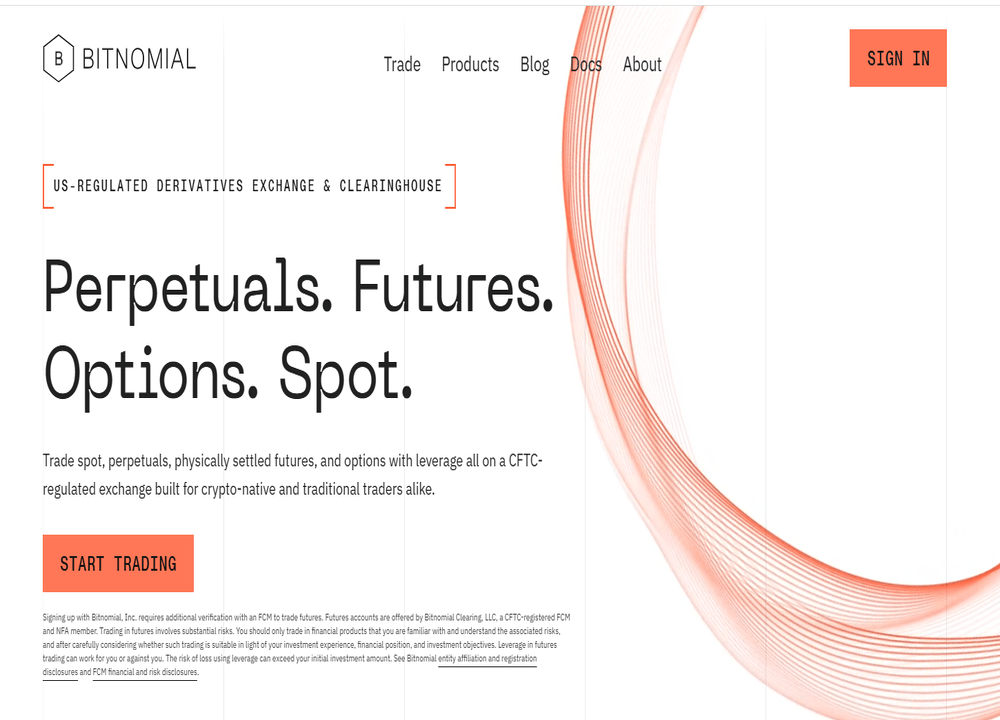
Table of Contents
- What is Bitnomial Exchange: A Brief Overview of Its History
- How does Bitnomial Work?
- Key Features of Bitnomial
- Is Bitnomial Legit?
- Does Bitnomial Require KYC?
- Conclusion
- About BTCC
\Unlock Up To 10,055 USDT In Welcome Rewards!/
What is Bitnomial Exchange: A Brief Overview of Its History
Founded in 2014 by Luke Hoersten, Bitnomial is a derivatives exchange and clearinghouse operator headquartered in Chicago, designed to offer U.S.-regulated trading of digital asset derivatives.
Originally approved by the CFTC in April 2020, Bitnomial was authorized to offer margined and physically delivered futures and options contracts on assets such as Bitcoin. This approval allowed Bitnomial to operate an exchange for margined and deliverable digital asset futures and options, marking a significant milestone as one of the first new exchanges to receive such approval.
In 2021, Bitnomial Exchange, LLC launched its margined, physically settled bitcoin futures market, thereby expanding its offerings in the digital asset trading space.
In 2022, Bitnomial Clearing, LLC obtained approval as a futures commission merchant (FCM) from the National Futures Association (NFA). This enabled Bitnomial Clearing to operate as a clearing firm for margined and deliverable digital asset futures and options, thereby enhancing its capabilities in the derivatives market.
In 2023, Bitnomial Clearinghouse, LLC achieved registration as a derivatives clearing organization (DCO) with the US Commodity Futures Trading Commission (CFTC). This made Bitnomial the first crypto-native exchange to be granted the full set of CFTC derivatives licenses.
More recently, Bitnomial announced plans to launch a spot cryptocurrency trading platform under CFTC regulation. Scheduled for 8 December 2025, the launch represents a watershed moment for U.S. crypto markets.
As the first platform to bring leveraged spot crypto trading under the full regulation of the CFTC through the DCM and DCO framework, Bitnomial is setting a new standard for digital asset markets in the United States. By combining the capital efficiency of net settlement and portfolio margining with the protections of U.S. derivatives market infrastructure, the platform will deliver safe, regulated access to leverage for retail and institutional traders alike.
[TRADE_PLUGIN]BTCUSDT,ETHUSDT[/TRADE_PLUGIN]
How does Bitnomial Work?
Bitnomial provides a full infrastructure system consisting of an exchange, a clearing house and a brokerage to to facilitate trading in crypto derivatives. Its model brings together the dynamics of the traditional financial markets and the plasticity of digital assets.
The product line of Bitnominal comprises perpetual futures, physically delivered futures and options. Interestingly, its physically-settled futures imply that, at the expiry of the contract, the traders obtain the real cryptocurrency, and no longer a cash equivalent, which is not typical of the U.S.-regulated derivatives exchanges.
Whenever a user buys or sells on Bitnominal, the exchange (DCM) will be used to execute the trade and then cleared in the clearing house (DCO). In the meantime, the brokerage (FCM) is the one to deal with the margin of the client and settlement. This vertical integration provides Bitnomial with the ability to control every phase of a derivative contract – execution of orders to final settlement of the contract – but at the same time, exposes it to regulatory restrictions and conflict-of-interest policies.
Additionally, Bitnomial has recently expanded its collateral model to support crypto and stablecoins such as XRP and RLUSD as margin collateral. This enhances the capital efficiency of traders who wish to leverage existing digital assets without converting them to fiat currency.
\Unlock Up To 10,055 USDT In Welcome Rewards!/
Key Features of Bitnomial
Comprehensive CFTC Regulation & Institutional-Grade Structure
Bitnomial is licensed as a Designated Contract Market (DCM), Derivatives Clearing Organization (DCO) and a Futures Commission Merchant (FCM).
This multi-layered regulatory status is unusual among crypto exchanges. It brings Bitnomial into line with traditional futures markets, offering a higher level of oversight, transparency and operational integrity than is typical of unregulated crypto platforms.
Physically Delivered Futures and Options
Unlike most U.S. crypto derivatives products, which settle in cash, Bitnomial is set to physically settle futures and options, meaning that upon expiry of the contract, traders can receive real digital assets.
It is an important distinguishing characteristic that traders can have the true ownership of the cryptocurrencies that can be beneficial in terms of hedging, long-term investment, or any combination of the other crypto-related strategies.
Support for Crypto & Stablecoin Collateral
Bitnomial has recently become the first U.S. exchange to accept digital assets and stablecoins (e.g., RLUSD, XRP) as margin collateral. This innovation enables traders to leverage their existing cryptocurrency holdings without needing to convert them into fiat currency first, thereby enhancing capital efficiency and simplifying entry into leveraged positions.
Competitive Fees and Flexible Leverage
The trading fees on the platform are competitive, according to the information, with a low of 0.002% in some cases, and and allows leverage up to 6× on margin trades.
Moreover, pre-collateralization is not needed: traders are allowed to hold their collateral until they make a decision on delivery commitments, which is more flexible than cash-collateralized derivatives.
Expansion into Spot Cryptocurrency Trading
In late 2025, Bitnomial announced to offer spot cryptocurrency trading under CFTC regulation. This represents a “watershed moment for U.S. crypto markets,” arguing that Bitnomial is establishing a standard for cryptocurrency markets in America.
Is Bitnomial Legit?
Bitnomial is entirely legal, in the sense that it possesses good regulatory credentials that are solid: its exchange, clearinghouse, and broker entities are all registered with the CFTC.
Tracking its history, the approval in 2020 to operate as a designated contract market, and the December 2023 granting of full clearinghouse and brokerage licenses underscore Bitnomial’s legitimacy.
Besides, the internal organization of Bitnomial and its transparency are are documented publicly. Its different affiliated organizations including the exchange, clearing house, settlement facility and FCM, are disclosed together with the policies of the conflict of interest stating a dedication to the compliance with the regulations and standards of the institutions.
Furthermore, its recent move to accept crypto and stablecoin collateral and to launch a regulated spot trading venue highlights its responsiveness to market demand while adhering to oversight rules.
Bitnomial is thus one of the most reputed and compliant derivatives exchanges in the crypto market.
[TRADE_PLUGIN]BTCUSDT,ETHUSDT[/TRADE_PLUGIN]
Does Bitnomial Require KYC?
Since Bitnomial is regulated by CFTC and uses an FCM (Futures Commission Merchant) to trade futures and options, a customer has to undergo verification before they can trade futures. Trading on Bitnomial generally requires identity verification and compliance with regulatory standards typical of U.S.-regulated financial platforms.
Moreover, the multi-entity structure with exchange, clearinghouse, and brokerage components suggests that Bitnomial must enforce anti-money-laundering (AML) and know-your-customer (KYC) procedures consistent with U.S. regulatory requirements.
The requirement of KYC to trade futures is not explicitly mentioned on the website of Bitnomial, but due to the need to undergo additional verification with an FCM to trade futures, it is highly likely that either KYC (or similar identity and compliance measures) is a requirement.
\Unlock Up To 10,055 USDT In Welcome Rewards!/
Conclusion
Bitnomial is a derivatives exchange and clearinghouse operator based in Chicago. The opening of the first US leveraged retail spot crypto exchange by Bitnomial comes at a time when U.S. lawmakers are debating the details of a market structure bill that would establish jurisdictional boundaries between the CFTC and the Securities and Exchange Commission over the crypto industry.
For traders seeking legitimacy, transparency and direct ownership rather than just paper exposure, Bitnomial boasts some of the strongest credentials in the crypto derivatives market. As regulatory clarity in the US continues to evolve, exchanges like Bitnomial could play a pivotal role in defining the intersection between mainstream finance and crypto — potentially shaping the future of regulated digital asset markets.
Nonetheless, derivatives trading is still risky in nature, particularly with leverage. When you are about to use Bitnomial, make sure that you are aware of the margin requirements, collateral requirements and risks involved in leveraged instruments.
[TRADE_PLUGIN]BTCUSDT,ETHUSDT[/TRADE_PLUGIN]
About BTCC
Founded in 2011, BTCC stands out as a trusted and well-respected exchange due to its unwavering commitment to security and transparency. Since its establishment in 2011, BTCC has boasted an impeccable security track record, with zero reported hacks or breaches. Holding licenses in the U.S., Canada, and Europe, BTCC provides a comprehensive suite of trading features within a secure and regulated platform.
With a mission of providing a trading platform that is fair and reliable in every sense, BTCC platform supports spot trading for over 360 cryptocurrencies, crypto futures trading with leverage up to 500x, crypto copy trading that allows users to follow experienced traders, demo trading accounts pre-loaded with $100,000 in virtual funds, and tokenized futures for stocks and commodities. If you want to engage in cryptocurrency trading, you can start by signing up for BTCC.

BTCC is among the best and safest platforms to trade cryptos in the world. The reasons why we introduce BTCC for you summarize as below:
- Industry-leading security
- High Liquidity & Volume
- Extremely low fees
- High and rich bonus
- Excellent customer service
\Unlock Up To 10,055 USDT In Welcome Rewards!/
BTCC Guide:
How to Earn Your 10,055 USDT Welcome Bonus on BTCC: A Complete Guide To Maximize Your Crypto Return
Understanding KYC In Crypto: How To Complete KYC On BTCC
Why Choose BTCC Futures: A Comprehensive Guide For All Traders
A Beginner’s Guide: What Is Copy Trading & How To Start Copy Trading On BTCC
How to Use BTCC Demo Trading: A Step-By-Step Guide For Beginners In 2025
BTCC Referral Code 2025: Inviting Friends To Sign Up On BTCC
Crypto Investing Guide:
Best Sign-Up Bonus Instant Withdraw No Deposit Crypto Apps 2025
Top Legit 100x Leverage Crypto Trading Platforms Canada 2025
Best Crypto Exchanges With Lowest Fee In Canada (2025 Guide): Which One Is Your Best Pick?
Top Free Crypto Sign-Up Bonuses In Canada For December 2025
Best Crypto Trading Bots In Canada For December 2025
How To Get Free Bitcoin & Other Cryptos Instantly No Deposit: A Complete Guide in 2025
VWA Crypto Price Prediction 2025, 2026 And 2030: Is It A Good Investment In 2025?
What Is GAIB Crypto: Everything You Need to Know About It
Orca (ORCA) Price Prediction 2025, 2026 And 2030: Can ORCA Hit $20 Again?
Best Free Crypto Sign-Up Bonus Australia 2025
Top Free Crypto Sign-Up Bonuses In Canada For December 2025
Top Free Crypto Mining Apps for Android and iOS Canada 2025
Coinsquare Review 2025: A Comprehensive Guide For All Canadian Crypto Traders
Newton Crypto Review 2025: Best Platform For Crypto Trading In Canada?
Bitbuy Review 2025: Best Crypto Exchange In Canada?
NDAX Review 2025: A Full Breakdown of its Services, Safety, Fees, and Canadian Alternatives
Bybit Hack: Everything You Need To Know About It
8 Types of Crypto Scams to Avoid in 2025
How To Withdraw Money From Binance In Canada: A Useful Guide For 2025
Coinspot vs. Swyftx: Which Is A Better Crypto Trading Platform For Australian Traders In 2025?
Best Crypto & Bitcoin Casinos Australia 2025
BTCC vs. NDAX: which is a better choice for crypto trading in Canada?
BTCC vs. Bybit vs. eToro:which is the best choice for you?
Compare BTCC vs. Binance: Which is a Better Choice for Canadian Traders in 2025?
BTCC vs. NDAX: which is a better choice for crypto trading in Canada?
BTCC vs. Coinbase vs. Crypto.com
Compare BTCC vs. BitMart 2025: Which is a Better Choice for Your Demand
Compare BTCC vs Pionex: Crypto Exchange Comparison 2025
BTCC vs CoinJar: Which One is Better?
Compare BTCC vs Gate.io: Which is Best in 2025
BTCC vs. MEXC: A Complete Comparison In 2025
Coinbase vs. CoinSpot: Which Is A Better Crypto Trading Platform For Australian Traders In 2025?
eToro vs. CoinJar: Which Is A Better Crypto Trading Platform For Australian Traders In 2025
Coinspot vs. Swyftx: Which Is A Better Crypto Trading Platform For Australian Traders In 2025?
Please be aware that all investments involve risk, including the potential loss of part or all of your invested capital. Past performance is not indicative of future results. You should ensure that you fully understand the risks involved and consider seeking independent professional advice suited to your individual circumstances before making any decision.
For any inquiries or feedback regarding this article, please contact us at: [email protected]