Ether ETF Buyer’s Guide: Launching Soon – Get Your Info Here
 Written by Judith WeberLast updated:
Dive into the latest crypto investment opportunity: the July 23rd launch of nine Ethereum spot ETFs. As regulatory hurdles are overcome and amended registrations are finalized, Ethereum (ETH) ETFs are poised to revolutionize the investing landscape. With ETH tickers hovering around $3,474, the arrival of these funds marks a significant milestone for the cryptocurrency market. For the first time, Ethereum ETF shares will trade alongside traditional stocks like Apple (AAPL) and SPDR S&P 500 ETF Trust (SPY) on leading US brokerage platforms. This historic moment presents an unparalleled opportunity for both institutional and retail investors in the US to capitalize on the booming crypto market. Discover the ins and outs of these revolutionary Ethereum ETFs and how you can leverage them to enhance your portfolio. Don’t miss out on this exciting new chapter in the evolution of crypto investing.
- Ether ETF Availability Date?
- Ethereum ETF Shares: Where to Purchase?
- Ether ETFs Staking Prospects Explored
Ether ETF Availability Date?
Exciting news for Ethereum investors! The Chicago Board Options Exchange (CBOE) has officially set July 23 as the launch date for five Ethereum ETFs: 21Shares Core, Fidelity, Invesco Galaxy, VanEck, and Franklin. These ETFs will trade exclusively on the CBOE platform. Meanwhile, four additional spot ETH ETFs are anticipated to list on either Nasdaq or NYSE Arca on the same day, though official announcements are still pending. Stay tuned for the latest updates on when spot Ether ETFs will be available for trading!
Ethereum ETF Shares: Where to Purchase?
While these exchanges may be the ultimate destinations for the ETF shares, everyday investors don’t trade directly on them. Instead, they rely on trusted brokerage platforms as intermediaries. Names like Fidelity, E*TRADE, Robinhood, Charles Schwab, and TD Ameritrade are household favorites that provide investors with access to these exciting new investment opportunities.
So, how do you choose the best brokerage platform for your Ethereum ETF investments? With nine spot Ether ETFs poised to start trading, it’s essential to consider the underlying mechanics of each fund, which are largely similar. However, it’s also crucial to look at factors like platform fees, ease of use, customer service, and the range of investment options available.
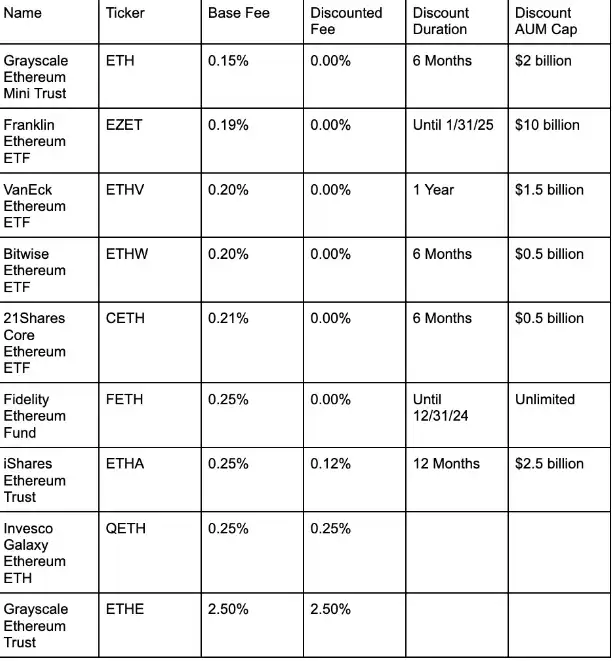
One of the primary considerations for investors looking to buy Ethereum ETF shares is the management fees. Most Ethereum ETFs charge fees ranging from 0.15% to 0.25%, providing a cost-effective way to invest in Ethereum. However, there are some exceptions to this rule. Grayscale Ethereum Trust (ETHE), for instance, charges significantly higher management fees of 2.5%. Despite this, some Ethereum ETFs are offering temporary fee waivers or discounts to attract investors.
Among the lowest-fee options is the Grayscale Ethereum Mini Trust (ETH), a newer fund created specifically to list as an ETF. It charges management fees of only 0.15%, and these fees are waived entirely for the first six months after listing or until the fund hits $2 billion in assets under management (AUM). Another compelling choice is Franklin Templeton’s Franklin Ethereum ETF (EZET), which charges management fees of 0.19%. These fees are fully waived through January 2025 or until the fund clears $10 billion in AUM.
Investing in Ethereum ETFs offers several benefits. Firstly, they provide investors with the convenience of trading Ethereum shares on traditional stock exchanges, just like any other publicly traded company. This allows investors to buy and sell Ethereum shares using their existing brokerage accounts. Secondly, Ethereum ETFs offer the same standard investor protections as other securities, including insurance against brokerage failures and cybersecurity risks.
Ether ETFs Staking Prospects Explored
Currently, staking rewards for ETH stand at approximately 3.7% annually, according to StakingRewards.com. Earlier this year, several issuers, including Fidelity, BlackRock, and Franklin Templeton, sought regulatory approval to add staking to their spot Ether ETFs. However, the Securities and Exchange Commission (SEC) denied these requests, primarily due to concerns surrounding liquidity.
Staked ETH is typically subject to withdrawal delays of several days from the Beacon Chain, which poses a significant challenge for ETF issuers. These issuers are required to promptly redeem ETF shares for the underlying fund assets upon request, a process that becomes complicated when dealing with illiquid staked Ether. As a result, ETF issuers are still exploring potential solutions to incorporate staking into their existing spot Ether ETFs, such as maintaining a “buffer” of liquid Ether. However, a viable plan is likely to take several months to develop and implement.