What Is API3 Crypto? A Complete Guide to the API3 Oracle Network
 Written by F, Fairy.fLast updated: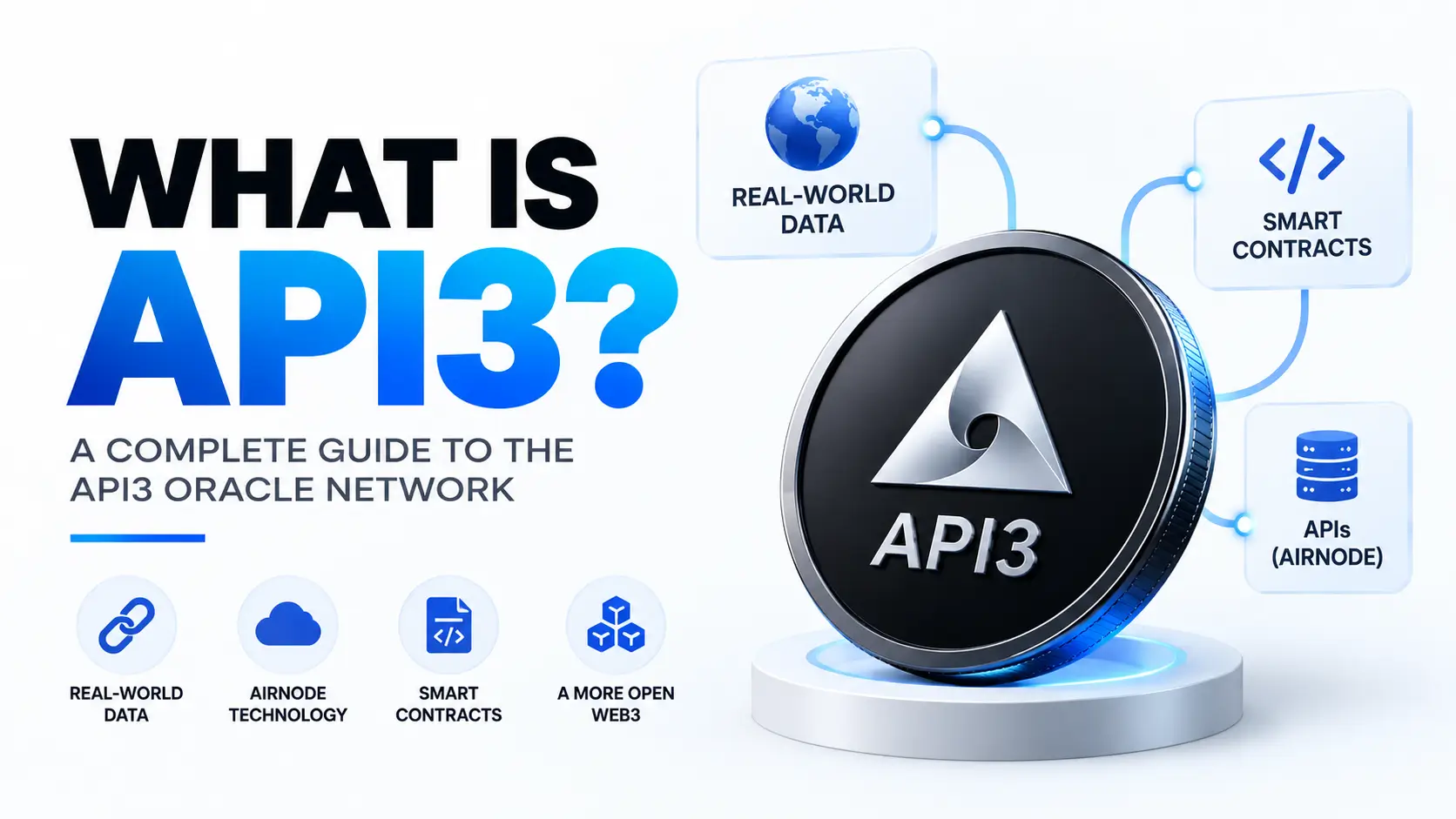
Blockchain applications can facilitate transactions, execute contracts, and build decentralized services, but they have a key limitation: the blockchain itself cannot directly obtain information from outside sources. A smart contract needs an external connection to check a website, read a market report, or monitor real-world events.
This is where oracles come in. If you’re wondering, “What is API3 crypto?” you likely want to know how the project helps blockchain applications access external information. API3 is a blockchain oracle project that connects conventional APIs to smart contracts using a first-party oracle approach.
It helps to start with the problem API3 sets out to solve. Blockchains often need reliable external information to run applications, especially in decentralized finance (DeFi). API3 aims to create a more streamlined, direct path between data providers and blockchain applications through Airnode and decentralized APIs (dAPIs).
Key Takeaways
- API3 purpose: API3 is a blockchain oracle project that enables blockchain applications to retrieve data from APIs and use that data in smart contracts.
- Oracle technology: API3 provides first-party oracle technology, giving the original data provider a major role in supplying blockchain data.
- Airnode role: Airnode lets API providers use their existing data services as oracles for blockchain applications without having to build complex oracle solutions.
- API3 token utility: It supports staking, governance in the API3 DAO, and participation in the ecosystem.
- Competitive position: API3 operates in the oracle layer and is often compared with Chainlink, both of which provide blockchain data solutions.
What Is API3 Crypto?
API3 is a blockchain oracle project that connects external data sources to smart contracts. It aims to enable simpler, direct interaction between data providers and blockchains, and to give decentralized applications access to accurate information from original APIs.
To understand what API3 crypto is, consider an example. A decentralized lending application that lets users borrow assets needs current price information before it can proceed. The smart contract cannot directly check exchange prices on the blockchain itself. It requires a reliable system to supply that information.
Oracle networks solve this by acting as a bridge between external data sources and blockchain applications.
API3 emphasizes first-party oracles. This enables original data providers to be part of the data delivery chain, rather than relying exclusively on separate oracle operators.
According to API3’s official documentation, the project gives blockchain applications access to external data feeds through decentralized APIs, called dAPIs. API3 also developed Airnode, an oracle node system that enables API providers to connect their services to blockchain applications.
Why Do Blockchains Need Oracle Networks?
A blockchain is designed to record and secure information within its own network. That brings security, but it also creates a limitation: blockchains have no native way to access information outside their systems.
For instance, a smart contract cannot automatically access:
- Current cryptocurrency prices
- Stock market information
- Weather conditions
- Sports results
- Currency exchange rates
These details are often essential to many blockchain applications.
To unpack this: a decentralized exchange needs price data to facilitate trades. A lending platform needs market information to determine collateral values. An insurance application may need external data to process a claim.
Without a way to connect external nodes to a blockchain, many smart contracts would not function.
What Problem Does API3 Solve?
API3 focuses on delivering external data to blockchain applications more efficiently. Traditional oracle systems typically have multiple layers between the original data provider and the application that ultimately consumes the data.
API3 has developed a first-party oracle solution that lets data providers integrate their APIs with blockchain apps through API3’s infrastructure.
The idea is simple: it can lead to more direct involvement for organizations that create valuable data and want to share it with Web3 applications.
This approach aims to remove middlemen and create a more direct connection between data sources and blockchain users.
How Does API3 Work?
API3 is developing several technologies to connect external data sources to blockchain applications. They include Airnode, dAPIs, and the first-party oracle model.
What Is Airnode?
Airnode is API3’s oracle node service that lets API providers integrate their services with blockchains. Many companies already offer useful information through APIs. However, these APIs are typically built for traditional software applications rather than blockchain networks.
Airnode lets these providers deliver that data to blockchain applications without having to build an entire oracle system themselves.
The overall aim is to simplify blockchain integration for API providers and make external information accessible to decentralized applications.
What Are dAPIs?
dAPI stands for decentralized API. These are blockchain-compatible data feeds that let an application obtain data from outside the blockchain.
Traditional APIs enable communication between software systems. dAPIs extend that idea by letting blockchain applications use external data.
For example, a dApp such as a DeFi application might need price data before it can execute a transaction. A dAPI can supply that data to the smart contract so it can complete the operation.
API3 First-Party Oracle Model Explained
One of API3’s distinguishing features compared with other oracle projects is its first-party oracle model.
In a traditional setup, a separate oracle network gathers information from various sources before feeding it to applications on the blockchain.
With API3’s approach, original data providers can be directly involved.
It can be illustrated this way:
- Traditional model: Data provider → Oracle operator → Blockchain application
- API3 model: Data provider → Airnode → Blockchain application
This model aims to establish a more direct link between the source of information and the application that uses it.
What Is the API3 Token Used For?
The API3 token is the native cryptocurrency of API3. It plays a key role in governance and participation in the API3 DAO.
Many people ask, “What is API3 crypto?” Another useful question is: What does API3 do besides trade in the market? The API3 token is tied to practical operations within the platform.
According to the API3 docs, the token is used for governance and staking procedures.
- Participation in governance: API3 token holders have a say in API3 governance.
- Staking: The API3 ecosystem supports staking mechanisms and community participation.
- Ecosystem participation: The token community can participate in ecosystem activities and help drive the network’s management and growth.
API3 Use Cases in Web3
API3’s main use case is providing external data access for blockchain applications. As decentralized applications evolve, data reliability is becoming increasingly important.
DeFi Applications
One of the most notable uses of oracles is decentralized finance (DeFi).
In most cases, DeFi projects require access to data such as:
- Asset pricing
- Lending systems
- Trading applications
- Financial agreements
This can range from core functionality, such as a lending protocol’s asset pricing, to the ability to make decisions using users’ assets.
Smart Contract Applications
A smart contract is a set of rules that executes specified actions when certain conditions are met. But it needs suitable data to do so.
API3 acts as an interface between smart contracts and external data providers.
Other Web3 Services
Oracle technology can also be applied beyond finance, across many industries.
Examples include:
- Insurance applications: smart contracts can capture external data and use it to process claims.
- Blockchain games: A game can tap off-chain data for various features and functions.
For companies using blockchain applications, data synchronization is a major concern.
API3 vs. Chainlink: What Is the Difference?
Some key projects in the blockchain oracle space include API3 and Chainlink. Both accomplish the same end goal—external data access—but take different approaches.
| Feature | API3 | Chainlink |
| Oracle approach | First-party oracle model | Decentralized oracle network |
| Data providers | API providers can connect their services directly. | Independent oracle node operators supply the data. |
| Main technology | Airnode and dAPIs | Chainlink oracle infrastructure |
| Ecosystem structure | API3 DAO | Chainlink ecosystem |
While API3 aims to let original data providers supply information directly, Chainlink does so through a network of independent oracles.
The key point is that both projects address the same challenge: how to use trusted external data on the blockchain.
Benefits and Risks of API3
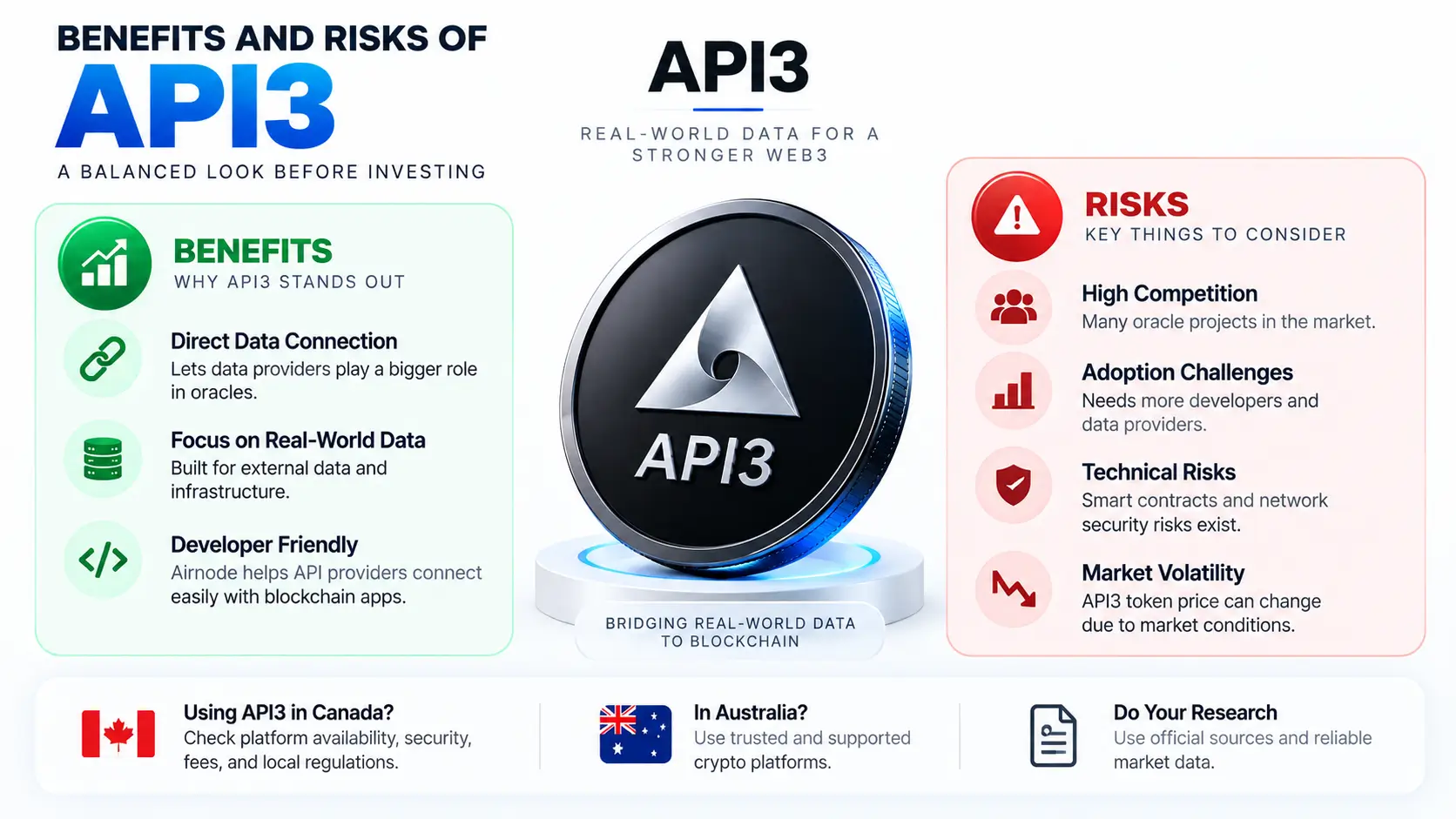
When evaluating any crypto project, it’s important to keep a balanced perspective. API3 has a clear role in the oracle space, and its approach is distinct from other oracle projects.
Benefits of API3
- Direct data provider connection: API3 allows original data providers to become more involved in providing oracle services.
- Infrastructure focus: API3 prioritizes infrastructure for external data.
- Developer support: Airnode can assist API developers in connecting with blockchain apps.
Risks and Limitations
- Adoption: API3 operates in a competitive oracle market.
- Adoption challenges: Developers and data providers need to adopt the technology for the network to grow.
- Technical risks: Like other blockchain platforms, API3 faces technical risks, including smart contract risk and potential attacks on network infrastructure.
- Market volatility: The API3 token is a crypto asset, so its market value can change for many reasons.
The best sources are, in this order: official project data, trusted platforms for market data, and supported cryptocurrency services.
- Official resources: The API3 website and documentation contain information about the technology, system, and development.
- Research: Users can check market data and project updates on cryptocurrency websites.
- Platform checks: Users should confirm whether a platform offers API3 services.
Users should also consider platform security, reliability, and the local tax implications of their transactions before participating in the digital asset market.
Once you understand what API3 offers in terms of openness and connectivity, it’s worth building your knowledge of crypto markets and blockchain functions—and why they matter for Web3 infrastructure projects like API3.
BTCC’s education and market resources can help you understand crypto concepts, trading skills, and crypto asset research. BTCC’s trading tools provide top-tier market information; however, traders should do their own research and apply appropriate risk management measures while using BTCC’s educational resources.
Conclusion
API3 is a blockchain project that acts as an oracle, providing a link between data sources and smart contracts. One of the most pressing challenges in Web3 is that blockchain applications depend on data from external systems.
The key point about API3 crypto is that API3 is more than a digital token; it’s an infrastructure project. It is designed to improve how data providers interact with decentralized applications through offerings such as Airnode and dAPIs.
The project has introduced a first-party oracle solution that gives data providers a more direct path to deliver data to blockchain applications. In the meantime, users should keep doing their homework before making a decision about the project, including reviewing the technology, adoption outlook, competitive landscape, and risks and benefits.
Understanding blockchain infrastructure is essential for making informed decisions and seeing the broader picture of projects like API3.
BTCC Exchange
BTCC offers an exclusive welcome campaign for new users. Sign up and start trading today to earn up to30,000 USDT in rewards. You can also enjoy a higher VIP level based on your deposit amount (Higher Deposit = Higher VIP Level). As a VIP, you’ll benefit from lower trading fees and additional exclusive privileges.
- Sign-Up Bonus: Receive 10 USDT upon registration.
- KYC Bonus: Complete identity verification to earn an additional 20 USDT.
- First Trade Rewards: Earn 5 USDT for your first spot trade and 5 USDT for your first copy trade.
- First Futures Trade Bonus: Complete your first futures trade to receive 20 USDT.
- Deposit Bonus: Deposit 200 USDT or more to receive 10 USDT, or deposit 500 USDT or more to receive 20 USDT. Users who accumulate 2,000 USDT in deposits within 30 days will receive an additional 30 USDT Flexible Trading Fund.
- Futures Trading Challenge: Trade futures over a 90-day period to earn up to 30,000 USDT in rewards, with leverage of up to 250× available.