Is Cash Cat (CASHCAT) Legit or a Scam? A Deep-Dive into the Robinhood Chain Sensation
 Written by Fiona FLast updated:
 The cryptocurrency landscape is filled with thousands of tokens, each promising lucrative returns and innovative utility. Among these emerging projects is Cash Cat (CASHCAT), a token that has recently captured massive attention—and intense skepticism—from investors.
Originally emerging as a speculative meme coin, CASHCAT has recently been supercharged by its association with Robinhood Chain, the newly launched Layer 2 network. Understanding whether Cash Cat is a legitimate, history-making opportunity or a carefully disguised high-risk gamble requires a data-driven, expert-led evaluation.
What Is Cash Cat (CASHCAT) and Its Robinhood Origin?
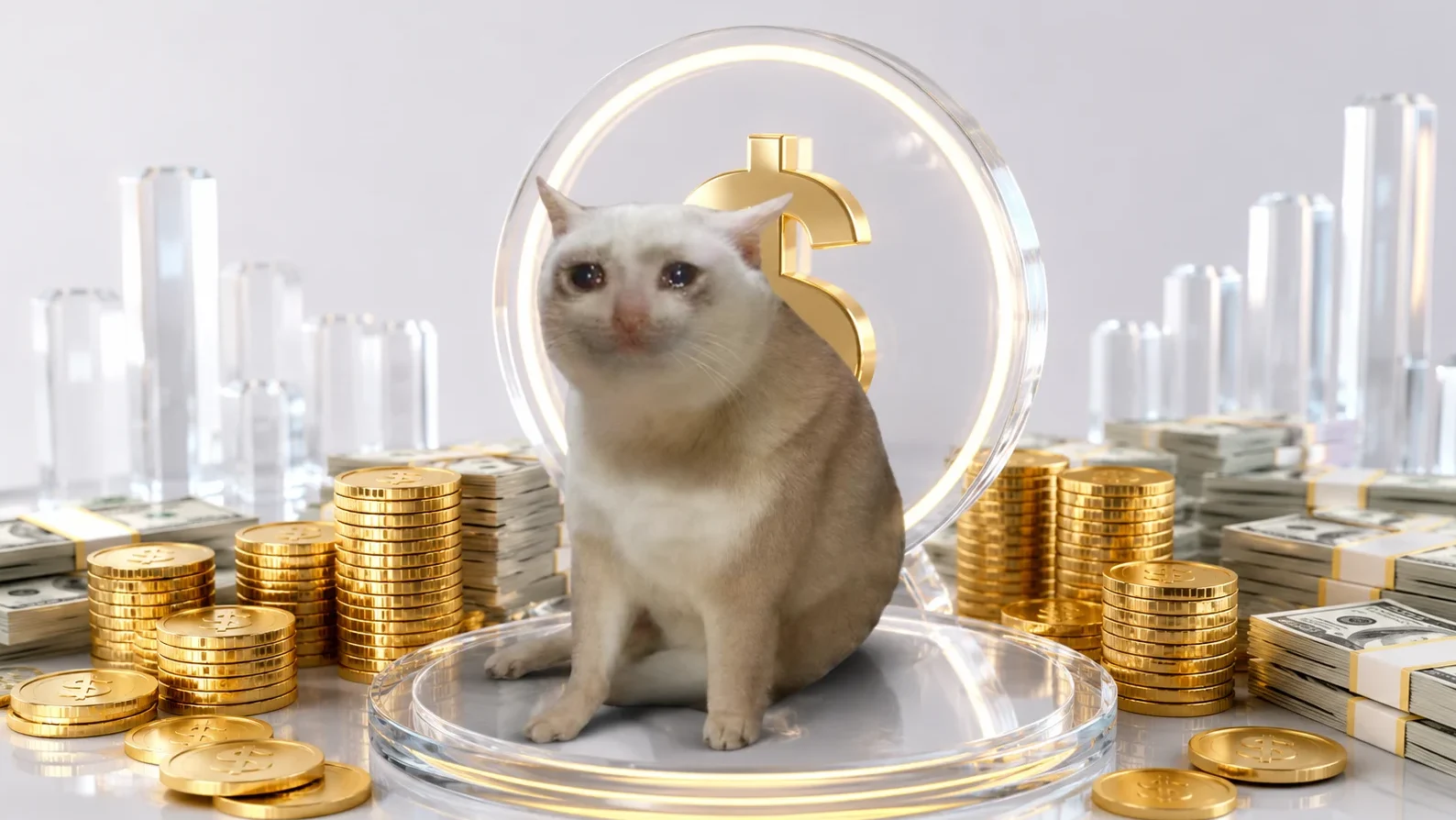
Cash Cat is a cryptocurrency token that markets itself as a community-driven digital asset, capitalizing on the viral appeal of meme culture. While its branding relies on a lighthearted feline theme, its recent explosive growth is tied directly to the history of Robinhood Markets.
-
The Lore: During Robinhood’s early founding days, the co-founders originally considered naming their trading app “Cash Cat” and designed a logo of a cat sitting on a pile of money. While they ultimately went with “Robinhood,” the “Cash Cat” lore remained a cult favorite.
-
The Launch: Following the launch of Robinhood Chain (an Arbitrum-powered Layer 2 network) on July 1, 2026, community developers deployed $CASHCAT as a homage to this corporate history. Despite Robinhood Chain being designed for Real-World Assets (RWAs), it was this feline meme coin that took the network by storm.
The Catalyst: CEO Endorsement and On-Chain Mania
What began as a low-cap meme coin quickly turned into a market-wide phenomenon due to a series of high-profile events in July 2026:
1. The Vlad Tenev “Shoutout”
On July 8, 2026, Robinhood co-founder and CEO Vlad Tenev posted a playful nod on social media: “While we optimized the Robinhood Chain for RWAs, it turns out it runs meme coins incredibly well too.” Though Tenev did not officially endorse any specific token, speculators took this as a green light. Within 24 hours, CASHCAT surged, with its market capitalization flirting with the $200 million mark on daily trading volumes exceeding $81 million.
2. Mind-Boggling On-Chain Returns
Blockchain analytics platforms highlighted astronomical “rags-to-riches” stories. Most notably, one early trader turned an initial purchase of $838 into over $1.05 million in unrealized profits in under three weeks—a staggering 1,250x return. This viral narrative triggered intense FOMO (fear of missing out) among retail traders.
Is Cash Cat Legit? A Reality Check on the Risks
While the numbers are flashy, looking past the marketing and examining the tokenomics and structural setup reveals several critical red flags that mirror classic pump-and-dump dynamics:
-
Severely Disproportionate Liquidity: Despite boasting a paper market cap of nearly $200 million at its peak, CASHCAT’s actual locked liquidity in decentralized pools (like Uniswap) sat at only around $6.6 million. This massive mismatch means that if even a few early “whale” wallets decide to cash out, the price will collapse catastrophically, and late buyers will be left holding worthless tokens with no exit liquidity.
-
No Official Association or Security Audits: It is vital to understand that Robinhood Chain is a permissionless network. Anyone can deploy a smart contract on it. Cash Cat has not undergone a verified, comprehensive smart contract audit by a tier-1 security firm like CertiK or Hacken. Furthermore, Robinhood has not audited, backed, or taken responsibility for CASHCAT. It is not an official Robinhood product, despite the thematic branding.
-
Anonymous Team & High Wallet Concentration: The creators of Cash Cat remain entirely pseudonymous. Furthermore, blockchain explorers show that a very small cluster of early wallets holds a highly concentrated percentage of the token supply. This centralization allows a select few to manipulate the market or execute a rug pull at any moment.
Comparing Legitimate Assets vs. Cash Cat (CASHCAT)
The following table highlights the stark differences between a secure, institutional-grade cryptocurrency and the high-risk environment surrounding Cash Cat:
| Characteristic | Legitimate Project (Industry Standard) | Cash Cat (Observed Signals) |
| Audit Status | Verified public audit by top-tier firms (CertiK, Hacken, etc.). | No visible, verified third-party audit on the contract. |
| Team Transparency | Doxxed founders with verifiable Web3/finance backgrounds. | Pseudonymous creators hiding behind internet memes. |
| Liquidity-to-Cap Ratio | Healthy liquidity pools, usually 20% to 50%+ of market cap. | Extremely thin liquidity (~3-6% of market cap), risking high slippage. |
| Official Association | Direct, legally binding backing from the parent platform. | No official affiliation with Robinhood Markets. |
| Token Utility | Native utility (Gas fees, governance, RWA yield). | Speculation-only with no functional utility. |
How to Safely Navigate Low-Cap Tokens Like CASHCAT
If you choose to participate in the volatile world of Layer 2 meme coins, implementing strict risk management is your only defense against complete capital loss. Experienced traders typically follow a hybrid portfolio strategy to balance out these structural vulnerabilities:
-
The 90/10 Portfolio Split: Never put your core capital into unvetted DEX contracts. Experienced traders limit speculative, un-audited L2 tokens (like CASHCAT) to less than 5-10% of their total crypto portfolio. The remaining 90% should be kept in highly liquid, stable market-leading assets.
-
Isolate Your On-Chain Risk: Do not connect your primary web3 wallet containing your main holdings to experimental L2 dApps. Use a clean, dedicated “burner wallet” with only the exact amount of gas and swap capital you are willing to lose.
-
Move Derivative Trading to Secure Venues: If your goal is to trade high-volatility price swings rather than holding illiquid tokens, do not buy them on highly slippage-prone DEXs. Instead, trade liquid high-cap meme contracts (like PEPE, DOGE, or SHIB) or layer-1 assets (like ETH or SOL) on secure, dedicated derivatives platforms.
For instance, established platforms like BTCC Exchange—which has operated since 2011 with a clean security record—allow traders to trade major high-volatility assets with deep liquidity and zero exposure to the smart contract or “rug pull” risks inherent in unvetted meme coins. This lets you capture the broader volatility of the crypto market without the risk of an anonymous developer draining the liquidity pool.
Conclusion: Is Cash Cat (CASHCAT) Legit or a Scam?
While Cash Cat (CASHCAT) is not a hardcoded “scam” in the sense of a malicious contract exploit, it exhibits extremely high-risk, speculative characteristics that mimic classic pump-and-dump dynamics.
With paper-thin liquidity, an anonymous team, and zero direct backing from Robinhood itself, the risk of high slippage or sudden whale sell-offs is exceptionally high.
If you want to speculate on the Robinhood Chain craze, treat it strictly as a casino roll with burner funds. For serious trading, capital preservation, and leveraging market volatility, the smartest move remains shifting your core derivatives activity to battle-tested platforms like BTCC, where deep liquidity and established regulatory compliance ensure your capital stays safe from on-chain exploits.
If you want to explore the mechanics of Robinhood Chain and on-chain security further:
-
Analyze Robinhood Chain’s RWA ecosystem: What actual Real-World Asset (RWA) projects and tokenized assets are launching legally on the Robinhood Chain?
-
Learn how to track CASHCAT whale wallets: How can I use blockchain tools like Etherscan or DeBank to track early CASHCAT whale wallets and monitor if they are dumping?
🔥 Open Your Secure Account Now & Claim Your 30,000 USDT Reward