What Is Tether (USDT)? The Ultimate Guide to Reserves, Risks, and Mechanics


This is the world’s dominant stablecoin, with a market capitalization exceeding $180 billion. As of 2026, USDT’s market capitalization is the third largest among all cryptocurrencies, behind only Bitcoin and Ethereum. It has become an integral part of the crypto infrastructure, providing stability and liquidity in volatile markets. Thanks to its peg to the US dollar, USDT is widely used for trading, value storage, cross-border remittances, and as the primary trading pair on most exchanges.
But how exactly does Tether work? What is the technology behind it, and what guarantees its price stability? Why has it maintained its leading position among stablecoins for so many years? Most importantly—is holding USDT truly as risk-free as commonly believed? This article will help you understand all the important aspects of USDT so you can maximize its effectiveness.
What is USDT?
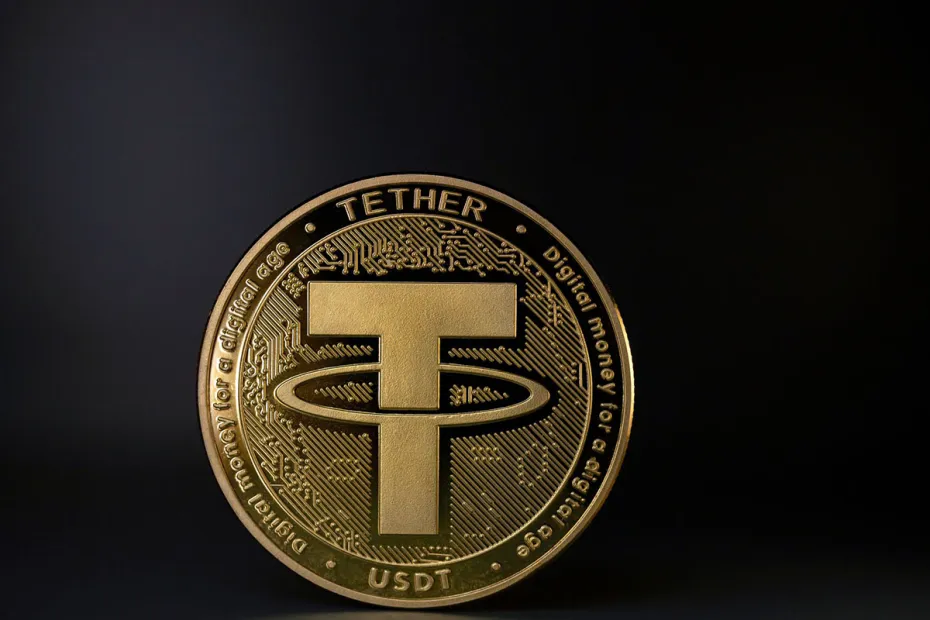
USDT (Tether) is a stablecoin pegged 1:1 to the US dollar. Launched by Tether in 2014, USDT’s core mechanism is based on 100% reserve backing. In principle, every USDT token in circulation is backed by a corresponding amount of US dollars or equivalent highly liquid assets (such as US short-term Treasury bonds) in Tether’s reserves, thereby maintaining its price stability.
| Name | USDT (Tether) |
| Type | Stablecoin (Fiat-collateralized) |
| Pegged Target | 1 USDT ≈ 1 USD |
| Launch Date | October 2014 |
| Issuer | Tether Limited |
| Supported Blockchains | Ethereum (ERC-20), Tron (TRC-20), Solana, Polygon, Avalanche, etc. |
| Market Status | The largest stablecoin by market cap—approximately $180 billion in 2026, accounting for around 61% of the stablecoin market. |
History and Current Status Of USDT (Tether)
Tether (USDT) was officially launched in 2014 (initially named Realcoin) to address the slow and volatile transfers between traditional fiat currencies and crypto assets, providing an on-chain liquidity medium pegged to the US dollar for the digital asset market. As the first stablecoin in the cryptocurrency industry to achieve large-scale adoption, USDT established the industry standard for centralized fiat-backed stablecoins and has maintained its dominant position across multiple market cycles.
In regions with limited access to US dollars, high inflation, or foreign exchange controls (such as Latin America, the Middle East, and some emerging markets), USDT widely serves as an on-chain reserve asset and cross-border payment tool. As of 2026, USDT’s market capitalization has consistently remained above $180 billion, consistently ranking third in the global cryptocurrency market capitalization (after Bitcoin and Ethereum), accounting for over 60% of the global stablecoin market share.
Currently, USDT has been natively deployed on dozens of mainstream blockchain networks such as Ethereum, Tron, Solana, BNB Chain, Polygon, and TON, forming a very deep secondary market liquidity network.
\ 🚀 Ready for the Next Market Rally?/
Why Is USDT Usually Close to $1?
USDT’s target price is:
1 USDT ≈ 1 USD
However, this does not mean that USDT is strictly equal to 1 US dollar on all exchanges at all times. USDT is essentially still traded on the secondary market, so its price is affected by buying and selling demand, market liquidity, and extreme market conditions.
In normal market conditions, USDT typically fluctuates around 1 US dollar. When the market experiences liquidity shortages, panic selling, or a sudden influx of funds into stablecoins, it is not uncommon for it to experience short-term premiums or discounts.
USDT’s stability primarily comes from two aspects: reserve asset backing and the primary market issuance and redemption mechanism.
1. Reserve Assets Provide Underlying Support
Tether states that its issued Tether Tokens are backed by reserve assets. These reserves are not equal to all cash US dollars, but consist of assets including traditional currencies, cash and cash equivalents, and other assets. Tether continuously publishes relevant reserve information through its transparency disclosure page.
Therefore, a more accurate understanding is:
USDT’s 1:1 peg is supported by reserve assets, issuance and redemption mechanisms, and market arbitrage, rather than simply relying on an equivalent amount of US dollars held in bank accounts.
2. Primary Market Arbitrage Helps Price Revert
Suppose USDT briefly drops to $0.99 in the market.
Institutional participants meeting Tether’s requirements might buy discounted USDT in the secondary market and then redeem it through Tether’s official channels. If this arbitrage opportunity is large enough, demand for USDT in the market increases, and some tokens exit circulation, potentially causing the price to revert to $1.
Conversely, if USDT is above $1 due to strong demand, new issuance in the primary market and secondary market arbitrage may increase supply, thus alleviating the premium.
However, it is crucial to emphasize that ordinary users should not simply assume they can directly redeem USDT from Tether at a 1:1 price at any time.
Currently, Tether’s official redemption service requires users to have a verified Tether.to account, with a minimum redemption amount of $100,000 equivalent, and may also involve related fees.
How is USDT issued and burned?
The operation of USDT can be understood in three stages:
Reserve Assets → Issue USDT → Market Circulation → Redemption and Withdrawal from Circulation
Step 1: Issuing USDT
Customers who meet Tether’s KYC/compliance requirements can purchase or obtain USDT through official Tether channels.
Tether’s official description states that newly created tokens may initially be in an “authorized but not issued” state, meaning they have been authorized for issuance but are still held in the Tether Treasury and have not entered market circulation. Only when the tokens are transferred out of the Treasury are they considered officially issued.
This means that certain Treasury balances seen on-chain are not simply equivalent to USDT already in market circulation.
Step 2: Entering Market Circulation
Once officially entering circulation, USDT can be transferred between supporting exchanges, wallets, payment platforms, and DeFi applications. Users can use USDT to:
- trade digital assets such as BTC and ETH;
- transfer funds across platforms;
- participate in DeFi lending and liquidity markets;
- serve as a digital asset settlement unit;
- use for payments and business settlements in regions that support these services.
This layer is also the primary source of USDT’s liquidity value.
Step 3: Redemption and Withdrawal from Circulation
When an eligible customer submits a redemption request to Tether, the USDT is sent back to Tether’s relevant processes, and the corresponding token is subsequently withdrawn from circulation.
Mechanically, this can be summarized as:
Fiat currency or eligible assets enter → USDT issuance → market circulation → USDT redemption → decrease in circulating supply
This dynamic supply mechanism is a key reason why stablecoins can expand or contract with market demand.
Which blockchains does USDT support?
One of USDT’s biggest features is that it does not rely on a single blockchain.
Tether currently supports protocols including Ethereum, Tron, Solana, TON, Avalanche, Celo, Near, Polkadot AssetHub, Tezos, Aptos, and Liquid. Different networks use different token standards, but all belong to the USD₮ coin within the Tether ecosystem.
Specifically:
- Ethereum: Primarily used for DeFi, institutional funding, and on-chain settlement of high-value assets;
- Tron: Handles a large volume of USDT transfers and transactions;
- Solana: Suitable for high-throughput and low-cost applications;
- TON: Expands the use cases of stablecoins within the Telegram ecosystem;
- Other networks: Provide USDT liquidity based on the trading, payment, and DeFi needs of their respective ecosystems.
One point is especially important for users: USDT on different blockchains should not be treated as interchangeable without the appropriate bridge, exchange, or network support.
For example, when withdrawing USDT from the Tron network, users should ensure that the receiving address supports TRC-20 USDT. Choosing the wrong network, even if the address appears correct, may result in funds not being credited.
Tether officially states that Tether Tokens on different blockchains can be considered assets within the same system, but the specific protocols supported are determined by Tether’s own policies.
What are the core advantages of USDT?
1. Relatively Low Price Volatility
USDT is not designed to appreciate in value. Its primary purpose is to provide a relatively stable dollar-denominated unit.
When Bitcoin, Ethereum, or other crypto assets become highly volatile, traders can move part of their capital into USDT to reduce exposure to short-term price swings.
That said, “stable” does not mean “risk-free.” USDT can still deviate from its dollar target under extreme market conditions.
2. Deep Market Liquidity
USDT has become a crucial trading medium in the global crypto market.
Numerous spot and derivatives trading pairs use USDT as their pricing asset, creating a vast liquidity network across exchanges.
For traders, this means that USDT is often one of the easiest intermediary assets to use when entering or exiting other digital assets.
3. More Flexible Cross-Chain Transfers
USDT can operate on multiple blockchain networks.
Users can choose different networks based on transaction costs, speed, and the support of the receiving platform to meet various transfer needs.
However, the network choice must be consistent with the recipient’s; this is one of the most important issues to consider when using USDT.
What are the risks of USDT?
The larger the scale of USDT, the greater its importance, but the corresponding risks cannot be ignored.
Centralization Risk
USDT is not a fully decentralized asset. Tether has administrative authority over issuance, redemption, and related smart contracts, and can take restrictive measures against specific addresses, subject to legal, regulatory, or compliance requirements.
Therefore, one of the biggest differences between USDT and BTC is that USDT’s operation is highly dependent on the issuer and its reserve system.
Reserve Asset Risk
USDT’s credit foundation is closely related to the reserve assets held by Tether.
Therefore, when assessing the stability of USDT, one cannot only look at the on-chain circulation; it is also necessary to pay attention to the composition of Tether’s reserve assets, liabilities, and related attestation information.
Risk of De-pegging
While USDT aims for a 1:1 peg to the US dollar, its secondary market price may still deviate from $1.
In extreme market conditions, if there is a surge in redemption demand, liquidity shortages, or a decline in market confidence, the de-pegging could widen.
Regulatory Risks
Stablecoins have become a key category of digital assets under scrutiny by global financial regulators.
Different countries and regions have different regulatory policies regarding the issuance, trading, custody, and payment uses of stablecoins. Therefore, the availability of USDT varies across different jurisdictions.
Furthermore, Tether has ceased supporting the issuance or redemption of USD₮ on some older blockchains, including Omni, Bitcoin Cash SLP, Kusama, EOS, and Algorand. Tether also reserves the right to discontinue support for specific blockchain protocols.
What is the true value of USDT?
From today’s crypto market perspective, USDT’s value extends beyond simply being a “digital token worth $1.”
It actually plays three important roles:
a trading medium, an on-chain dollar-denominated asset, and a core source of liquidity for the digital-asset market.
For traders, it’s a crucial intermediary asset for entering and exiting the crypto market; for DeFi protocols, it’s an important source of USD-denominated pricing and liquidity; and for cross-border payments and digital finance applications, it provides a USD-denominated tool that can be directly transferred on the blockchain network.
However, USDT is not a risk-free “on-chain dollar.” It still relies on the issuer, reserve assets, regulatory environment, and market liquidity.
Therefore, understanding USDT isn’t about simply remembering “1 USDT = 1 USD,” but rather understanding the underlying mechanisms of reserves, issuance, redemption, cross-chain circulation, and regulation.
This is also key to judging USDT’s long-term stability and practical use value.
USDT Freezing and Blacklisting Risks: What Holders Should Know
USDT is convenient to use, but it differs fundamentally from decentralized assets like Bitcoin: Tether, as the issuer, retains administrative control over token issuance, redemption, and certain address restrictions.
This means that even if USDT is held in a user’s own non-custodial wallet, such as Ledger or Trust Wallet, the asset is not entirely free from the issuer’s control. For addresses that meet certain conditions, Tether can use smart contracts to freeze or restrict transfers.
This is not just a theoretical risk. In recent years, Tether has repeatedly frozen USDT suspected of being related to illegal activities, sanctions evasion, or other criminal activities based on information provided by law enforcement agencies.
The Scale of Restrictions in 2026
In April 2026, Tether announced a large-scale freeze. The company stated that after receiving relevant information from the US government and law enforcement agencies, it froze over 344 million USDT in two TRON addresses. Tether stated that these addresses were involved in illicit activities investigated by relevant authorities and that the operation was coordinated with US law enforcement agencies and OFAC.
These two transactions, amounting to approximately $213 million and $131 million respectively, quickly became one of the high-profile cases in the stablecoin compliance field in 2026.
More importantly, this is not an isolated incident. In February 2026, Tether disclosed that the cumulative value of USDT frozen due to suspected illicit activities had reached approximately $4.2 billion. Subsequently, the T3 Financial Crime Unit, jointly established by Tether, TRON, and TRM Labs, disclosed that as of May 2026, the scale of illicit assets frozen globally had exceeded $450 million. It is important to note that these two figures use different statistical methods and cannot be simply added together.
Therefore, rather than saying that “USDT can be frozen arbitrarily,” a more accurate statement is that the issuer of USDT possesses actual compliance enforcement capabilities and has already used this authority in large-scale law enforcement cases.
What Does This Mean for USDT Holders?
The most direct impact is that wallet addresses themselves do not guarantee the free transfer of USDT indefinitely.
If funds are linked to sanctioned entities, fraud, hacking, terrorist financing, or other activities under law enforcement investigation, the relevant addresses may face freezing. Tether states that it currently cooperates with law enforcement agencies in multiple jurisdictions worldwide and will take restrictive measures as legally required.
However, this risk should not be oversimplified.
Using P2P platforms, mixing services, or informal exchange channels that have never used KYC services does not necessarily mean that users will be permanently frozen. The real issue lies in whether the source and transaction path of funds are linked to tagged addresses, sanctions lists, or suspected illegal activities.
Therefore, a more practical approach for ordinary users is:
- Do not proactively accept large amounts of USDT from unknown sources;
- Maintain basic caution regarding P2P trading counterparties and fund sources;
- Check address history and transaction paths before making large transfers;
- When using exchanges or payment services, verify their compliance qualifications and local regulatory requirements;
- If USDT in your wallet is restricted from transfer, contact the relevant platform or official Tether channels as soon as possible, rather than continuing to attempt to split or transfer funds.
From this perspective, USDT’s convenience and centralized nature are actually two sides of the same coin. It is precisely because the issuer can implement compliant freezes that USDT can continue to undertake large-scale payment and settlement functions under the regulatory system; however, the same mechanism also means that users cannot obtain the same level of asset autonomy as Bitcoin.
Key Use Cases of USDT
USDT’s long-term market dominance isn’t solely due to its near-$1 price. Its widespread adoption is truly driven by its integration into multiple aspects of the market, including trading, payments, DeFi, and cross-border capital flows.
1. Transaction Settlement: One of the Most Common Pricing Assets in the Crypto Market
USDT is one of the most common pricing assets in the global crypto trading market.
For example, with BTC/USDT, users can directly buy and sell Bitcoin using USDT without first converting funds to USD and then re-entering the market through the banking system. For traders, this reduces the steps involved in switching funds between the traditional financial system and the crypto market.
Numerous exchanges, market makers, and OTC markets have thus built substantial liquidity around USDT.
2. Market Hedging: Temporarily Reducing Crypto Asset Price Volatility
When Bitcoin or altcoins experience significant volatility, some traders convert a portion of their positions into USDT.
This doesn’t mean USDT provides absolute hedging security. It’s more of a tool for temporarily reducing exposure to crypto asset prices.
For example, traders can sell BTC and temporarily hold USDT to avoid immediately exiting the entire crypto market. If new trading opportunities arise later, the funds can be directly used to buy other assets.
3. Cross-border Transfers: Bypassing Some Traditional Payment Processes
USDT is also used for cross-border fund transfers.
Compared to traditional bank transfers, blockchain transfers are not restricted by bank operating hours, and on some networks, fees and confirmation times are relatively low. This is attractive to individuals and businesses that need to frequently conduct cross-border settlements.
However, there is an easily overlooked issue: blockchain transfers themselves do not mean that the entire cross-border payment process is cost-free.
Users may still face exchange fees, network fees, fiat currency deposit and withdrawal costs, exchange rate differences, and local regulatory requirements. Therefore, statements such as “funds arrive in minutes, with absolutely no exchange rate risk” are inaccurate.
4. DeFi: An Important Asset in Lending and Liquidity Markets
USDT also has a wide range of uses in DeFi.
It can be used as a borrowing asset or collateral in lending protocols, or it can be included in liquidity pools to form trading markets with other tokens.
Because USDT’s price target is relatively stable, its role in DeFi differs from that of highly volatile crypto assets.
However, USDT itself does not automatically generate yield simply by being deposited into a wallet. Users typically need to deposit USDT into specific lending, liquidity, or other yield protocols to earn yield, which adds additional risks associated with smart contracts, platforms, and the market.
5. Commercial Payments and Digital Settlements
More and more digital services, cross-border merchants, and Web3 companies are exploring stablecoin payments.
USDT’s advantage lies in its intuitive pricing. Merchants can directly price their goods in US dollars without having to adjust prices daily based on BTC or ETH price fluctuations.
However, its suitability as an everyday payment tool still depends on local laws, tax policies, merchant acceptance, and the payment channels available to users.
| What exactly is USDT?
USDT is a centralized stablecoin issued by Tether, targeting the value of the US dollar, and operating on multiple blockchain networks. It brings the US dollar pricing method to the blockchain, thus possessing both the pricing convenience of traditional US dollar assets and the technological characteristics of blockchain transfers. However, it is not a bank deposit, nor is it a digital dollar issued by the US government. Users actually hold an on-chain token managed by a private issuer. This is the most important point to understand about USDT. |
\ ⚡ Buy USDT in Under 5 Minutes/
How to Buy and Trade USDT
A number of platforms allow users to purchase USDT directly, including services such as MoonPay, Transak, and iTez. Depending on the user’s location, USDT can also be purchased through an exchange using bank cards, bank transfers, or other supported payment methods.
Below is a practical example of purchasing USDT through MoonPay and then using it on BTCC.
Step 1: Prepare Your Account and Payment Method
First, create an account on BTCC and complete any required identity verification.
You will also need a supported payment method. Depending on your location and the payment options available at the time, MoonPay may support Visa, Mastercard, Apple Pay, Google Pay, or other payment methods.
Before making a purchase, check the available payment methods, minimum transaction amount, fees, and supported USDT network.
Step 2: Purchase USDT Through MoonPay
If MoonPay is available through the relevant BTCC purchase interface in your region, select the fiat purchase option and choose USDT.
Enter the amount you want to purchase and review the quoted exchange rate, fees, and final amount before continuing to the payment page.
Because payment options and purchase limits can change by jurisdiction, users should rely on the amounts and terms displayed in the current checkout interface rather than assuming a fixed limit.
Step 3: Confirm the Payment
On the payment page, review the amount of USDT you will receive and the total cost of the transaction.
Depending on the region, you may be able to pay using a bank card or a supported digital wallet such as Apple Pay.
Once the payment is completed, the processing time will depend on the payment provider, compliance checks, blockchain network, and current transaction volume.
Step 4: Start Trading
Once the USDT has arrived in your BTCC account, you can use it to trade supported markets.
For example, if you want to trade Bitcoin, search for the BTC/USDT market.
- Spot trading: You can use a market order for immediate execution or a limit order if you want to specify the price at which you are willing to buy or sell. Once the order is filled, the purchased asset will be credited to the relevant account balance.
- Futures trading: Perpetual contracts allow traders to use leverage and take either long or short positions. This can increase capital efficiency, but it also increases liquidation risk. Traders can use tools such as take-profit (TP) and stop-loss (SL) orders to manage potential losses and lock in gains.
Before trading leveraged products, users should understand margin requirements, liquidation mechanisms, funding rates, and the risks associated with leverage.
USDT vs. USDC: What Is the Difference and Which One Should You Choose?
How Is USDT Different From USDC?
USDT and USDC are both dollar-pegged stablecoins designed to maintain a value close to $1. However, the two differ in terms of their issuers, reserve structures, market distribution, regulatory positioning, and ecosystem adoption.
| Comparison | USDT | USDC |
|---|---|---|
| Issuer | Tether | Circle |
| Launch year | 2014 | 2018 |
| Market capitalization | More than $180 billion in 2026 | Significantly smaller than USDT, but one of the largest stablecoins |
| Adoption | Extremely broad across global crypto markets | Broad adoption, particularly in regulated and institutional markets |
| Liquidity | Generally the deepest stablecoin liquidity in the market | High liquidity, but generally below USDT |
| Blockchain coverage | Available across numerous networks, including Ethereum, Tron, Solana and others | Available across major networks, including Ethereum, Solana, Base and others |
| Reserve structure | Primarily short-term U.S. Treasury exposure and other reserve assets | Primarily cash and short-duration U.S. government obligations |
| Transparency | Regular reserve and assurance reporting | Regular reserve disclosures and independent assurance reporting |
| Regulatory positioning | Broad global use, but subject to different restrictions depending on jurisdiction | Stronger focus on regulatory compliance and transparency |
Two concepts need to be clearly distinguished here.
First, an “assurance report” is not equivalent to a complete financial audit in the traditional sense. Therefore, when comparing two stablecoins, it’s best not to simply state that “USDT has no audit, while USDC does.” The two companies have different disclosure and assurance mechanisms; a comparison should specifically focus on their reserve composition, disclosure frequency, and reporting scope.
Second, it’s also inappropriate to simply assert that “USDC will fully comply with all global regulatory standards by 2026.” Stablecoin regulation exhibits significant regional differences; even if a stablecoin meets the requirements of one jurisdiction, it doesn’t automatically mean it meets the rules of all global markets.
USDT or USDC? How should ordinary users choose?
If your primary needs are trading, cross-platform transfers, and access to maximum market liquidity, USDT is generally easier to find trading pairs and supporting networks.
If you prioritize institutional payments, compliance, and reserve transparency, USDC is also a worthwhile option to consider.
However, in actual use, you can’t just look at the stablecoin’s name.
More importantly, confirm three things:
First, does the platform support your region?
Second, which blockchain network does the platform support?
Third, do you understand the issuer and centralized risks of this stablecoin?
For most ordinary users, both USDT and USDC can fulfill basic USD-denominated and on-chain settlement needs. The differences lie more in liquidity, use cases, regulatory environment, and issuer risks, rather than simply “which is definitely safer.”
USDT’s biggest advantages are its scale and liquidity, while its biggest structural risks are centralized issuance and compliance freeze capabilities. Understanding this is more important than simply remembering that it is “approximately worth $1.”
Conclusion
In today’s digital finance environment, USDT (Tether) can no longer be considered a “optional” choice; it’s more like a default infrastructure layer in the entire crypto market. Whether it’s cross-border transfers, transaction pricing, or the flow of funds between different platforms, it almost always plays the role of an intermediary. Relying on its dollar-pegged mechanism and high liquidity, it has maintained a relatively stable position through multiple market fluctuations, while constantly adjusting to local regulatory environments.
However, the word “stable” needs to be taken with a grain of salt when applied to USDT. It is not a risk-free asset; essentially, it remains a stablecoin structure centrally managed by a single issuer. This means several unavoidable issues persist: for example, is Tether’s credit and transparency sufficient? Can its reserve assets truly be fully, real-time, and independently verified? And, in the event of stricter regulations, is there a possibility of account freezes or usage restrictions? Especially after 2026, with a significant tightening of global regulations on stablecoins, these uncertainties have become more real.
From the perspective of ordinary users, a more common and prudent approach is not to concentrate all stablecoin needs on a single asset. Many people switch between USDT and USDC depending on the scenario, while keeping long-term idle funds in more secure self-custodied wallets. When it comes to trading, deposits and withdrawals, or platform usage, they prioritize exchanges with higher compliance and more stable reputations (such as BTCC), and always pay attention to regulatory requirements such as AML in their region.
In practical terms, USDT is closer to a “tool” than an asset for value appreciation. It does make the flow of funds in the crypto market faster and more convenient, but it also carries the inherent risks of a centralized system. Understanding this before using USDT will bring it closer to its true purpose—it is a bridge connecting the traditional dollar system and the crypto world, but the security of this bridge is always conditional.