Bernstein interprets the 177% surge in mRNA prices: which are fundamental factors and which are speculative?
 Blockbeats
Abstract: The successful Phase III trial of INTepath-001 validated that Moderna's mRNA platform can be used for respiratory vaccines, but complete efficacy data has not yet been disclosed.
Moderna's 177% surge in a single day is difficult to explain by pipeline value; platform re-rating, short covering, and the "cancer vaccine" narrative all amplified the market's rise.
Successful melanoma treatment cannot be directly extrapolated to indications such as lung cancer and kidney cancer; cross-cancer replication remains the key to realizing the platform's value.
• INT is essentially a personalized cancer therapy, and the customized production costs and 50/50 profit sharing may limit profit release.
• Clinical breakthroughs have occurred, but cross-cancer efficacy and commercialization efficiency have not yet been verified, and Moderna's performance inflection point has not yet been confirmed.
On August 19, Moderna and Merck announced the Phase 3 topline results of their personalized neoantigen therapy intimuseran autogene (INT) in combination with Keytruda for the treatment of high-risk melanoma.
The INTerpath-001 trial enrolled 1137 patients with stage IIB to IV cutaneous melanoma who had undergone surgical resection and had not previously received systemic therapy. In the first interim analysis, the trial met both the primary endpoint of recurrence-free survival (RFS) and the key secondary endpoint of distant metastasis-free survival (DMFS). Overall survival data are not yet mature, and the trial will continue.
The company has only confirmed that the results are statistically significant and clinically meaningful; it has not yet disclosed specific hazard ratios, confidence intervals, patient subgroups, or complete safety data. In other words, the market has confirmed the trial's success, but the exact efficacy remains unknown.
Following the announcement, Moderna shares surged approximately 177% to $174.38, adding about $45 billion to its market capitalization in a single day; Merck shares rose about 13% to $152.20, adding about $50 billion to its market capitalization. The market debate quickly shifted from whether the trial would be successful to whether such a large increase could be supported by fundamentals.
The clinical breakthrough is real, but it's insufficient to explain the 177% increase.
Bernstein believes that INTepath-001 met the RFS and DMFS endpoints in the first interim analysis, which means that the efficacy may be quite positive.
Interim analyses typically require overcoming higher statistical thresholds. Based on this, the report speculates that the RFS hazard ratio for the phase III trial may be between 0.50 and 0.65, and the DMFS hazard ratio may be close to 0.40, roughly consistent with the previous phase II data.
A hazard ratio below 1 means that the relative risk of relapse, distant metastasis, or death is lower in the combination therapy group than in the Keytruda monotherapy group. For example, a hazard ratio of 0.50 roughly represents a 50% reduction in the risk of related events, but does not mean that half of the patients are cured.
The aforementioned ranges are merely Bernstein's inferences based on statistical thresholds and historical data, and do not represent the Phase III results published by the company. Specific efficacy, safety, and overall survival trends still await complete data.
However, the significance of this trial extends beyond melanoma. It is Moderna's first pivotal trial outside of respiratory vaccines to achieve success, and the first personalized neoantigen regimen to demonstrate further improvement in the efficacy of Keytruda in a phase III study.
This provides crucial clinical evidence for expanding mRNA from infectious disease vaccines to cancer treatment and marks the starting point for the market to reassess the value of the Moderna platform.
The market is trading platform revaluation and short covering.
Clinical results can explain the rise in stock prices, but not the magnitude of the rise.
Bernstein believes that even with a relatively optimistic outlook on the success of all of INT's later-stage projects, it would be difficult to support Moderna's approximately 177% single-day increase. This rally was primarily driven by a combination of three forces:
Clinical success reduced the remaining risk of the melanoma program;
Investors are beginning to price in the platform potential for mRNA to expand into more cancer types;
High short positions triggered short covering, amplifying short-term buying pressure.
Before the results were announced, approximately 14% to 15% of Moderna's outstanding shares were shorted. After the clinical results exceeded pessimistic expectations, short sellers were forced to buy back to cover their positions, and investors who had previously underweighted the stock began to chase the price higher. Moderna's trading volume that day approached 200 million shares, roughly equivalent to half of the company's total outstanding shares.
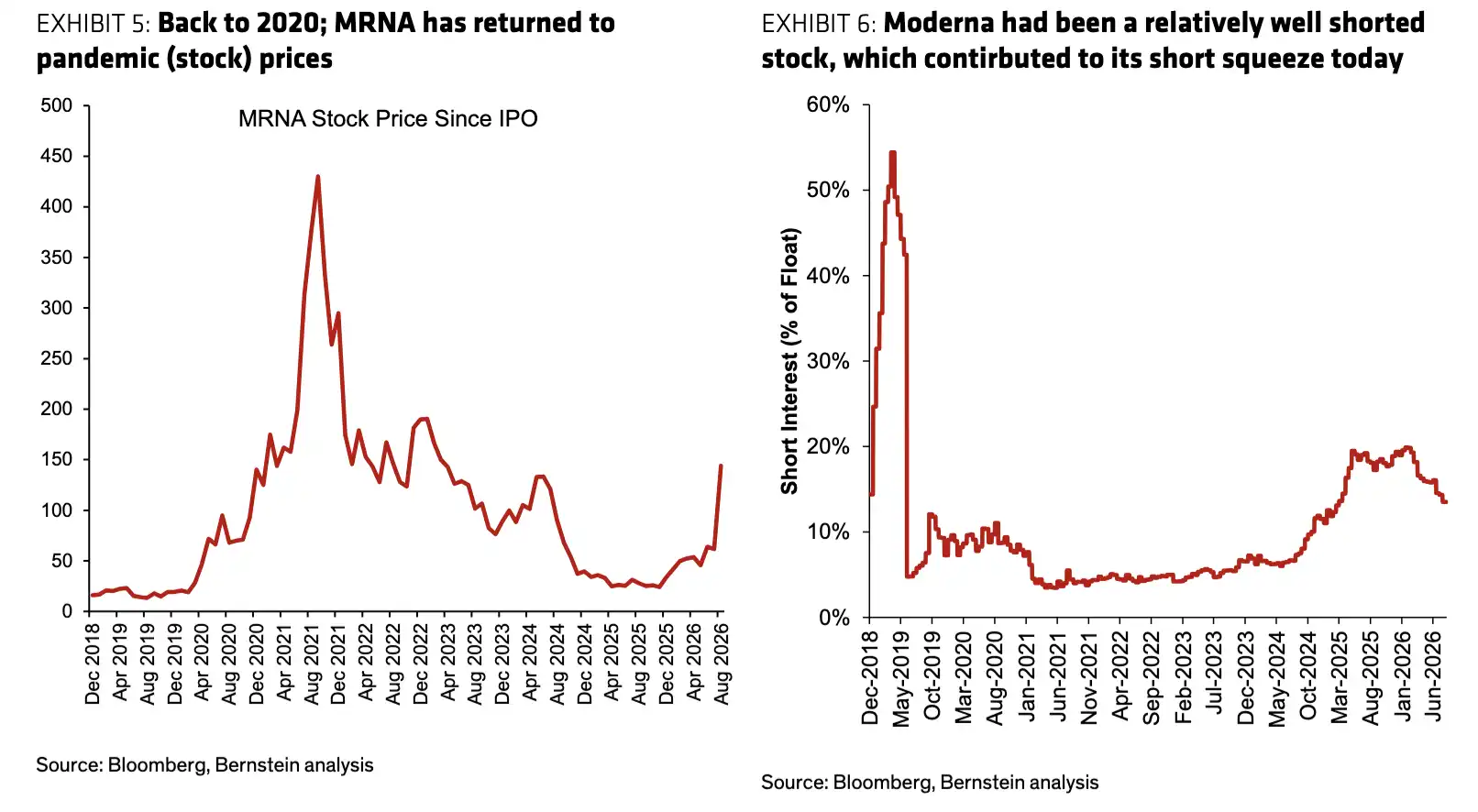
The chart shows the stock price movement of MRNA (left) and the short-selling ratio (right). After a surge on August 19, 2026, MRNA's stock price has returned to pre-pandemic levels. Previously, approximately 14-15% of the outstanding shares were shorted, creating conditions for a short squeeze. Clinical data triggered the rise, but short covering amplified the gains.
The news tag "successful cancer vaccine" further amplified the dissemination effect. Compared to "personalized neoantigen therapy reaches the endpoint of Phase III trials," this statement is more likely to lead the market to associate it with a large platform covering multiple cancer types.
Therefore, clinical data triggered the price increase, while platform narratives, short covering, and news amplified the gains. The extent of the stock price increase does not necessarily indicate that the market has confirmed INT's ability to generate equivalent revenue and profit.
Melanoma is just the beginning; platform replication still needs to be verified.
Moderna and Merck currently have four Phase III studies and five Phase II studies in the INT group, covering melanoma, non-small cell lung cancer, renal cell carcinoma and bladder cancer, and are beginning to enter unresectable or metastatic tumors.
Bernstein estimates that INTepath-001 could potentially reach 13,000 to 19,000 patients in the United States, representing about 30% of the patient pool for Phase III and potentially registrational Phase II projects, and about 17% of all Phase II and Phase III projects.
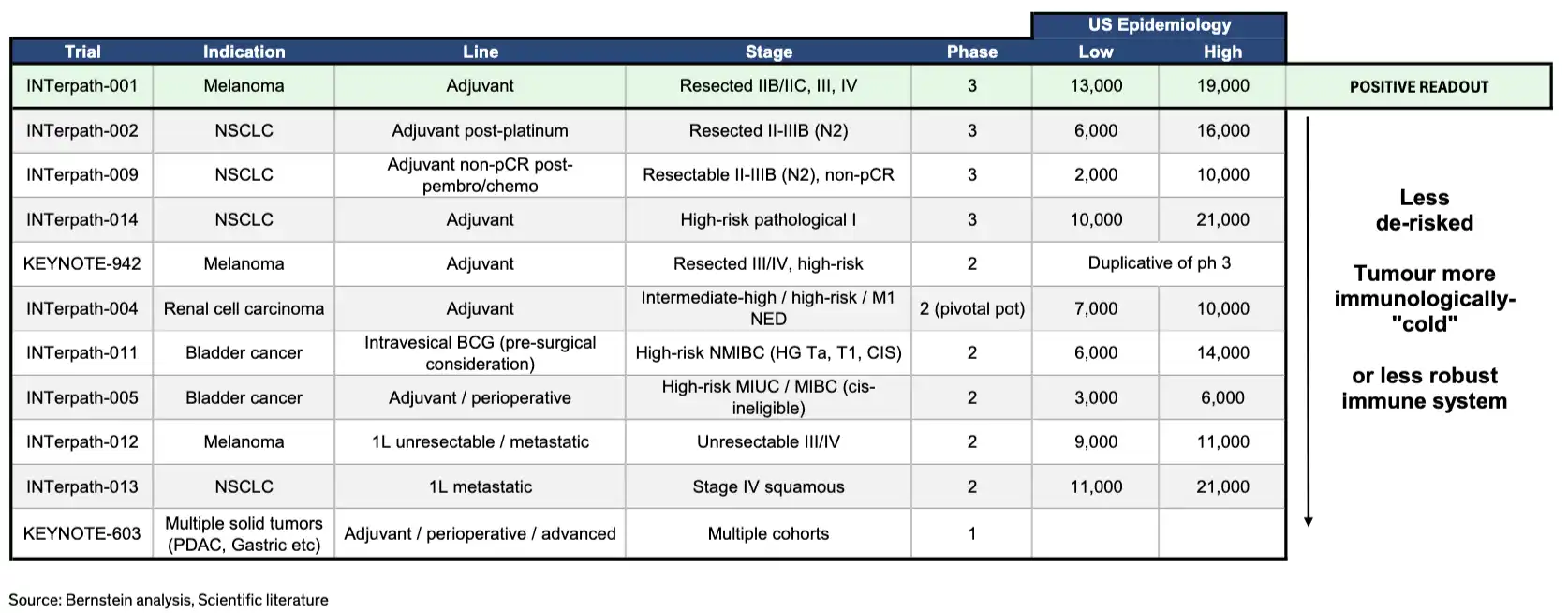
The number of patients in the United States who can access INTerpath-001 is approximately 13,000 to 19,000, representing only about 30% of the total number of patients accessible to current pivotal programs and about 17% of all Phase II and Phase III INT studies. Success in melanoma does not mean that the same results can be automatically replicated in other cancers such as lung cancer and kidney cancer.
If the success of INT (intrinsic endothelial cells) can be replicated in treatments for lung, kidney, and bladder cancer, the market potential will expand significantly. Bernstein currently projects approximately $2.4 billion in unadjusted sales for early-stage melanoma and lung cancer.
The report also uses Keytruda as an upside benchmark: its early-stage cancer indication revenue is projected to be approximately $7.9 billion in 2025 and approximately $9.2 billion in 2028, while INT's future pricing may be higher than Keytruda's.
However, the $2.4 billion figure is an unadjusted sales forecast, not profit, and certainly not realized performance. INT also does not yet cover Keytruda for several important indications, including triple-negative breast cancer, cervical cancer, and head and neck cancer.
More importantly, melanoma is usually highly immunogenic, and its success cannot be directly extrapolated to tumors with different immune environments, such as lung cancer, kidney cancer, and bladder cancer.
INTerpath-001 demonstrated the platform's potential for replication, but not that replication would necessarily occur. The market has begun trading on the eventual success of other cancer types, but relevant clinical data is still pending.
Bernstein therefore maintained Moderna's "market perform" rating and $45 price target, well below the closing price of $174.38 on August 19.
The "cancer vaccine" label blurs the lines of commercial reality.
INT is not a preventative vaccine for healthy individuals, but rather a personalized treatment for cancer patients. Currently, it is used as adjuvant therapy after tumor resection, with the goal of reducing the risk of recurrence and distant metastasis caused by residual lesions.
Each patient underwent individual tumor tissue and blood sample collection, followed by gene sequencing and algorithmic analysis. The system screened up to 34 specific neoantigens from the patient's tumor mutations, and then produced corresponding mRNA constructs to induce a T-cell response against the tumor.
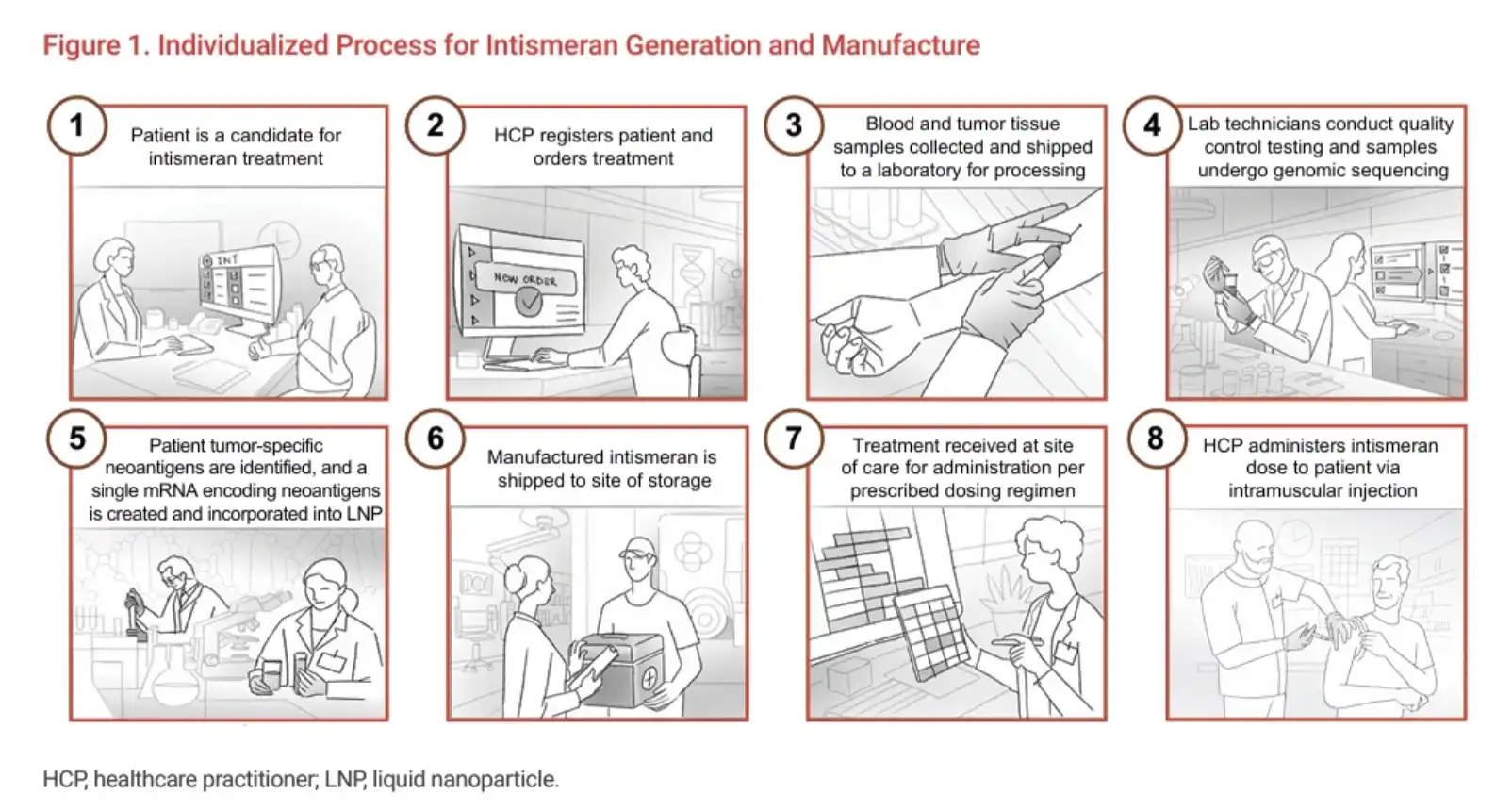
Therefore, although INT uses Moderna's mRNA platform, its business model is closer to personalized oncology drugs:
The target patients are in the tens of thousands, rather than the tens of millions or hundreds of millions of people treated with traditional vaccines;
Each patient requires individual sequencing, design, and production;
Production costs are difficult to amortize as quickly as they are with mass-produced vaccines.
Regulation, pricing, and reimbursement will also follow the oncology drug pathway.
"Cancer vaccine" is an easily disseminated label, which may amplify the market's imagination of the scale of patients and downplay practical limitations such as individualized production costs and commercialization efficiency. INT's success also has a relatively limited incremental impact on traditional vaccine raw material suppliers.
How much profit can be retained after a billion dollars in revenue?
Bernstein was more concerned about INT's profit margin than its sales potential.
Merck will be responsible for global commercialization, Moderna will participate in joint promotion in the United States, and Merck will be solely responsible for marketing and sales in markets outside the United States. The two parties will share costs and profits according to the agreement.
Bernstein used melanoma as a single indication as an example, assuming that INT peak sales reach $1.2 billion and the gross margin gradually increases from 35% at the initial stage of market launch to 60%. After deducting approximately $250 million in sales and administrative expenses and profit sharing, the contribution to Moderna's earnings per share in the mature stage would be approximately $0.6.
This is Bernstein's scenario analysis, not company guidance. It illustrates that even if INT becomes a billion-dollar product, individualized production costs and profit sharing will still limit profit realization.
Current market pricing already implies several favorable conditions: successive successes with other cancer types, smooth expansion of customized production, implementation of pricing and reimbursement mechanisms, and continued improvement in gross margins. These conditions have not yet been fully validated.
For Merck, the strategic value of INT lies primarily in expanding the use of Keytruda. Most trials use a design of "INT in combination with Keytruda" versus "Keytruda monotherapy," so INT is primarily an add-on therapy, not a replacement for Keytruda.
If combination therapies become the new standard of care, Bristol-Myers Squibb's Opdivo, Roche's Tecentriq, and AstraZeneca's Imfinzi may face market share pressure in parts of the melanoma and non-small cell lung cancer markets. However, lower initial gross margins and profit sharing could also drag down INT's contribution to Merck's operating profit margin.
Therefore, Merck's approximately $50 billion increase in market capitalization cannot be explained solely by the profits from its current melanoma project.
The rise in the pharmaceutical sector was also influenced by the rotation of AI trading.
Bernstein believes that this rally is not entirely a story about Moderna alone.
The report observes that the pharmaceutical and semiconductor sectors have recently exhibited certain contrarian trading characteristics. Against the backdrop of increasingly concentrated holdings in AI and semiconductors, pharmaceuticals are beginning to be seen by some investors as a relatively clean defensive option: demand is less affected by economic cycles, and it may benefit in the long term from the application of AI in drug development and clinical trials.
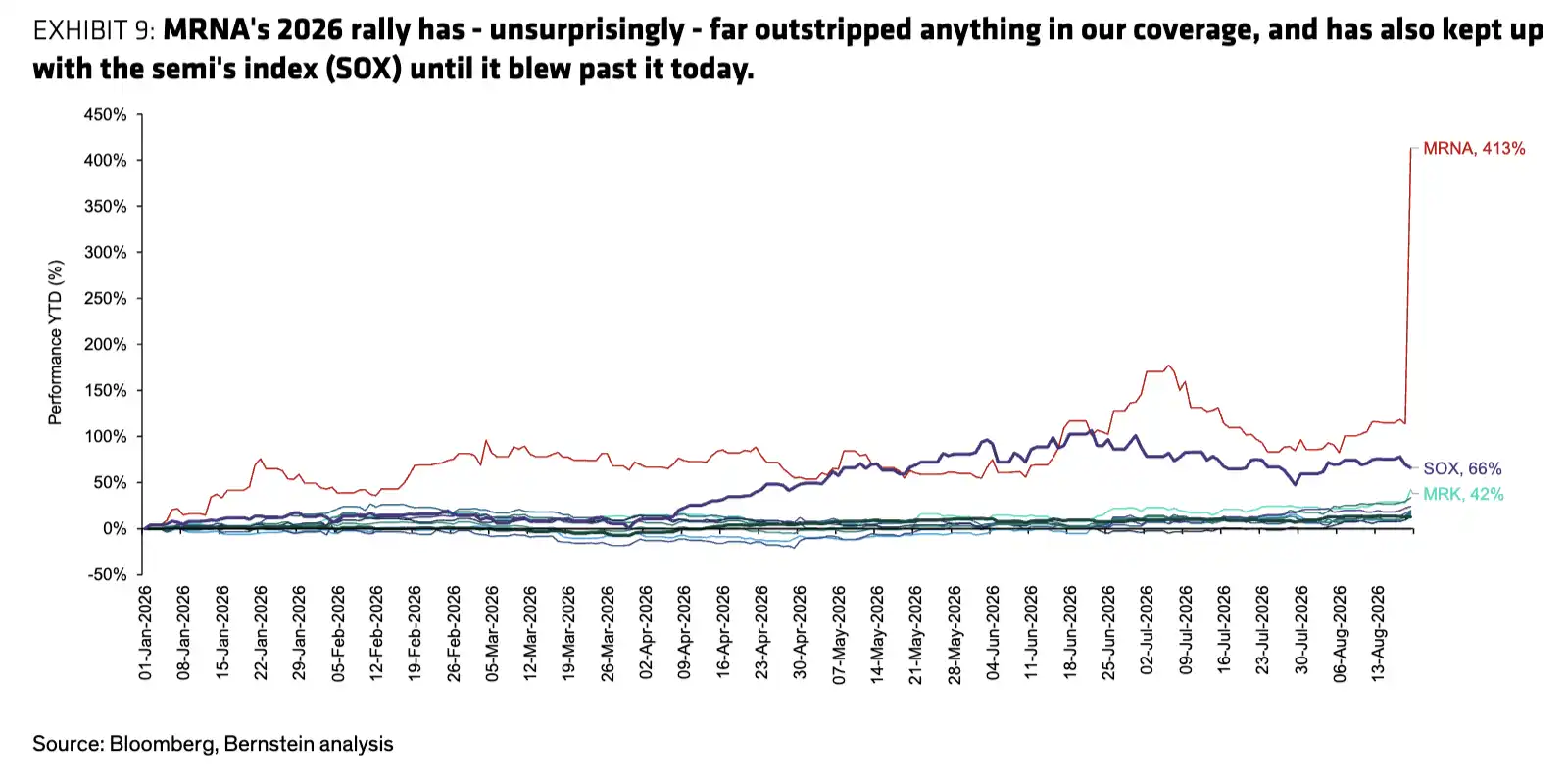
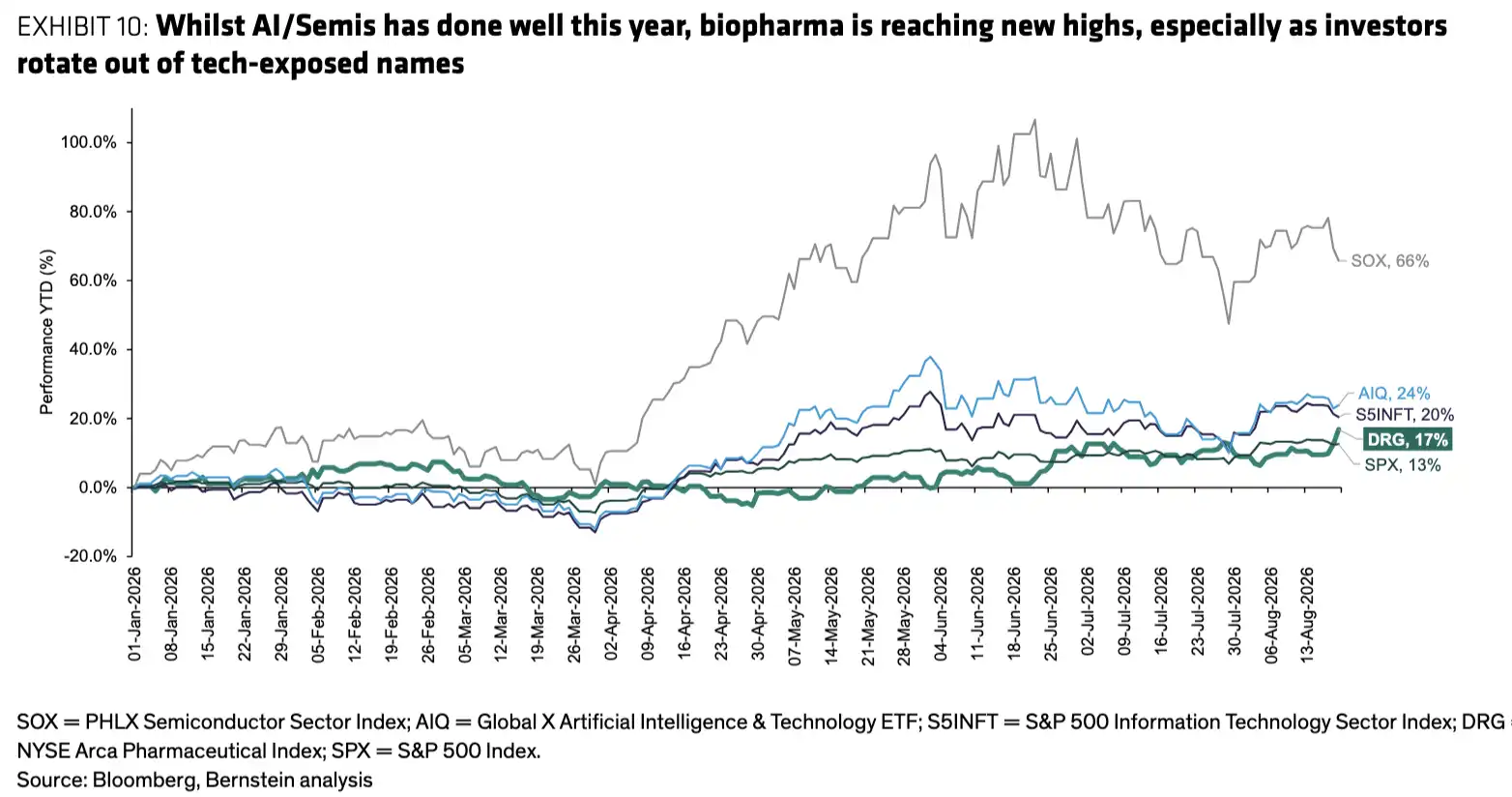
In 2026, the pharmaceutical sector (DRG) and the semiconductor index (SOX) exhibited a clear inverse trading pattern. When AI-related themes fluctuated and funds flowed out of the technology sector, the pharmaceutical sector, as a defensive asset, attracted inflows. Moderna's rise was not merely an individual stock story, but also a result of sector rotation.
This is merely Bernstein's explanation of capital behavior and does not imply a stable negative correlation between pharmaceuticals and semiconductors. However, when tech stocks fluctuate upwards, capital rotation may provide additional buying opportunities for the pharmaceutical sector and amplify the market impact of INT clinical results.
Therefore, Moderna's rise comprises three layers of trading: the bottom layer is the successful completion of Phase III melanoma treatment; the middle layer is the revaluation of the mRNA platform; and the outer layer is short covering and sector rotation. The further out you go, the further the price action deviates from quantifiable fundamentals.
Three more validations are needed to go from clinical breakthrough to performance inflection point.
INTerpath-001 has demonstrated the success of mRNA-based personalized neoantigen therapy in large phase III trials. However, at least three more validations are needed to define it as a turning point for Moderna's performance:
First, complete Phase III data. Specific hazard ratios, safety profiles, patient subgroups, and overall survival trends will determine the true advantage of INT relative to Keytruda monotherapy.
Second, cross-cancer replication. Subsequent outcomes in lung cancer, kidney cancer, and bladder cancer will determine whether melanoma is merely a preferred indication or the starting point for a broader cancer platform.
Third, commercialization efficiency. Customized production cycles, capacity, pricing, reimbursement, and gross profit margins determine whether sales revenue can be converted into profits sufficient to support the valuation.
Bernstein does not deny the clinical value of INTepath-001. Its real warning is that the market has rapidly jumped from a successful melanoma trial to a multi-cancer platform and end-game pricing focused on long-term profit realization.
Clinical breakthroughs have occurred, but a turnaround in performance has not yet been confirmed. Current stock price trading reflects more the imagined success of the platform and short-term demand amplified by high short-selling positions.
This content is for informational and educational purposes only and does not constitute investment advice related to BTCC. BTCC makes every effort but cannot guarantee the truthfulness, accuracy, or originality of the content above.