Samsung shares plunge 7% as shareholder return plan is disappointing, and Japanese and South Korean stock markets both decline
 wallstreetcn
Samsung Electronics' shareholder return plan, which prioritizes dividends over share buybacks, disappointed the market, causing its stock price to plummet by over 6.5% in a single day. The South Korean Kospi index fell 1.4%, and the entire Asia-Pacific technology sector was under pressure. JPMorgan Chase bluntly stated that the plan was "no surprises," with many details postponed until January next year. Uncertainty, coupled with multiple negative factors such as Nvidia's price increases and the potential breakdown of US-Canada trade relations, has led to continued weakness in Asia-Pacific market sentiment.
Samsung Electronics' shareholder return plan, which focuses on dividends and lacks share buyback arrangements, has disappointed the market, dragging down the South Korean and Japanese stock markets and putting pressure on the Asia-Pacific technology sector.
Samsung Electronics shares plunged as much as 7.1% on Monday after the company announced a shareholder return plan that focused on cash dividends rather than share buybacks, failing to meet investor expectations. As of the latest quote, Samsung Electronics' decline has narrowed to 6.57%, while the South Korean KOSPI index has widened its losses to 1.4%, and the Nikkei 225 index has also fallen 0.4%.
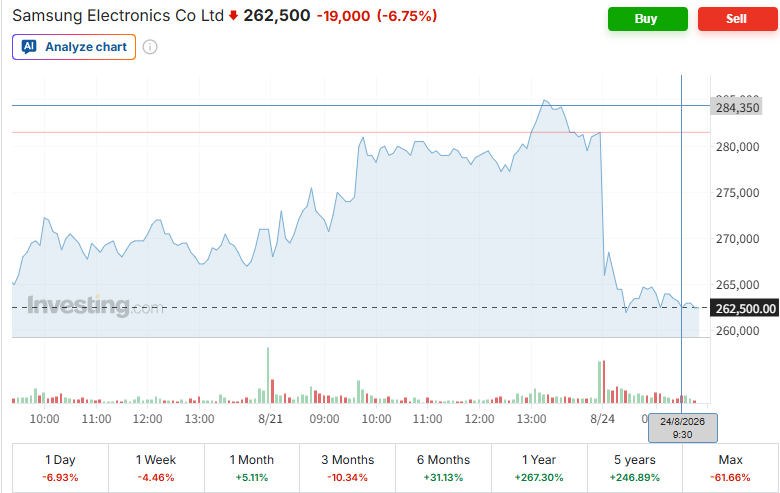
Samsung Electronics announced on Friday that it plans to return up to 110 trillion won (approximately $80 billion) to investors this year, with 30 trillion won to be distributed as cash dividends in the third quarter. The remaining arrangements will be finalized at the board meeting in January. JPMorgan analyst Jay Kwon stated in a research report that the plan "failed to deliver a positive surprise," disappointing the market.
Samsung's sharp decline in share price further dragged down the overall performance of the Asia-Pacific technology sector. The MSCI Asia Pacific Equity Index fell 0.2%, with technology stocks leading the decline. Kospi, a key indicator for artificial intelligence investment, saw a particularly significant drop.
Prioritizing dividends while neglecting share buybacks raises questions about the core of the plan.
In his report, Jay Kwon listed three specific disappointments for the market: the promised returns for the third quarter, the lack of any share buyback program announced, and the shareholder return ratio remaining unchanged at 50% of cumulative free cash flow.
Kwon stated, "It remains unclear why Samsung management chose to distribute dividends instead of buybacks, as we believe many investors prefer buybacks, considering them a more effective way to generate returns." The conservative nature of this plan caught investors off guard, given the market's widespread expectation that Samsung would introduce more aggressive capital return initiatives.
Furthermore, the fact that many details of the plan were delayed until January next year to be finalized has increased market uncertainty and weakened investors' confidence in the company's capital allocation intentions.
Multiple pressures weighed on Asia-Pacific markets, putting pressure on technology stocks.
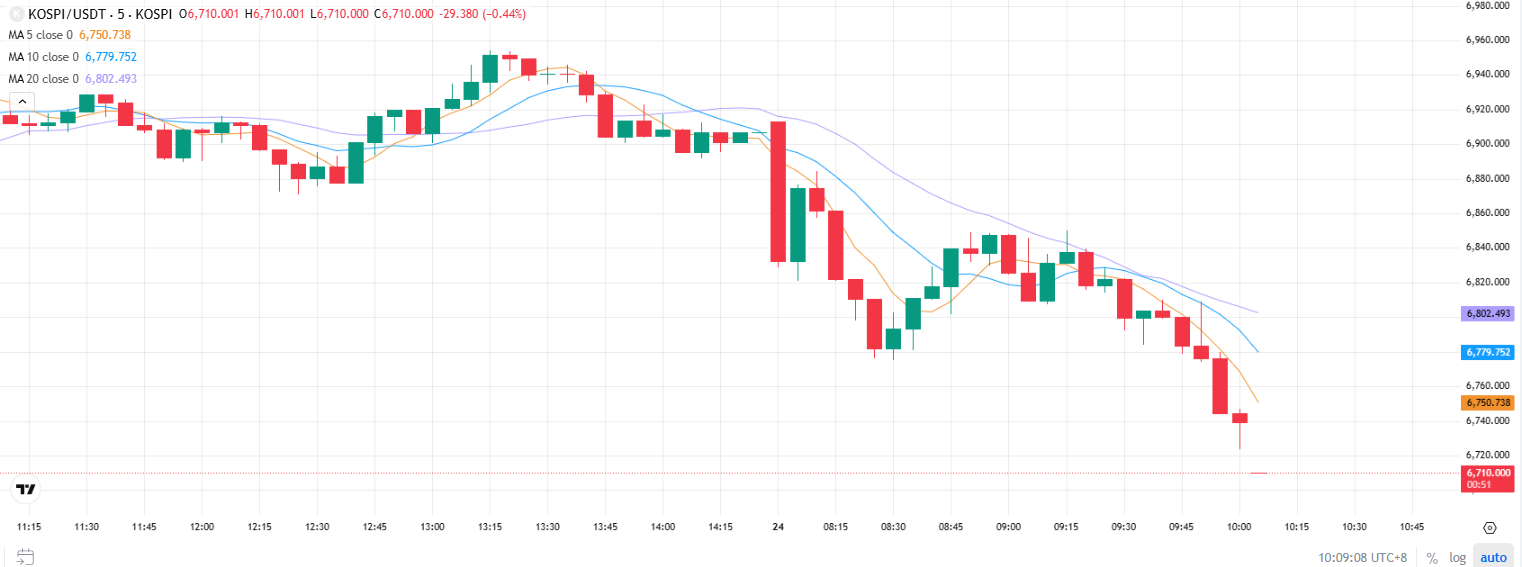
Samsung dragged down the Asia-Pacific market, with South Korea's KOSPI index falling as much as 1.4%. This week, market focus is heavily on the artificial intelligence sector. Nvidia's earnings report and Federal Reserve Chairman Warsh's speech at the Jackson Hole Economic Symposium in Wyoming will be key signals for investors to determine whether the AI rally can continue.
Meanwhile, Nvidia has notified customers of a price increase affecting its flagship Vera Rubin and Grace Blackwell chip systems. The price hike will take effect early next year with shipments, and the specific increase will depend on the chip generation and memory configuration. This news further exacerbates market concerns about rising AI hardware costs and pressure on corporate returns on investment.
Alibaba announced the issuance of 710 million new shares at HK$112.7 per share, raising approximately HK$80 billion (approximately US$10.2 billion), a discount of about 3.6%, to compete for global AI leadership. This development continues to attract market attention.
Oil prices fell while gold prices continued to rise.
On a broader macroeconomic level, Brent crude fell 1.5% to $93 a barrel on Monday, ahead of a press conference by U.S. Treasury Secretary Bessenter to detail plans for the economic isolation of Iran. U.S. Treasury yields edged lower, with the 10-year yield falling 2 basis points to 4.71%. 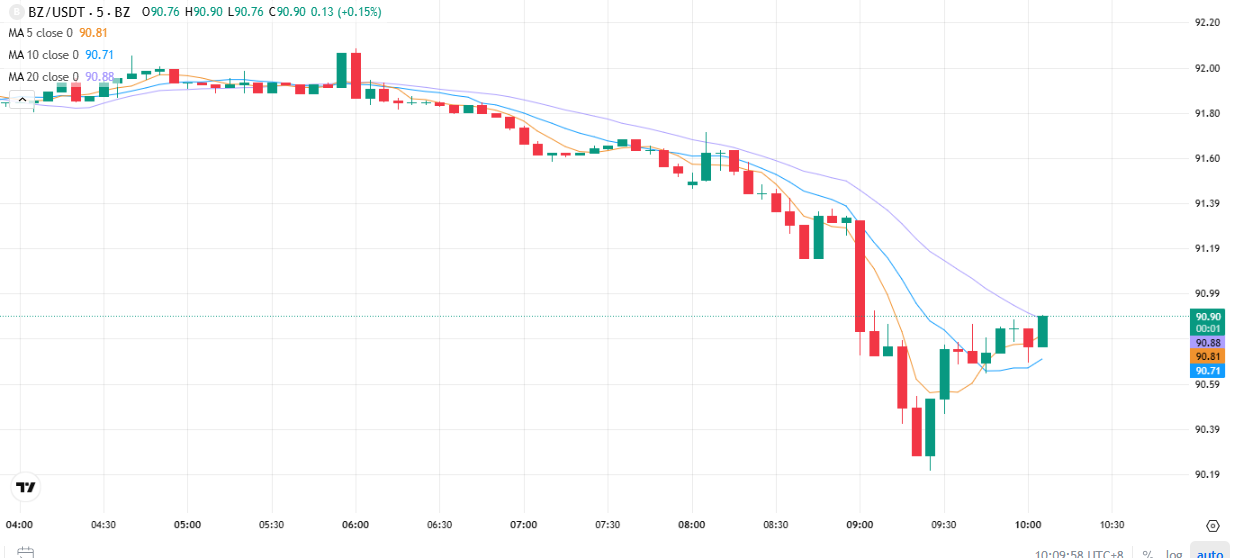
The Canadian dollar weakened due to the sudden breakdown of trade negotiations between the US and Canada. Last Friday, the US imposed a 50% tariff on approximately $20 billion worth of Canadian goods, and Canadian Prime Minister Mark Carney announced that retaliatory tariffs would be implemented on $20 billion worth of US goods on September 8.
Gold maintained its gains from last week, with spot gold prices around $4,605 per ounce.
This content is for informational and educational purposes only and does not constitute investment advice related to BTCC. BTCC makes every effort but cannot guarantee the truthfulness, accuracy, or originality of the content above.