BTCC Weekly Highlights (Aug. 25–31): Warsh’s Hawkish Turn Reprices the Rate-Hike Path as BTC Loses $80K

The final week of August delivered a textbook shift from expanding risk appetite to a sharp reversal in policy expectations. Early in the week, the “currency debasement trade” fueled by the U.S. Treasury’s expanded long-term debt buybacks continued to gain momentum. Bitcoin broke above $80,000, while major altcoins including SOL, XRP and ETH advanced in tandem. Nvidia’s stronger-than-expected earnings also reignited the AI trade, supporting U.S. equities and Asian semiconductor stocks.
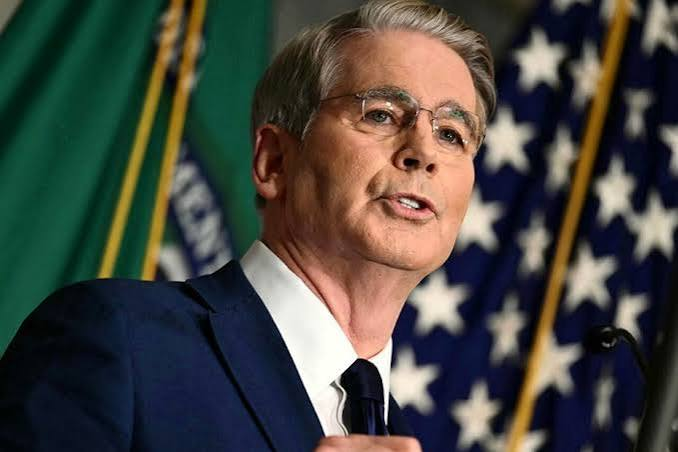
By Friday, however, Federal Reserve Chair Kevin Warsh delivered his clearest hawkish signal since taking office at the Jackson Hole symposium. Market-implied odds of a September rate hike surged from roughly 35% to nearly 60%, pushing the dollar and short-term Treasury yields higher while Bitcoin, gold and technology stocks retreated together.
Looking ahead to the first week of September, the August U.S. nonfarm payrolls report will provide the first major data test following Warsh’s hawkish speech. A Reuters survey currently puts expected payroll growth at roughly 45,000 jobs. Continued weakness in employment could push rate-hike expectations lower again, while resilient labor and inflation data could allow the September hike trade to remain the dominant driver of the dollar, Treasuries and global risk assets.
Key Highlights
1. Warsh Turns Hawkish at Jackson Hole, September Rate-Hike Odds Near 60%
On Aug. 28, Federal Reserve Chair Kevin Warsh delivered his first keynote address at the Jackson Hole central banking symposium since assuming the role. He said the Fed needed to be confident that underlying inflation was returning to the 2% target “clearly and at a sufficiently rapid pace,” or policymakers would still “have work to do.”
Warsh also said there was little evidence that current financial conditions reflected a meaningfully restrictive monetary policy stance and made clear that price stability should remain the Federal Reserve’s primary focus at this stage.
Markets quickly interpreted the speech as a hawkish pivot. CME data showed the probability of a September rate hike rising from 35.4% the previous day to around 55.7%. The two-year Treasury yield climbed nearly 13 basis points to 4.36%, the U.S. Dollar Index gained 0.61%, the Nasdaq fell 0.52%, and Bitcoin dropped more than 3% at one point.
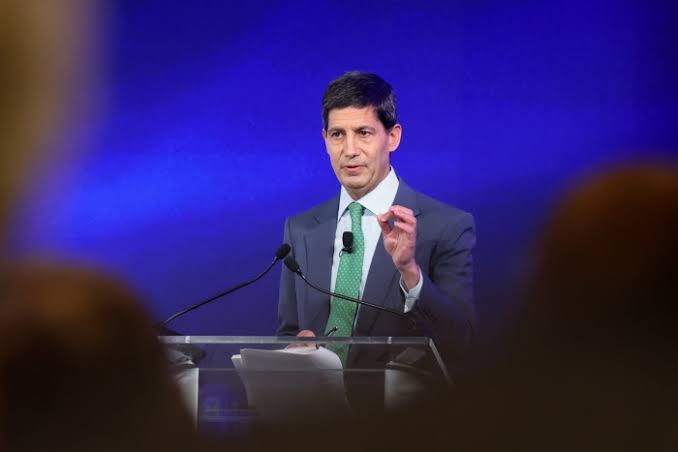
Commentary: Warsh’s Jackson Hole remarks amounted to a renewed effort to reinforce the Federal Reserve’s inflation-fighting credibility. His comments suggested that current conditions could justify at least one additional rate increase, while also explicitly reaffirming interest rates as the Fed’s primary tool for tackling inflation.
Warsh did not commit to a September move. Still, his message was clear that the data available so far are not sufficient to remove another hike from consideration, increasing the market sensitivity of upcoming employment and inflation reports.
Recommended Reading:
Warsh’s Latest Speech: In Our Time
With Inflation Data Out, Can Warsh Still Stay on Hold?
Fed Chair Warsh Makes His Jackson Hole Debut: A Three-Way Test of Inflation, Long-Term Debt and Independence
2. Bitcoin Breaks $80K, Then Fails to Hold It
Bitcoin briefly moved above $80,000 last week, reaching approximately $81,265 on Aug. 25 before repeatedly failing to establish a firm foothold above the psychological threshold. On Aug. 28, BTC touched $81,455 intraday, its highest level since May, before quickly reversing following Warsh’s speech and briefly falling below $78,000.
U.S. spot Bitcoin ETFs recorded eight consecutive trading days of net inflows, absorbing roughly $2.8 billion over the period, while total August net inflows surpassed $3 billion. Technical pressure, however, also became increasingly visible. The $80,000–$82,000 range has developed into a dense supply zone, while the May high near $82,800 remains unbroken.
Related Pair: BTCUSDT
Commentary: QCP Capital said part of the latest rally was still driven by short covering rather than entirely by fresh leveraged longs, with the more durable source of demand coming from spot ETF buying. LMAX Group, meanwhile, sees approximately $82,820 as an important confirmation level for opening the next leg higher. That level could help determine whether the move develops beyond a short squeeze and liquidity-driven rally into a broader trend.
Recommended Reading:
Bitcoin Spot ETFs Post Eight Straight Days of Inflows — So Why Can’t BTC Hold $80K?
Bitcoin ETF Inflows Surge as BTC Faces a September Test
U.S. Treasury Buybacks, Not Just Crypto News, Are Driving Bitcoin’s August Rally
3. Nvidia Beats Expectations Again
Nvidia reported its latest results on Aug. 26, with second-quarter revenue reaching $96.22 billion, more than doubling from a year earlier and beating the consensus estimate of $92.17 billion. Data center revenue came in at $89 billion, also above expectations, while adjusted earnings per share reached $2.22 versus the $2.10 market forecast.
Nvidia projected third-quarter revenue of $108 billion, plus or minus 2%, and forecast roughly 70% revenue growth for the fiscal year ending January 2028, well above analysts’ previous estimate of around 44%. Nvidia shares surged following the release, lifting chipmakers and the broader AI sector.
Related Pairs: NVDAUSDT, AMDUSDT, MUUSDT
Commentary: Reuters argued that the most important message from the report was its temporary answer to one of Wall Street’s biggest questions in recent months: whether AI capital spending is approaching a peak or remains in an expansion phase.
By offering a long-term growth forecast of 70%, Nvidia was effectively signaling that demand for AI computing power has not yet peaked despite the extraordinary capital spending commitments made by the world’s largest technology companies.
Risks remain. Nvidia said memory and other component shortages will continue to constrain supply, while gross margin could fall to around 71%–72%. Revenue from China’s data center market also remains excluded from the company’s current guidance.
Recommended Reading:
Nvidia Beats Earnings Expectations — Can It Keep the AI Bull Market Alive?
“Compute Is Revenue”: Breaking Down the Surge and Risks in Nvidia’s Latest Earnings
Wall Street’s Imagination Can’t Keep Up With Nvidia’s Speed
Nvidia Earnings Analysis: Why Rubin, Margins and AI Demand Matter for NVDA
4. Is Altseason Arriving? SOL, DOGE and ENA Surge
As Bitcoin approached $80,000, capital began rotating more visibly into major altcoins. In the week through Aug. 28, SOL gained about 20%, ETH and XRP each rose around 11%, DOGE climbed roughly 16%, and HYPE advanced about 12%. ENA was the standout performer, gaining approximately 45% over the week.
SOL also reclaimed the $100 level as traders priced in expectations around Solana governance reforms that could reduce new token issuance and increase the scale of token burns.
At the strongest stage of the rally, several altcoins dramatically outperformed Bitcoin. SOL’s seven-day gain at one point approached 35%, ETH rose around 32%, and XRP briefly gained more than 50%, displaying the typical catch-up behavior of high-beta assets.
Related Pairs: ETHUSDT, SOLUSDT, XRPUSDT, DOGEUSDT, ENAUSDT, HYPEUSDT

Commentary: Current data support the conclusion that an altcoin rotation is already underway, but they remain insufficient to confirm a full-scale Altseason. CoinDesk market data show a clear broadening of capital flows, yet Bitcoin itself remains strong, while the bulk of new institutional capital continues to enter the market through spot BTC and ETH ETFs.
Another notable feature of this rally is that altcoins are not rising indiscriminately. ENA’s gains have coincided with protocol revenue buybacks and adjustments to VC unlocks, while SOL has been supported by governance and supply-side catalysts. This suggests the market is increasingly rewarding projects with distinct fundamental narratives.
Recommended Reading:
SOL Jumps Nearly 47% in a Month: What’s Driving the Powerful Rebound?
Trading Volume Jumps 10x in a Month — Who Is Driving UNI’s Rally?
ENA Surges More Than 130% in 10 Days: VC Unlocks Halted as 95% of Protocol Revenue Goes to Buybacks
LIT Keeps Hitting Record Highs — What Did Lighter Get Right?
5. Bessent Keeps Supporting Treasuries as Wall Street Debates “Market Stability” vs. “Financial Repression”
U.S. Treasury Secretary Scott Bessent continued this week to defend the Treasury Department’s expanded long-term debt buyback program. The department previously decided to at least double the size of individual buybacks for 10- to 30-year Treasuries to $4 billion, with implementation scheduled to begin on Sept. 10.
Bessent also stressed that the Treasury would not reduce normal long-term debt issuance as a result and that existing auction plans would continue.
In an Aug. 30 interview with Reuters, Bessent again rejected the idea that the Treasury market was in crisis, arguing that U.S. government bonds had continued to perform strongly relative to global peers this year. The 10-year Treasury yield remains around 4.7%, while the 30-year yield is still above 5%.
Commentary: Bessent’s attempt to place a floor under the Treasury market is entering a second phase. The first phase was about addressing liquidity stress and short-term panic. The next test is whether buybacks can sustainably contain the U.S. government’s funding costs while the fiscal deficit remains elevated.
Bessent maintains that Treasury buybacks are a market-stabilization tool designed to address thin August liquidity, rather than a form of yield control. That view has not been universally accepted. Citadel Securities has characterized efforts to suppress long-term borrowing costs as carrying features of “financial repression,” arguing that such measures may temporarily lower market rates but cannot resolve structural issues such as the roughly $40 trillion national debt and persistent fiscal deficits.
Recommended Reading:
Bessent Moves to Support Treasuries, but His Former Mentor Calls It a “Mistake”
Bessent, U.S. Treasuries and Bitcoin
Is the Global Debt Cycle Entering an Era of “Erasing Debt Out of Thin Air”?
Wall Street Wonders: What Is Bessent’s Next Move to “Save” Treasuries?
Other Hot Topics
Hyperliquid Launches AQAv2 Buyback Plan as HYPE Nears an All-Time High
Aave V4 Deposits Jump 30% in One Week to a Record $806 Million
Reuters Investigation: Zuckerberg’s “AI Everywhere” Push Hits Trouble as Code Crisis Forces Layoff Plan to Be Halted
OpenAI and Anthropic Sign Joint Letter Warning Large-Scale AI Cyberattacks Are Imminent
Report: Trump’s Crypto Ventures Cost Investors $4.7 Billion
Iran Prepares Conditions for Fully Reopening the Strait of Hormuz, With Ending the Middle East War as Its Top Demand
Russia’s Crypto Trading Volume Could Reach $46 Billion in Its First Year
U.S. Officials Signal Ahead of G20: Bessent May Warn Countries to Support Iran Sanctions or Risk Losing Access to Dollar Settlement
Institutional Research, Top Voices and Trading Strategy: This Week’s Recommended Reads
DeFi Wasn’t Built for You — It Was Built for AI
Grayscale: Bitcoin-Gold Correlation Tops 50% as Debt Concerns Return
CZ Answers 15 Questions in Hong Kong: Binance, the Web3 Cycle and Advice for Young Entrepreneurs
Strive Executive: Rethinking Bitcoin’s Price Flywheel
OpenAI Releases First Full Report on AI-Agent Attacks Against Hugging Face
Tom Lee Interview: Four Catalysts Driving ETH Higher This Year
UBS: MLCC Distributor Inventories Fall to a New Low as Unit Prices Rise Again
Bill Gates Warns in Long Essay: The Era of AI Disruption Has Arrived — This Time Really Is Different
IOSG: Treasuries, AI and Inflation Can’t All Win — Which Side Is BTC Betting On?
Latest Promotion
BTCC continues its “First Copy Trade, Loss Compensation” campaign, offering additional protection for users making their first copy trade.

This content is for informational and educational purposes only and does not constitute investment advice related to BTCC. BTCC makes every effort but cannot guarantee the truthfulness, accuracy, or originality of the content above.