LIT Surges to New Highs: Lighter and Robinhood Share the Same Roots
 BlockbeatsAuthor: Jaleel
From its all-time low of $0.7794 in late March this year to today, five months later, LIT has surged nearly 5x, touching a high of $3.79. It's up 75% over the past 30 days and 24% over the past 7 days.
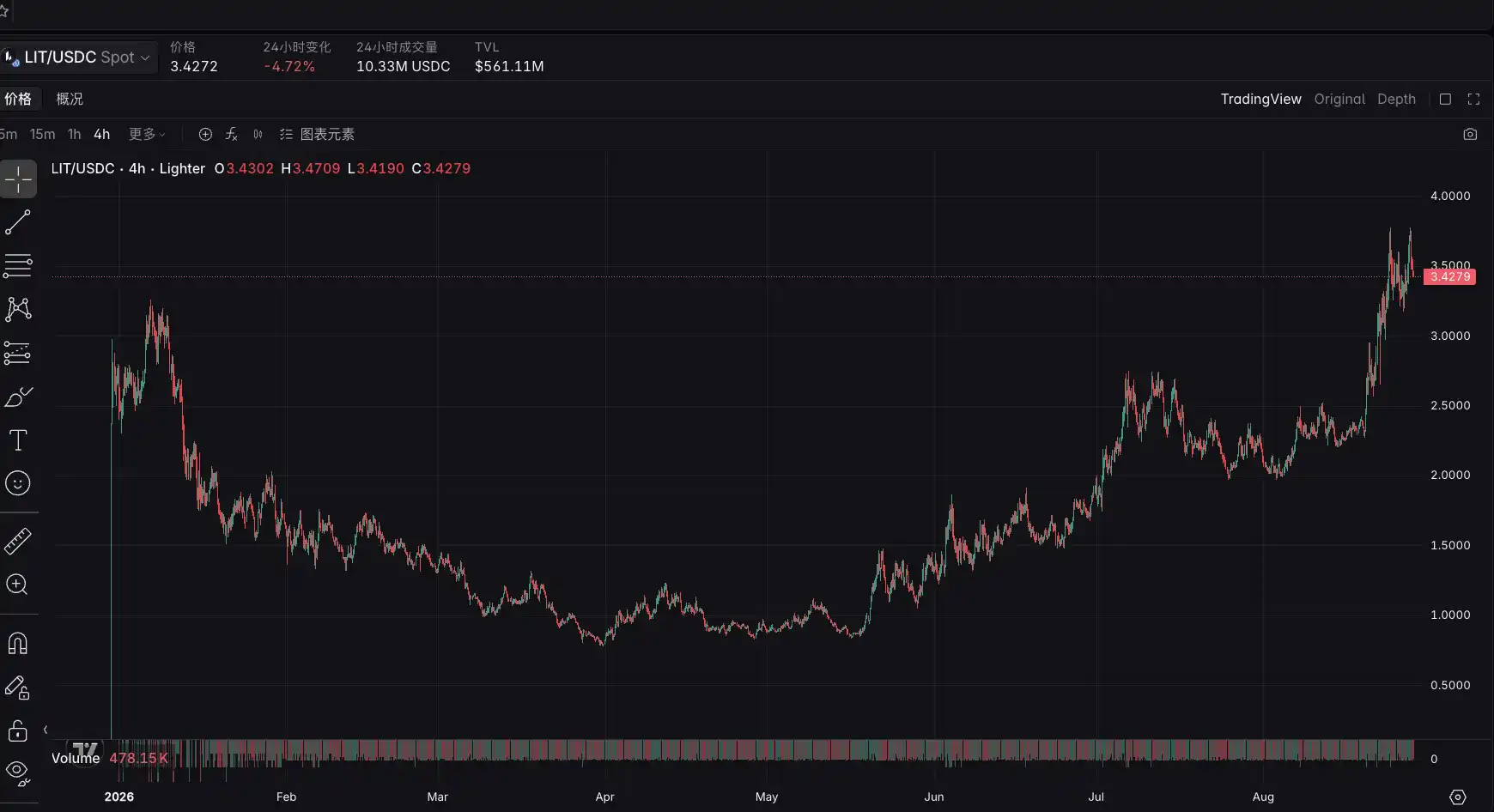
LIT is arguably one of the strongest performers in the crypto market this year, currently ranked 76th by global market cap at $865 million. With Bitcoin and HAPE also rising at the start of this mini bull run, it's natural for altcoins to follow suit—after all, a rising tide lifts all boats. But LIT's rally isn't just about the broader market.
Perp DEXs have been a core sector over the past two years, with Hyperliquid as the benchmark. It has been remarkably smooth sailing in the US recently—regulation, compliance, and institutional onboarding have faced few obstacles, setting an expectation for the entire sector: this business can work in America. Lighter is in the same lane, naturally making it a core project of these two years.
But when it comes to "American legitimacy," Lighter is even further ahead than Hyperliquid. It's a US-native project, registered in Delaware, with its token issued directly by a US C-corp rather than routing through a Cayman or Swiss foundation like most projects. Lighter's founder Vladimir immigrated from Russia to the US as a child. Under the Trump administration's "America First" tone, that identity is a passport money can't buy.
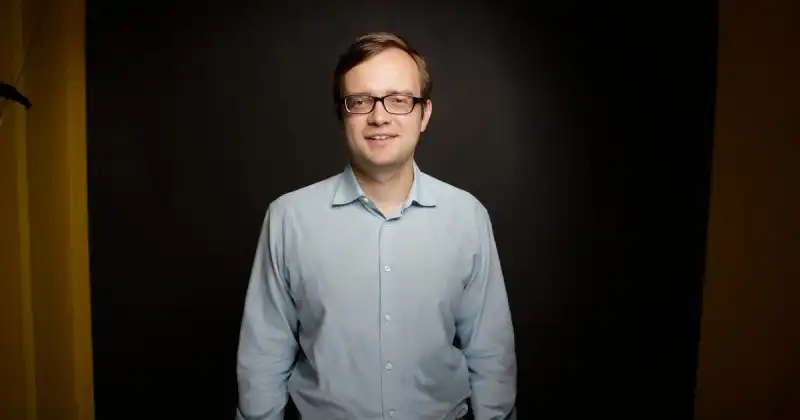
Lighter founder Vladimir
So when the CFTC's newly established Innovation Advisory Committee held its first meeting on Aug. 20 to discuss "what a decentralized exchange needs to look like to operate legally within the US," Lighter's founder and CEO Vladimir was at the table offering input.
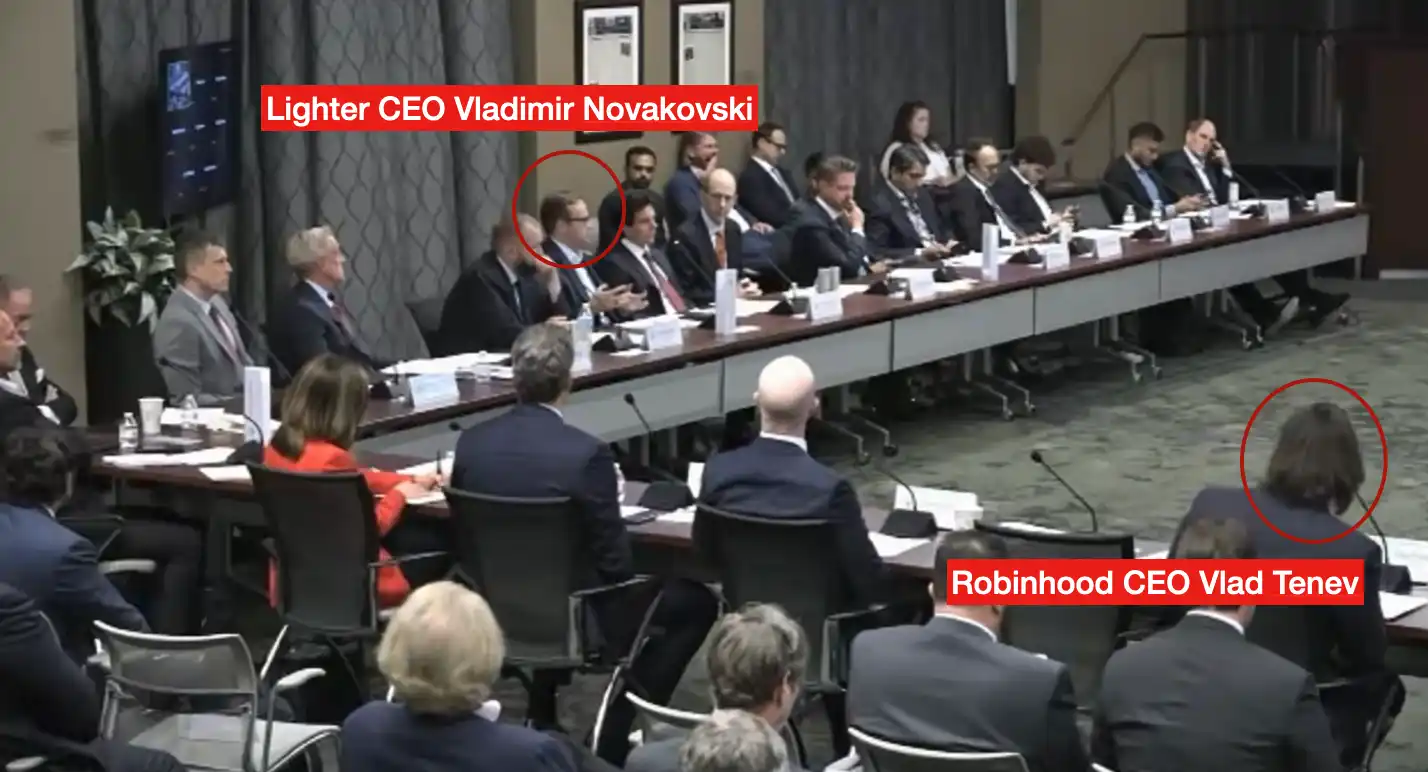
CFTC Innovation Advisory Committee first meeting on Aug. 20
Lighter's business itself is also in expansion mode. In April this year, Telegram Wallet launched perpetual contracts exclusively powered by Lighter, covering 150 million registered users. On July 1, Robinhood's own chain went live, with Lighter providing the perpetual contract engine and a 50/50 revenue split. Lighter has zero fees for retail traders to date—maker and taker fees are 0 across 241 markets. On Aug. 24, Upbit, South Korea's largest exchange, listed a KRW trading pair for LIT, and it jumped another 22% that day.
These factors together may explain most of this rally. But they still don't explain one thing: why, among all Perp DEX projects, it's Lighter that managed to turn Robinhood, America's largest retail brokerage, into its distribution channel—and secure a 50/50 split.
On Laura Shin's podcast, Lighter's founder and CEO Vladimir shared a story from the past.
He said he used to joke with his team that this partnership was 12 years in the making—or, from another angle, even 25 years. "Because Robinhood's founder Vlad Tenev and I were high school classmates. We were the only two Vlads in our school."
We Were the Only Two Vlads in High School
Lighter's founder Vladimir and Robinhood's founder Vlad Tenev were the only two Vlads in their high school.
The school they attended was Thomas Jefferson High School for Science and Technology, or TJ for short. It's one of the most elite, famous, and hardest-to-get-into public STEM high schools in the US, drawing the strongest science and math students from the Washington metropolitan area. Many go on to top universities and into tech and finance, making it a recognizable credential in Silicon Valley, quant, and startup circles.
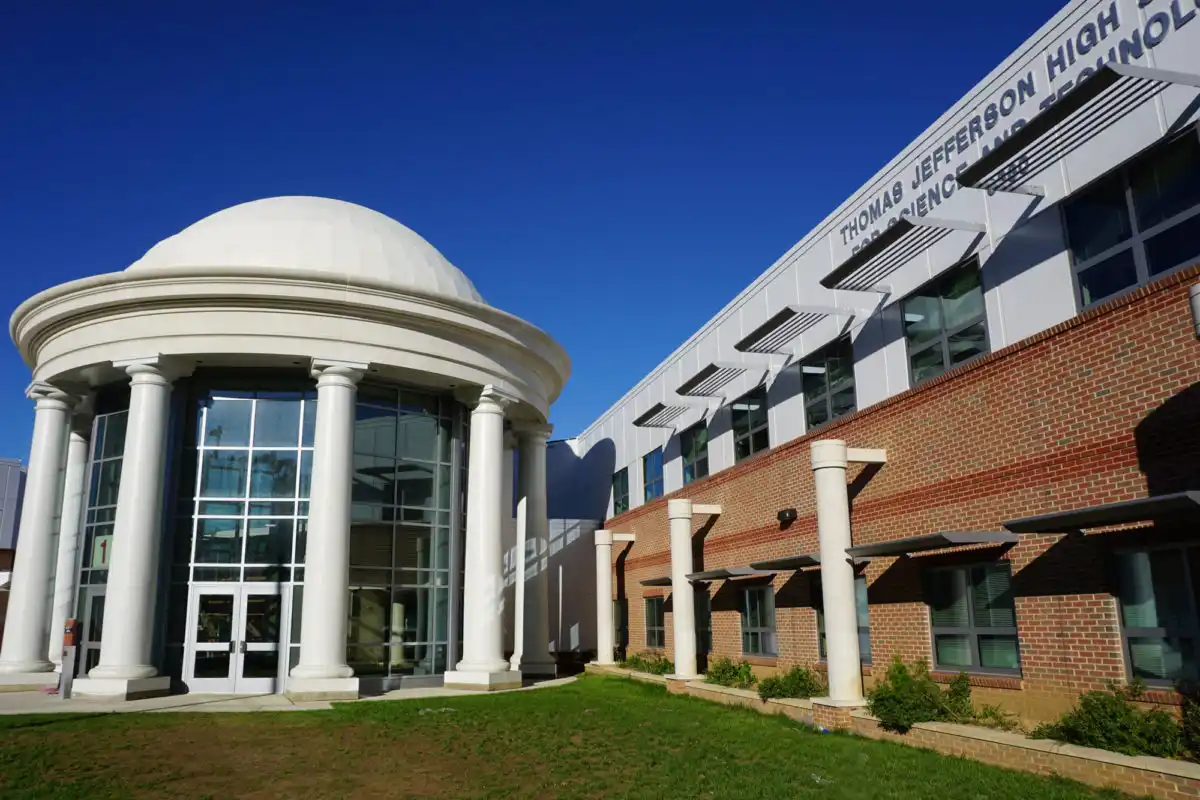
TJ High School
Since Lighter's founder is three years older than Robinhood's founder, for clarity in this article, we'll refer to Lighter's founder as "Big Vlad" and Robinhood's founder as "Little Vlad."
Big Vlad was one of the most famous students in school during his senior year.
That year, he took first place in the US Physics Olympiad; then represented the US at the 32nd International Physics Olympiad in Antalya, Turkey, winning a silver medal; after that, he reached the national finals of the Intel Science Talent Search with a project called "Optimal Hologram Design for Optical Neural Computing." Only two students from his school made the finals that year, and most others on the list were 16 to 18 years old—Big Vlad was only 15.
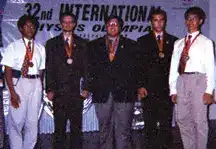
2001 Physics Olympiad team, second from left: Lighter founder Big Vlad
Big Vlad later recalled that time on Quora. He said he still remembers his first math team practice two weeks into school, unsure how long he could last given his skill level. To sharpen their competitive skills, he and a few classmates started organizing extra after-school sessions focused on math team, computer team, and Olympiad training. That after-school training culture continues to this day.
When Little Vlad first entered high school, his first impression of Big Vlad was as the senior who organized those after-school competition trainings. It was through those sessions that the two Vlads became acquainted.
Big Vlad Was Actually an Early Advisor to Robinhood
Soon after, at 16, Big Vlad graduated high school and entered Harvard, finishing in just two years. He was personally recruited by Ken Griffin, founder of the renowned hedge fund Citadel.
That was Big Vlad's first job—quantitative research, tasked with building high-frequency trading systems for the FX market. He then moved to Graham Capital, a global macro and trend-following fund managing over $10 billion, where he became a portfolio manager and director, staying for seven years.
Big Vlad's office was an easy commute to New York City, and Little Vlad was in New York at the time.
That was two years after the Lehman crisis. Little Vlad had started a company called Celeris, which didn't work out. In January 2011, he pivoted to Chronos Research, selling low-latency trading software to banks and hedge funds. It found modest success, generating a few million dollars in revenue within a year.
Big Vlad, as a portfolio manager at a billion-dollar quant fund, was pitched Little Vlad's low-latency trading software. A quant macro fund of Graham's size was exactly the standard target customer for Chronos's product.
Public records don't confirm whether they worked together at that point, but we believe the quant industry was small then. After the 2010 flash crash, the entire Wall Street arms race was focused on latency. With one Vlad on the buy side and the other on the sell side, they likely had close interactions.
Because in 2013, when Little Vlad started a new venture, Big Vlad became an early advisor, providing considerable help to his junior's early entrepreneurial journey. And that venture was Robinhood—a name every American knows today.
Robinhood's original name was actually Cash Cat. (Yes, that's the origin of the biggest memecoin on Robinhood Chain.)
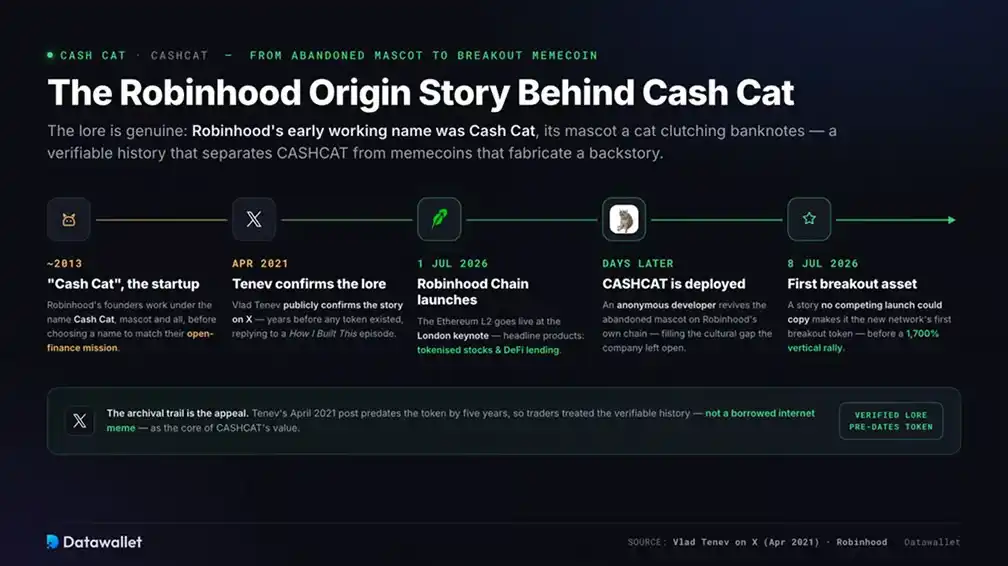
Little Vlad felt the low-latency trading software business wasn't cool. Even if he worked on it for another thirty or forty years to its ultimate version, he wouldn't want to tell his grandkids about it. He wanted to build a zero-commission stock trading mobile app.
On the podcast, Big Vlad recalled that time twelve years ago: "I was an early advisor to Robinhood. Back then, I think their company was still called Cash Cat, right? They had just renamed to Robinhood and were building the waitlist. I already knew the team and was involved in some things."
The following year, Big Vlad changed jobs himself. He joined Addepar, a wealth management software company, as VP of Engineering. Addepar's founder is Joe Lonsdale, co-founder of Palantir and a protégé of Peter Thiel.
Addepar was in Mountain View; Robinhood was in Palo Alto. The distance between the two was under ten kilometers. Their relationship grew even closer.
Senior Starts a Company, Junior Naturally Supports
This was a period when both Vlads' careers were thriving.
Big Vlad hired two interns. One was Scott Wu, who a decade later built the AI coding agent Devin, with a company valuation of $10.2 billion, and last year acquired Windsurf. The other was Alexandr Wang, who this year sold Scale AI to Meta for $14.3 billion and went on to lead Meta's superintelligence lab.
The competition circle is a small world.
In November 2017, two years after leaving Addepar, Big Vlad teamed up with Scott Wu to found Lunchclub, an AI-powered social networking company. It used machine learning to match people—analyzing users' backgrounds and goals to arrange a meal with someone worth meeting.

Lunchclub early UI
In September 2019, Big Vlad's Lunchclub raised a $4 million seed round led by a16z. Among the angel investors were Robinhood's co-founders.
Senior starts a company, junior naturally supports.
In August 2020, Lunchclub raised a $24.2 million Series A led by Lightspeed with participation from Coatue, valuing the company at over $100 million. Investors in that round included Hollywood super-agent Michael Ovitz, PayPal co-founder Max Levchin, Quora founder Adam D'Angelo, and Little Vlad.
That year, Little Vlad was on the eve of his peak. The pandemic drove millions of American retail investors into mobile stock trading, and Robinhood's user base exploded. The following April, Coinbase went public via direct listing on Nasdaq with an opening valuation of $100 billion; in July, Robinhood itself went public; in November, Bitcoin hit an all-time high of $69,000.
But soon, several historic events in crypto directly shaped the next five years for both Vlads.
In May 2022, Luna collapsed to zero, wiping out over $40 billion. In November, FTX went bankrupt—the industry's largest centralized exchange fell, and users couldn't withdraw their funds.
Big Vlad saw an opportunity. He believed exchanges could make the matching itself verifiable—using zero-knowledge proofs so every trade could be mathematically proven fair, with no front-running and no misappropriation.
He named it Lighter.
Big Vlad later said that when they started Lighter, on-chain perpetuals accounted for only 1% of the entire perpetual market. The ceiling back then was Hyperliquid. This year, Lighter's on-chain share has reached 10% to 20%.
In November 2025, Lighter raised $68 million at a $1.5 billion valuation, led by Peter Thiel's Founders Fund and fintech veteran Ribbit Capital, with participation from Haun Ventures.
Of course, Robinhood Ventures was in there too.
Robinhood and Lighter Join Forces
On July 1, 2026, Robinhood Chain's mainnet went live. It's Robinhood's own Ethereum Layer 2 network, built on Arbitrum technology, with 100ms block times, no native token, and fees settled in ETH.
The perpetual contracts running on Robinhood Chain are Lighter's.
Lighter didn't route Robinhood's orders to its main order book; instead, it ran a separate order book they call Lighter Domains. The two books are independent, but since both are built on Ethereum, market makers can quote on both sides using the same balance sheet, and funds move between the two books almost instantly. Robinhood's book uses USDG as collateral and quote asset, while Lighter's main book uses USDC, with a 50/50 revenue split.
Big Vlad admitted on the podcast that this creates friction for market makers. But he explained why they still come: because they know the order flow from Robinhood has a high proportion of retail orders—"that's the flow they ultimately want."
However, due to policy reasons, Americans can't use it yet. The perpetuals in Robinhood Wallet exclude the US, UK, Canada, Switzerland, UAE, and Singapore.
But both Vlads are members of this new Innovation Committee, and Big Vlad is working with the CFTC to obtain a license for decentralized perpetual contracts.
That license would cover both Lighter's own frontend and brokerages like Robinhood that plug in—similar to how Robinhood currently offers prediction markets using Kalshi's license.
"But so far, no one has obtained such a license," Big Vlad said.
This content is for informational and educational purposes only and does not constitute investment advice related to BTCC. BTCC makes every effort but cannot guarantee the truthfulness, accuracy, or originality of the content above.