OpenAI Buys Tens of Thousands of Macs for Reinforcement Learning
 wallstreetcn
OpenAI has purchased tens of thousands of Mac mini and Mac Studio units specifically for reinforcement learning, while Anthropic is also renting Mac minis through AWS to train "computer-use agents." Apple's M-series chips offer unified memory and thermal advantages suited to such tasks, and Mac sales have grown nearly 29%. Apple did not proactively plan for the enterprise market, but supplies have been sold out for months, and partners are pushing Macs deeper into enterprise markets.
OpenAI has been caught frantically buying Macs, tens of thousands at a time.
They accidentally bought them out of stock and are now trying every means to get more.
They don't want MacBook laptops, only Mac mini and Mac Studio models without screens or keyboards.
So the question is: what kind of AI business can't be handled by Nvidia GPUs and Google TPUs, requiring Macs instead?
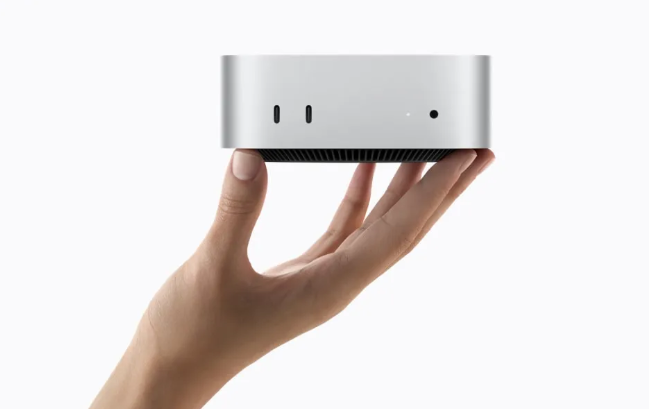
Tens of Thousands of Macs for Reinforcement Learning, Anthropic Did It Too
According to The Information, OpenAI has purchased tens of thousands of Mac mini and Mac Studio units specifically for reinforcement learning.
Not just OpenAI, Anthropic is also renting Mac minis through Amazon Web Services (AWS) for similar tasks.
These Macs are used to train "computer-use agents," AI systems that can autonomously operate computers to complete multi-step tasks such as editing and testing code, automatically organizing inboxes, and summarizing documents.
This trend is directly reflected in Apple's financial report.
In the most recent quarter, Mac sales grew nearly 29% year-over-year to $10.3 billion, outpacing all other Apple product lines including iPhone and iPad, making Mac Apple's fastest-growing business.
On June 23, 2025, Apple's headquarters Apple Park hosted an event called "Business at the Park." This is unusual in Apple's history, as Apple has traditionally focused on the consumer market and rarely holds events specifically for enterprise customers.
Executives from Disney and Ford attended, as did Anthropic co-founder Jared Kaplan, along with Apple's outgoing CEO Tim Cook and incoming CEO John Ternus.
According to an attendee, Apple repeatedly emphasized at the event that its hardware is well-suited for on-device AI processing, and the Mac mini was the focus of the entire event.
AI training has long been dominated by Nvidia GPUs, but the reason Macs can be purchased at scale for the niche scenario of reinforcement learning is unified memory.
Nvidia GPUs have separate video memory and system memory, and data transfer between them creates bottlenecks. Apple's M-series chips use a single shared memory pool, allowing the CPU and GPU to directly access the same memory, providing performance advantages for AI workloads.
Additionally, unlike thin MacBooks, Mac mini and Mac Studio are equipped with dedicated cooling systems, so they won't throttle due to overheating during long-running complex AI tasks. This is crucial for reinforcement learning training that can last hours or even days.
Apple is also promoting the EXO Labs open-source software project, which can cluster multiple Macs to run trillion-parameter AI models on-device.
Apple's newly released Mac Studio also specifically emphasizes clustering capabilities, as multiple Mac Studios can be linked together to form a more powerful system for running frontier models.
The timing of this new product release is also unusual. Apple typically updates its Mac lineup in October or November each year, but this time it was moved up to August 2025.
Nvidia Takes Notice, Apple Scrambles to Respond
The rise of Macs in on-device AI has caught Nvidia's attention.
According to a source familiar with discussions with Nvidia executives, Nvidia views Apple as its biggest competitor in the on-device AI space.
Late last year, Nvidia released the DGX Spark, an AI desktop computer with a design style similar to the Mac mini, directly targeting this market.
Apple, on the other hand, faces the practical problem of supply constraints.
The massive demand for memory chips from AI data centers has led to a historic industry-wide shortage, and Apple has not been spared.
The high-end Mac mini and Mac Studio models most attractive to AI developers have been out of stock for months.
Todd Dailey, former enterprise marketing manager for AI products at Apple, revealed that over the past year, due to Mac supply constraints, some enterprises have begun seeking alternatives, with Nvidia's DGX Spark being a frequently mentioned option that is currently in stock.
Dailey left Apple in April this year and is now an independent AI consultant. He also revealed that the popularity of Macs in the enterprise AI market was entirely accidental, not a proactive plan by Apple. Apple has no engineering team dedicated to enterprise customers and no employees focused on developer relations.
Apple's last server product was the Xserve, discontinued in 2011. The Mac-based server operating system also ceased development in 2022.
However, some have already smelled an opportunity.
Peter Voell, a former OpenAI compute infrastructure employee, founded Mount Thor, a cloud computing company based on Apple hardware that is still in stealth mode, with its website describing the product as an "AI execution environment based on Apple hardware."
Apple is also pinning hopes on partners like Mount Thor and webAI to push Macs deeper into the enterprise market.
Apple has recently started building its own servers using Mac chips. However, these servers are for internal use only, for the Private Cloud Compute service, handling AI tasks that exceed the processing power of iPhones or Macs.
Some enterprise customers have asked Apple if they can purchase access to these servers, but Apple has so far refused.
This content is for informational and educational purposes only and does not constitute investment advice related to BTCC. BTCC makes every effort but cannot guarantee the truthfulness, accuracy, or originality of the content above.