Year-End Liquidity Squeeze Keeps Bitcoin Capped Despite Soaring Demand and Fed Rate Cut Bets

Bitcoin's price is stuck in a chokehold—and Wall Street's seasonal cash grab is the culprit.
The Liquidity Lockdown
Forget the macro tailwinds for a second. Surging institutional demand? Check. Markets betting the Fed will slash rates? Absolutely. Yet none of it matters when the financial system decides to hoard cash like a dragon with its gold. Every December, banks and funds pull capital off the table to pretty up their balance sheets, creating an artificial scarcity of dollars that strangles asset prices. Bitcoin, for all its decentralization, isn't immune to this old-world ritual.
Demand Meets a Brick Wall
On-chain metrics and exchange inflows scream accumulation. Whales are buying, ETFs are seeing consistent net inflows, and the long-term holder supply keeps climbing. This isn't a speculative frenzy; it's a structural shift in ownership. But right now, that buy-side pressure is slamming into a wall of forced selling and margin calls elsewhere in the system. The result? A capped price that feels disconnected from its underlying fundamentals—a classic case of short-term plumbing problems overriding long-term value.
The January Effect Looms
Here's the kicker: this squeeze is a known, temporary phenomenon. Once the calendar flips and those year-end reports are filed, the liquidity faucets get turned back on. The pent-up buying pressure from December, combined with fresh capital allocations, has historically triggered powerful January rallies. The very mechanism suppressing Bitcoin now could become the rocket fuel for its next leg up.
So, while traditional finance plays its quarterly window-dressing game—prioritizing optics over opportunity—Bitcoin's foundation gets stronger. The squeeze won't last. And when it breaks, the move could be violent. After all, nothing makes a cynic smile like watching old money's bookkeeping exercise create a bargain for the new.
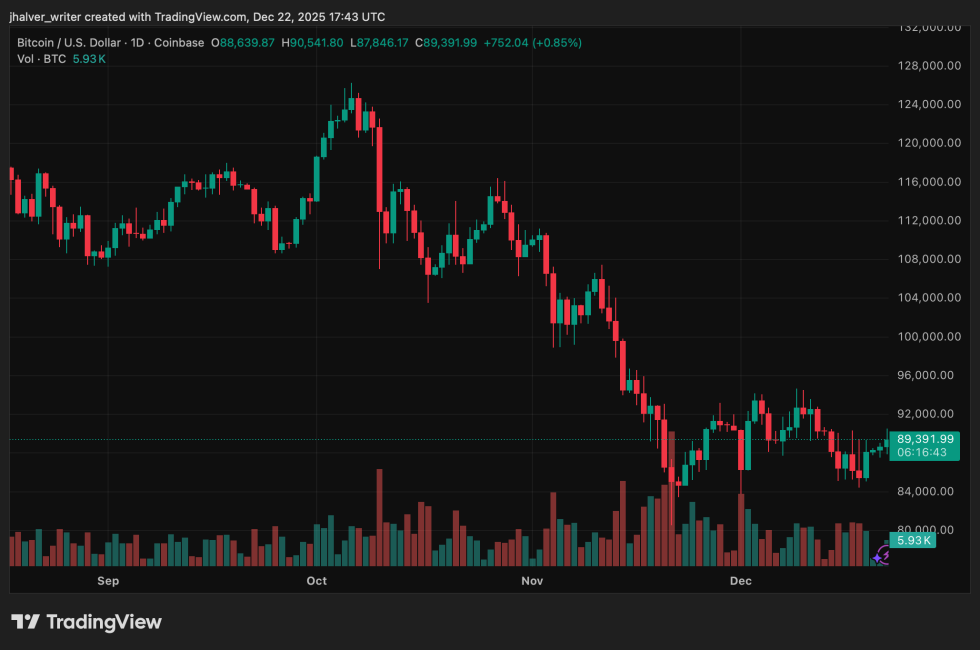
Bitcoin ETF Breakeven Levels Shape Short-Term Risk
A large share of ETF-linked capital is now sitting NEAR breakeven, making price behavior around this zone especially sensitive. Analysts note that a clean break below the $88,000 area could encourage more defensive positioning, particularly if thin holiday trading amplifies volatility.
On the upside, reclaiming and holding levels above $90,000 WOULD suggest that overhead supply from flat or nervous holders is finally being absorbed.
Despite muted price action, buying interest has not disappeared. Exchange outflows and whale accumulation have picked up in recent days, indicating that some investors are using the range to build positions rather than exit them.
Futures data, meanwhile, shows a gradual reduction in leverage instead of forced liquidations, pointing to controlled risk management rather than stress.
Gold’s Strength Highlights Risk RotationWhile bitcoin remains range-bound, gold has pushed to fresh all-time highs, underscoring a clear preference for traditional safe havens.
The divergence reflects a market still focused on capital preservation as uncertainty around growth and inflation lingers. Expectations for further rate cuts by the Federal Reserve in 2026 have supported broader risk sentiment, but the impact on crypto has so far been limited by positioning and timing.
Historically, Bitcoin has often lagged major moves in gold, reacting later once liquidity improves and risk appetite returns. For now, that pattern appears intact. With economic data releases light but closely watched, traders are approaching year-end cautiously.
Until liquidity returns in early 2026, Bitcoin may remain capped, even as underlying demand quietly builds beneath the surface.
Cover image from ChatGPT, BTCUSD chart from Tradingview
