XRP’s Exchange Netflows Are Screaming a Signal This Month—Here’s Why You Can’t Ignore Them

Forget the noise. The real story for XRP isn't on the front page—it's in the silent, algorithmic dance of coins moving on and off exchanges. This month, those netflows are flashing a signal that demands your attention.
The Hidden Pulse of the Market
Exchange netflows cut through the hype. They reveal what holders are actually doing, not just saying. A sustained negative flow—more XRP leaving exchanges than entering—points to accumulation. It's a bullish whisper in a market that usually shouts.
Why December Could Be Different
Seasonal patterns, year-end portfolio shuffles, and looming regulatory clarity create a perfect storm for movement. Smart money positions itself before the narrative shifts. When coins vanish from trading platforms, they're not being sold; they're being parked for the next leg up.
Reading Between the Ledger Lines
This metric bypasses sentiment analysis and goes straight to on-chain behavior. It's a cold, hard look at conviction. Major outflows often precede price breakouts, as supply available for quick selling dries up. It's basic economics with a cryptographic twist.
The Bottom Line
Ignoring netflows is like trading with the sound off. They provide a crucial, often-leading indicator of where pressure is building beneath the surface. In a market obsessed with price, sometimes the most important action happens off the stage. Keep one eye on the chart and the other on the exit doors—this month, they might just tell you everything. After all, in crypto, the 'smart money' is usually just the money that left the exchange before everyone else tried to.
XRP Leaving Binance Means Positioning, Not Panic
Exchange netflows often give a clearer picture of market intent than short-term price movements. When reserves drop consistently, it usually reflects strategic decisions by holders. This month, XRP’s netflows are flashing signals that are worth watching closely.
The steady decline in Binance’s XRP reserves points to deliberate withdrawals instead of emotional reactions. According to commentary shared on X by Stellar Rippler, this type of movement does not correspond with retail panic selling.
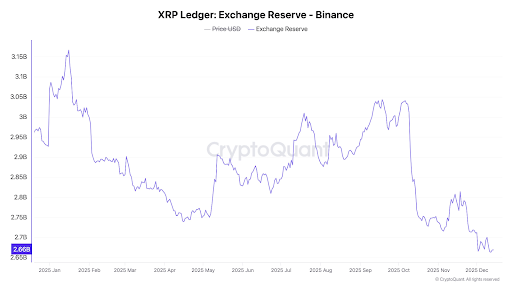
Retail-based fear typically shows up as sudden deposits to exchanges as traders rush to exit positions. What the data shows instead is a controlled and sustained reduction in available exchange liquidity.
This pattern points to holders choosing custody outside exchanges, a behavior commonly associated with long-term allocations. crypto history has shown that prolonged exchange outflows often occur when investors are confident in long-term demand, not when they anticipate a prolonged downward price action.
You don’t drain liquidity before bad news. In this context, XRP’s exchange netflows suggest preparation, not speculation.
Why Falling Binance Reserves Matter For Market Structure
Binance is the largest crypto exchange in the world, meaning its XRP reserves represent the most readily available supply for a large portion of active traders. As more and more XRP continues to leave the exchange, the amount of XRP immediately available for spot trading keeps shrinking, gradually tightening liquidity even though the price has not reacted yet.
Speaking of price not reacting, XRP’s price action has struggled over the past few weeks, repeatedly failing to hold above the $2.00 price level and spending most of the period trading lower around the $1.80 to $1.95 range. Despite this, the data shows that the weak price performance is largely due to broader market outflows across every crypto, not a surge in XRP-specific selling.
The outflows in XRP exchange reserves are more meaningful when viewed alongside the steady inflows into Spot XRP ETFs, which are yet to record a day of net outflows since their launch. Those ETF inflows suggest institutional demand is increasing under the surface, even though it has so far been outweighed by capital leaving the wider crypto market.
