Elon Musk Doubles Down on Bitcoin: Crypto King Wins Tesla CEO’s Endorsement Again

Elon Musk just reignited the Bitcoin bull case—again. The Tesla and SpaceX CEO's latest pro-crypto comments sent shockwaves through digital asset markets, proving he remains the ultimate crypto influencer.
Musk's Midas Touch
When Musk talks, crypto markets move. His tweetstorm about Bitcoin's "technological brilliance" triggered instant price action—because nothing pumps bags like billionaire validation.
The Fine Print
Never mind that Tesla dumped 75% of its BTC holdings last year. Or that Musk's crypto flip-flops make Fed policy look consistent. When the world's richest man winks at Bitcoin, traders front-run the hype.
Wall Street's Worst Nightmare
Traditional finance hates this story. Bitcoin keeps winning converts while hedge funds miss another rally—but hey, those 2% bond yields are "safe."
 ” beneath a Coinbase post on X that showcased an animated, Grok-generated revival of the classic Bitcoin “magic internet money” wizard. The billionaire’s trademark minimalist reaction was enough to ignite another round of speculation that he remains firmly in Bitcoin’s corner. The Coinbase clip, captioned “Grok Imagine: Bring this legend to life,” turns the pixelated 2013 wizard into a short, neon-blue video—an unmistakable nod to Bitcoin’s earliest grassroots marketing slogan.
Elon Musk Embraces Bitcoin Again
The meme itself traces back to a contest on r/bitcoin more than a decade ago. In April 2013, subreddit moderators asked users to design an ad that could run in Reddit’s sidebar; a hastily drawn MS-Paint wizard riding a Gold coin and declaring “magic internet money” won by popular vote. Despite (or perhaps because of) its crude aesthetic, the image encapsulated BTC’s outsider charm and has since become shorthand for the cryptocurrency’s defiant irreverence.
Musk’s latest emoji is small but strategic. Over the past month he has repeatedly woven bitcoin into his political and technological ventures. When unveiling the “America Party”—a nascent political vehicle he has floated as an alternative to the two-party system—Musk said “Fiat is hopeless, so yes,” after being queried if the American Party would “embrace” Bitcoin. That declaration followed a fresh internal transfer of roughly $150 million in BTC by SpaceX, reinforcing the notion that Musk’s companies remain long-term holders.
Just days before the wizard post, Musk turned to his xAI assistant Grok to interrogate one of the most persistent existential questions: the quantum-computer threat. “Bitcoin’s hashing remains secure for now,” Grok replied, assigning “nearly 0%” probability that a quantum machine could crack SHA-256 within five years and “under 10% by 2035” given current qubit road-maps.
In another example of Musk’s recurring BTC references, June saw the announcement of “XChat,” a new messaging feature on his social media platform X (formerly Twitter). Musk revealed that the system is built on Rust and incorporates “Bitcoin-style” encryption, a choice he framed as a commitment to security and decentralization principles long associated with the cryptocurrency.
Musk’s public statements have rarely moved markets as violently as they did during the 2021–2022 bull run, yet his influence endures. Tesla still lists more than 10,725 BTC on its balance sheet, and SpaceX is believed to hold a further nine-figure stash. Against that backdrop, even a laughing-crying emoji reads as tacit endorsement—especially when it revives a relic of BTC’s anarchic infancy.
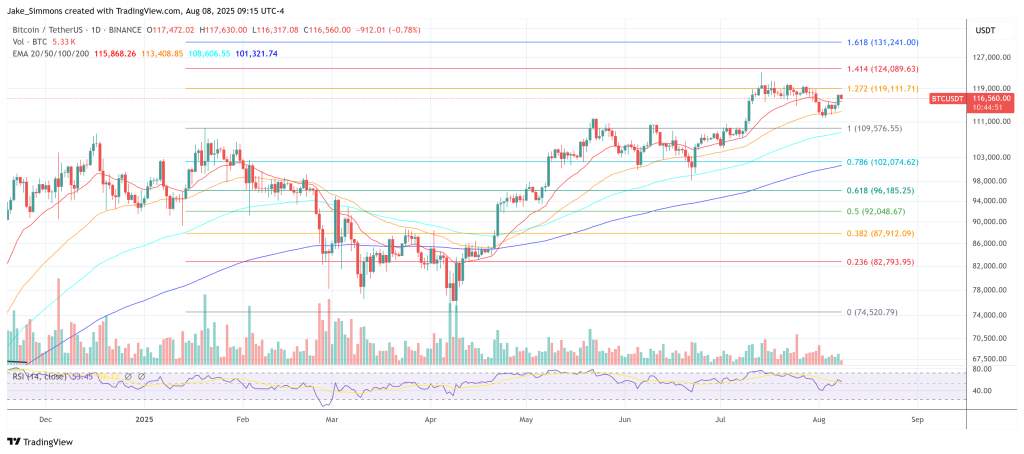
At press time, BTC traded at $116,560.

Log in to Reply
Log in to comment your thoughtsComments
Related Articles
|Square
Get the BTCC app to start your crypto journey
Get started today Scan to join our 100M+ users