Altcoins Shatter Crucial Boundaries in 2025: The Year Alternative Cryptocurrencies Redefined the Game

Forget the sidelines—2025 wasn't just Bitcoin's year. While the king held court, the altcoin arena erupted, smashing through psychological and technical barriers once thought unbreakable. The narrative shifted from 'if' to 'when,' and the 'when' arrived with a vengeance.
The Great Decoupling
For years, altcoin trajectories were shackled to Bitcoin's momentum. 2025 cut those chains. Major alternative assets began charting their own courses, driven by protocol upgrades, real-world utility spikes, and a wave of institutional capital looking beyond the blue-chip crypto. Correlation charts that once moved in lockstep started showing wild, independent divergences. The market matured from a monolith into a mosaic.
Utility Breaks the Hype Cycle
The breakthrough wasn't just on price charts—it was in function. Layer-1 networks processed transactions at speeds that left legacy financial rails in the dust. Decentralized finance (DeFi) protocols didn't just mimic banks; they created entirely new financial primitives. Gaming and social tokens built economies with more active daily users than some small countries. The 'vaporware' taunt from traditional finance grew fainter by the quarter, replaced by measurable, on-chain activity.
Regulatory Walls Crumble (Or Get Bypassed)
2025 saw regulatory frameworks—slowly, painfully—start to crystallize. Rather than stifling growth, clarity in key jurisdictions acted as a catalyst. Projects that had been building in the regulatory gray zone emerged with compliant, scalable structures. The 'wild west' narrative began its long-overdue retirement party. Of course, some regulators still seemed to be fighting the last war, issuing warnings about assets that had already evolved into full-fledged ecosystems—a classic case of finance catching up to technology at a snail's pace.
The New Guard Rises
Established altcoins solidified their positions, but the real story was the new entrants. Next-generation protocols launched with institutional-grade security and user experiences so smooth they made the crypto of just five years ago look like a technical draft. The barrier to entry for building and using world-class blockchain applications didn't just lower—it vanished.
The Investor Mindset Reset
Portfolio allocations changed. 'Altcoin season' transformed from a speculative frenzy into a strategic allocation. The conversation moved from mere price speculation to metrics like daily active addresses, protocol revenue, and governance participation. Volatility remained, but it was now layered atop a foundation of tangible use.
The cynic's take? Wall Street finally bought in—just in time to try and sell the revolution back to us in the form of bloated management fees on their new altcoin ETFs. Some things never change.
So, what's the bottom line? 2025 marked the end of altcoins' adolescence. They stepped out of Bitcoin's shadow, proved their worth beyond the trading chart, and rewrote the rules of the game. The boundaries broken weren't just on screens; they were in mindsets, in regulations, and in the very architecture of global finance. The train has left the station, and it's building speed.
Privacy Altcoins
Cryptocurrency regulations have been crucial for sector growth, yet, they have also increased the appeal of privacy-focused altcoins. Investors looking to keep their assets shielded from prying eyes have turned to privacy coins, which preserve the original intent of cryptocurrency as an alternative to the traditional financial system. While the current trend leans towards integrating cryptocurrencies with the conventional finance system, privacy altcoins remain an exception.
Despite restrictions from the European Union, privacy coins cater to those wishing to keep their wealth safely within the crypto space. This demand is perhaps why privacy altcoins have seen accelerated gains as the year nears its end.
Zcash (ZEC)
At the forefront is ZEC, which surged by over 840% following an update driven by excitement and support from figures like Vitalik Buterin, peaking at over $700. Analysts suggest a near-term breakthrough of the $1,000 psychological threshold could be on the horizon.
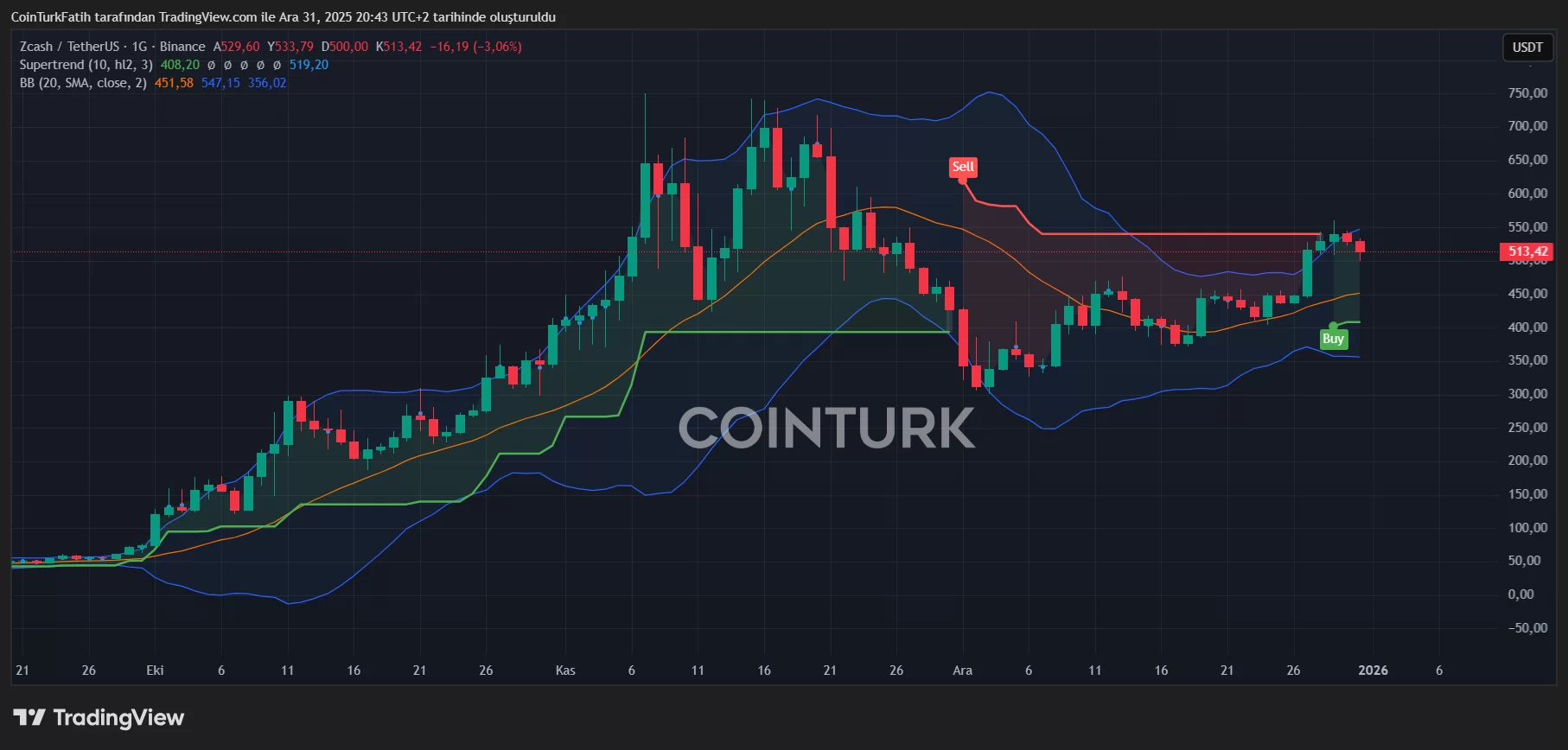
Starting its rise at $70, ZEC paused at $311 but maintained support at $514. Aiming for $565 and $676 in January remains plausible if the main support at $422 holds firm. The ability of privacy coins to gain from year-end tax motivations will be tested in January, but without sharp declines, four-digit prices remain within reach.
XMR Coin
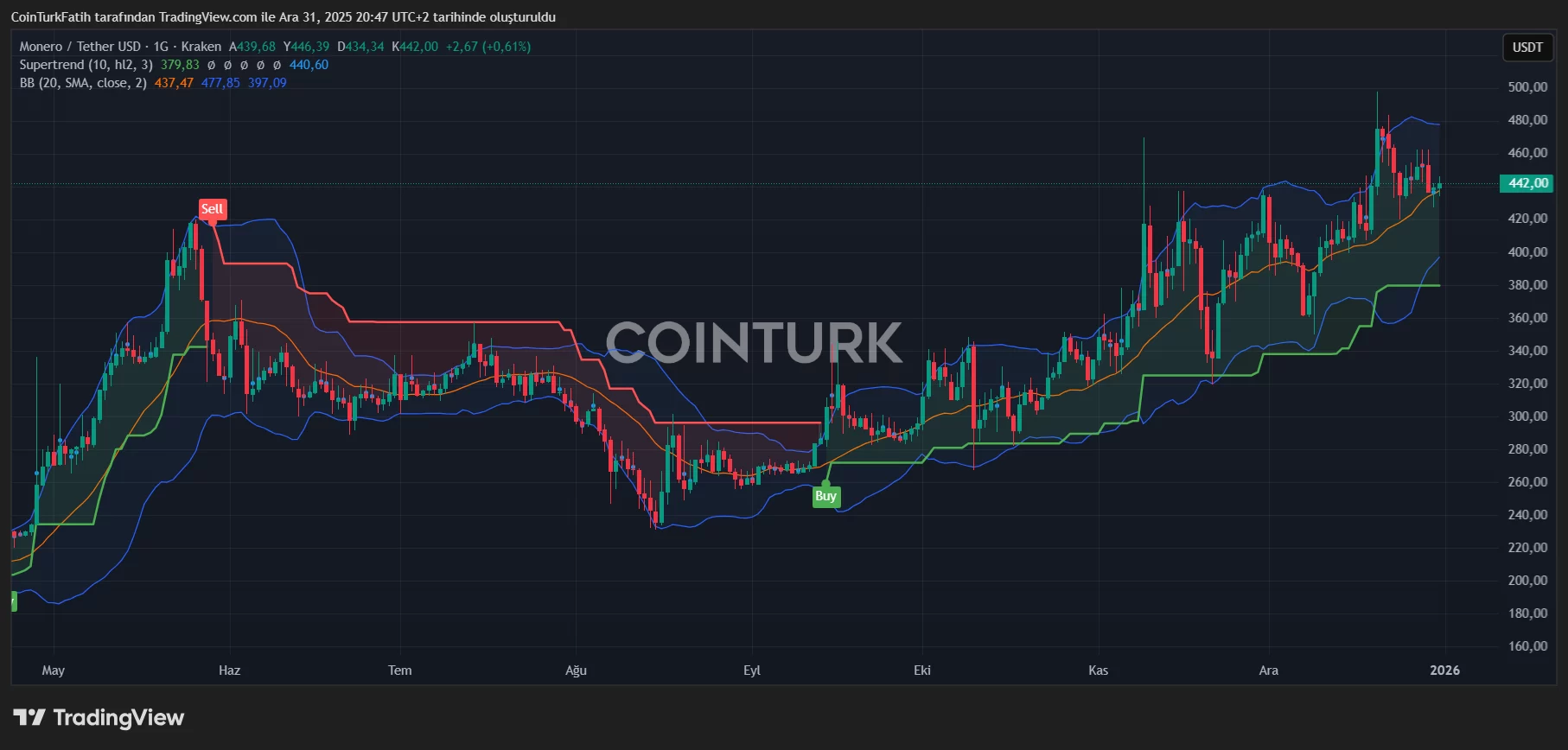
Monero (XMR), up by over 125% this year, outperformed many major altcoins which returned to previous lows. As one of the most established privacy altcoins, it achieved higher lows despite market instability. Should closures above $433 persist, XMR is targeting its 2021 peak of $519, potentially advancing towards four-digit prices like ZEC.