Trump Threatens India With Tariffs Warning Over Russian Oil Trade — Geopolitical Tensions Fuel Crypto Haven Narrative

Old-world energy politics just flashed a giant buy signal for decentralized finance.
The Warning Shot
A former U.S. president threatens a major democracy with tariffs over its sovereign energy choices. The message is clear: traditional financial and trade alliances are conditional, fragile, and subject to the whims of political cycles. Capital needs a neutral ground.
Enter The Digital Haven
This isn't just about oil. It's about the foundational instability of legacy systems for value transfer and storage. When geopolitical leverage translates directly into financial weaponization, the argument for borderless, censorship-resistant assets hardens. Bitcoin doesn't care about election results or trade deficits. Ethereum smart contracts execute without permission from any central bank.
The Cynical Finance Jab
Meanwhile, traditional finance scrambles to price in 'political risk premiums'—a fancy term for guessing which sovereign will get bullied next—while crypto assets simply verify the transaction and move on. The efficiency is almost insulting.
The Bottom Line
Every tariff threat, every sanctions package, every fracturing alliance writes another line of code in the public case for decentralized systems. The old world is busy building walls. The digital asset ecosystem is providing the tunnels. Smart money notices the divergence.
Why is Trump Threatening India amid Ongoing Trade Talks?
The main Core of the dispute is that India is buying crude oil from Russia, and India is the top buyer as well. Washington argues that these trades are indirectly funding the conflict with Ukraine. Which is leading to a "risk-off" mood in global diplomacy. Trump threatens India with these measures despite having already doubled import tariffs to 50% in August 2025. "They wanted to make me happy... He knew I was not happy," Trump remarked, suggesting that the "special relationship" between the two leaders may not be enough to stop a fresh wave of economic penalties.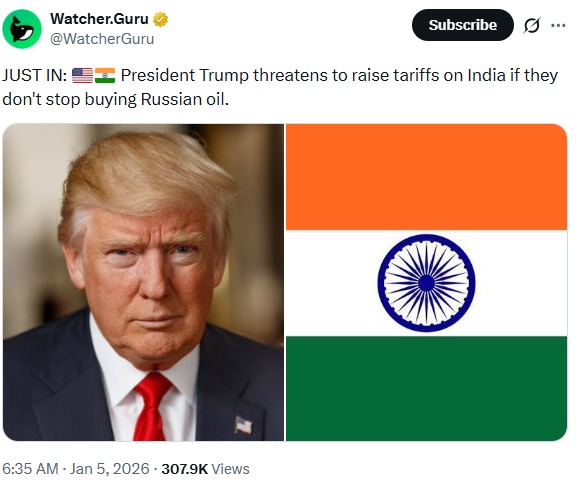 Source: X(formerly Twitter)
How These Trades Affect Bitcoin and Crypto
While these conflicts focus on oil and tariffs, the digital asset market also reacts to these international trade relations. Today, the total crypto market cap stands at $3.15 trillion, reflecting a 1.02% increase in the last 24 hours. Bitcoin is currently holding steady at $92,520, marking a rise of 1.34% in the last 24 hours as per CoinMarketCap. When Trump threatens India, the market is steady, and it is now also, but soon it will affect the digital asset market.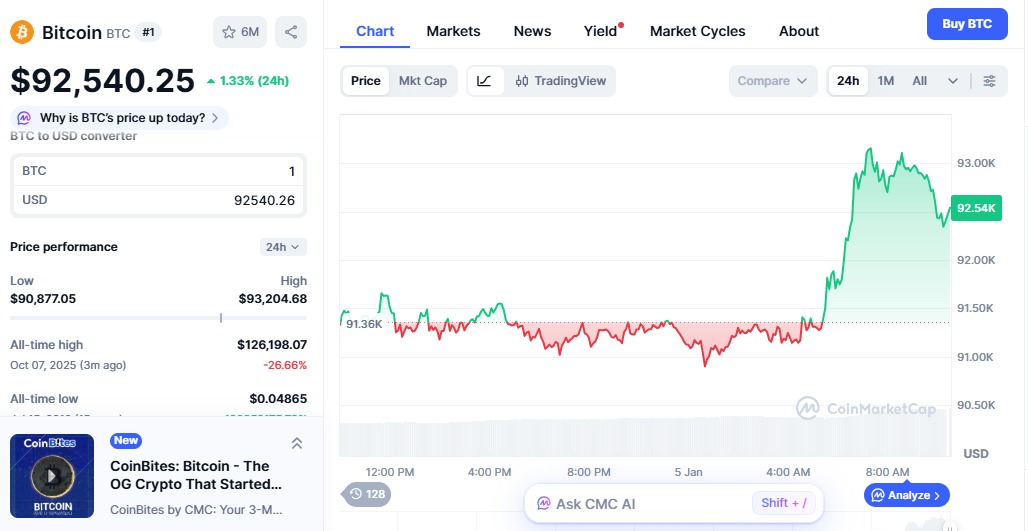 Source: CoinMarketCap
India Stands Firm on Energy Sovereignty
New Delhi hasn't wavered in its stance, consistently putting its own energy security and the needs of millions of consumers above external pressure. Despite the U.S. making it very clear they are "unhappy" with the current arrangement, Bharat continues to argue that its trade choices are simply a matter of market availability and economic necessity. But the stakes are getting higher. If Trump moves "very quickly" to hike tariffs, the cost for South Asian companies exporting to the U.S. could skyrocket. This WOULD likely force a massive shift in how Bharat handles both its international trade and its long-term investment plans.The growing friction between Washington and New Delhi is more than just a political spat; it’s a sign of how global powers now use deals as a primary weapon. While President Trump’s warning of "quick" tariff hikes is clearly aimed at forcing India to ditch Russian oil, it is also shining a spotlight on why decentralized assets are becoming so popular. As traditional deals routes face disruptions and fiat currencies get caught in the crossfire of sanctions.
Conclusion
The current "watchful pause" in the crypto space suggests that big institutional players aren't hitting the panic button just yet. Instead, they are keeping a close eye on whether Bharat's stand on energy sovereignty leads to a bigger shift in how the BRICS nations handle their deals settlements.
If the U.S. actually pulls the trigger on 50% or 100% tariffs, the pressure on the Indian rupee could spark a massive, localised rush into Bitcoin. For now, the $93,500 level is the big hurdle for BTC.