Bitcoin Alert: Red Team Exposes 85 Critical Flaws on BTC Network — 10% Drop Feared

A stark warning has been issued today as a renowned red team has uncovered a staggering 85 critical vulnerabilities within the Bitcoin network, sending shockwaves through the crypto market and sparking immediate fears of a 10% price correction. The disclosure, which highlights severe systemic risks, has put investors on high alert as the digital asset faces its most significant security challenge yet.
Bitcoin News Today: What's Next After the Red Team Found BTC Flaws
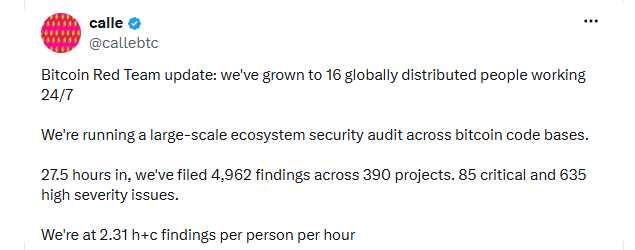
A volunteer security effort called the Bitcoin red team filed nearly 5,000 bug reports across 390 open source Bitcoin repositories in just 27.5 hours.
The group flagged 85 critical issues and 635 high-severity flaws, marking one of the fastest large-scale code reviews in the blockchain's history.
This Bitcoin News Today update comes days after a hardware wallet exploit drained more than $100 million from user funds, pushing security back to the center of every Bitcoin update today.
Bitcoin News Today: Volunteer Red Team Flags Nearly 5,000 Total Bugs
Rob Hamilton, CEO of self-custody insurance firm AnchorWatch, and Bitchat developer Calle led the sprint. Around 16 contributors spread across different time zones joined the review.
The Bitcoin red team combined several frontier AI models, including Kimi K3 and GPT variants, with a custom testing harness that grew past 170,000 lines of code. OpenSats covered more than $40,000 in compute costs, running close to $10,000 per day.
The results so far:
4,962 total findings filed
85 critical issues, 635 high-severity issues
390 open source repositories scanned
Over 21% of findings already independently verified
Maintainers across those projects are now working through responsible disclosure before full technical details go public.
The Coldcard BTC Hack That Triggered This Massive Security Review
The red team formed right after the Coldcard BTC hack came to light in late July 2026. A firmware bug dating back to March 2021 caused some devices, mainly older Mk3 models, to fall back on a weak software random number generator instead of the built-in hardware one.
That error cut seed entropy down sharply, to around 40 bits on some units and about 72 bits on others, far below the intended 128 bits. Attackers rebuilt private keys from the weakened randomness and swept funds across multiple waves.
Total losses topped $100 million from ~7,300 addresses, with estimates ranging between 1,596 and 2,055 BTC or more as per Galaxy Research data.
Bitcoin Price Today: BTC Trades Near $64,502 After Slight Weekly Gains
BTC price sits at $64,570, up 0.74% over the past 24 hours. Market capitalization stands at $1.29 trillion, also up 0.74% on the day. Trading volume over the last 24 hours reached $22.27 billion, down 3.01% from the prior session.
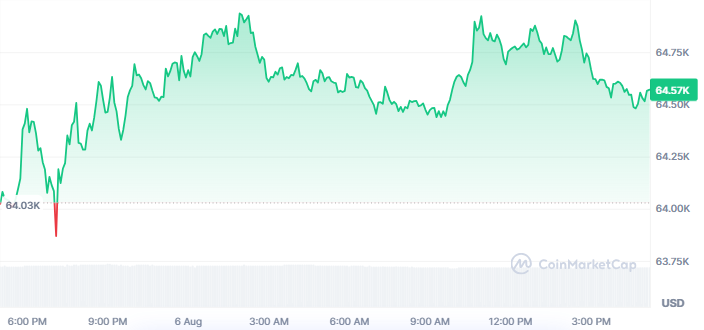
Bitcoin price today reflects a market that has stayed calm despite the scale of the Coldcard BTC hack fallout.
However, large wallet activity has picked up since the Coldcard disclosure. Some holders shifting funds into multisignature setups spread across different hardware brands.
$BTC whales move funds partly to cut reliance on any single device or seed-generation method.
Multisignature wallets spread across separate hardware brands
External entropy sources such as dice rolls paired with strong passphrases
Immediate seed migration for any device flagged in the audit
Regular firmware and software updates from verified sources
What Happens Next: How Developers Will Fix These Critical Bugs Now
Project maintainers now have first access to the flagged bugs before any public release. Each of the 390 repositories gets a private disclosure window to patch the issues the red team found.
Critical bugs move to the front of the queue. Maintainers apply fixes, test them, and ship updates once a patch is ready.
Three steps come next:
Finish verifying the remaining findings by hand
Release the open-source testing harness once disclosure closes
Publish a full summary report once all 390 projects respond
Independent audits of hardware wallet firmware are also expected to grow. Several companies have already started internal reviews of their random number generation code following the Coldcard wallet exploit.
No fixed date exists yet for full public disclosure. The team plans to publish detailed reports only after maintainers confirm patches are live and users have had time to migrate affected seeds.
This article is for informational purposes only and does not constitute financial or investment advice. Crypto markets carry significant risk. Always do your own research before making any investment decisions.

Log in to Reply
Log in to comment your thoughtsComments
Related Articles