Bitcoin’s Price Still Controls the Crypto Industry: Novogratz Explains Why

Bitcoin isn't just another asset—it's the entire crypto market's pulse. Michael Novogratz, a veteran investor who's seen more cycles than most, argues that the original cryptocurrency's price movements still dictate the industry's mood, capital flows, and even development priorities.
The King's Shadow
Forget the 'altseason' hype. When Bitcoin rallies, investor confidence floods the entire ecosystem. Venture capital opens its wallets, developers get funded, and mainstream headlines follow. When it stumbles? The opposite happens—a chilling effect that freezes ambition and capital alike. It's a dynamic that persists despite thousands of new tokens and blockchains vying for attention.
A Psychological Anchor
Novogratz points to a simple truth: Bitcoin remains crypto's primary gateway. For institutions and retail investors dipping a toe in, it's often the first—and sometimes only—digital asset they buy. Its price becomes a barometer for the entire sector's health, a psychological anchor that other assets either cling to or rebel against. This creates a gravitational pull that even the most innovative DeFi protocols can't fully escape.
The Ripple Effect
This dominance isn't just about sentiment. Liquidity follows Bitcoin's lead. Exchanges structure their offerings around it, derivatives markets use it as a benchmark, and portfolio allocations are often calculated as a percentage of a Bitcoin holding. It's the reserve currency of the crypto world—for better or worse—making its price action the single most important data point for everyone from hedge fund managers to crypto Twitter influencers.
Novogratz's take cuts through the noise of endless narratives. In an industry obsessed with disruption, the old king still wears the crown—and its price chart is the scepter that rules them all. After all, what's a financial revolution without one asset that everyone watches while pretending to care about 'fundamentals'?
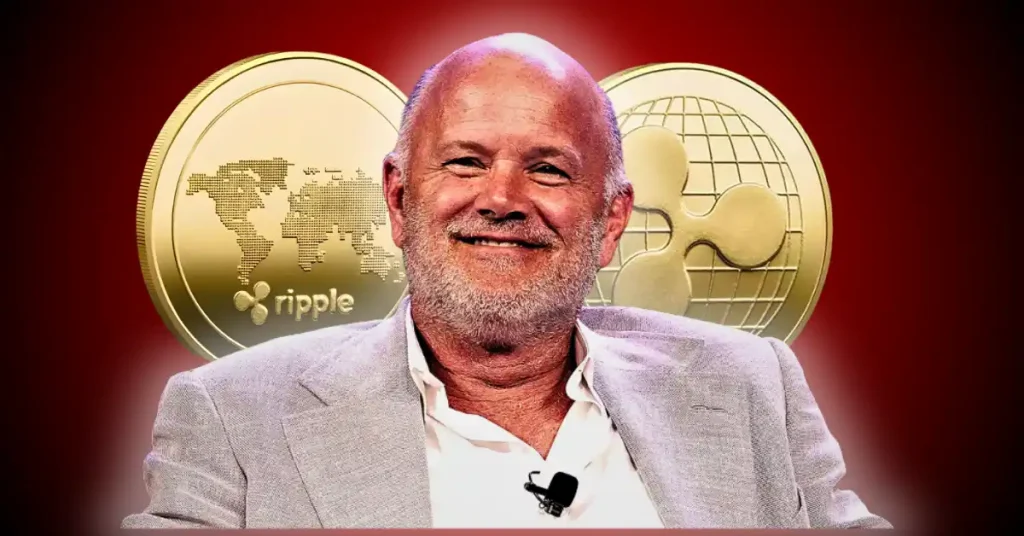
Michael Novogratz, founder and chief executive of Galaxy Digital, says crypto companies remain tightly tied to Bitcoin’s price and are unlikely to fully break that link for another three to four years.
Speaking about Galaxy’s business model, Novogratz said that even diversified crypto firms cannot escape market cycles yet, because most of their revenues are still directly linked to digital asset prices.
“If Bitcoin falls 30%, your revenue falls 30%,” he said, pointing to asset management, staking, and trading businesses where income is calculated as a percentage of the underlying crypto asset.
Why Price Dependence Still Matters
Novogratz explained that even if a crypto firm held no digital assets on its balance sheet, it WOULD still feel the impact of price swings. Staking rewards shrink when token prices drop, trading activity slows, and asset management fees decline alongside valuations.
This strong correlation, he said, makes the crypto industry very different from traditional financial firms that have broader and more stable revenue streams.
Data Centers Offer a Partial Buffer
Galaxy has started to reduce its exposure to crypto price swings by expanding into data centers and infrastructure. Novogratz said the data center business is now as important, or even more valuable, than Galaxy’s crypto operations from a market capitalization perspective.
Because infrastructure follows a different cycle and has different capital needs, Novogratz said Galaxy could eventually split into two separate businesses. That decision, however, remains under review.
Crypto Could Surprise in 2026
Despite crypto’s recent under performance, Novogratz said he is not bearish. He also expects easier monetary policy ahead, with the U.S. Federal Reserve likely to cut rates. A weaker dollar, he said, could support risk assets, including crypto, over time.
Novogratz said crypto has lagged behind assets like gold and silver, which have already seen strong rallies. That gap, he believes, creates the possibility of a sharp MOVE higher once momentum returns.
“The painful trade may actually be crypto going higher, not lower,” he said, adding that a clear break above key levels would change sentiment quickly. Novogratz said the broader setup for 2026 looks constructive, especially as investment in crypto infrastructure continues to grow.
For now, he said, crypto companies remain tied to Bitcoin’s price. But over time, as infrastructure businesses scale and revenue sources diversify, that dependence should gradually weaken.
