Trump’s Colombia Military Warning After Venezuela Sparks Crypto Market Tension - What’s Next for Digital Assets?

Geopolitical tremors ripple through crypto markets as former President Trump's saber-rattling toward Colombia triggers volatility—and opportunity.
The Geopolitical Catalyst
When political tensions flare in resource-rich regions, capital seeks alternative havens. Trump's renewed warnings—following earlier Venezuela posturing—signal instability that traditional markets hate but crypto sometimes feeds on. It's the old 'risk-off, risk-on' dance, just with digital assets now leading.
Flight to Digital Harbors
Bitcoin's correlation with geopolitical stress isn't linear—it's predictive. Savvy traders watch border disputes and resource conflicts not as political theater but as liquidity signals. When sovereign trust erodes, decentralized networks gain appeal. The math is simple: political uncertainty divided by traditional banking access equals crypto adoption acceleration.
The Institutional Calculus
Hedge funds aren't betting on conflict—they're pricing in capital displacement. Colombian peso volatility? Venezuelan bolivar collapse? These become Bitcoin and Ethereum inflow indicators. Meanwhile, stablecoin volumes between Miami and Bogotá tell the real story: digital dollars bypassing political rhetoric entirely.
Market Mechanics in Tension
Watch derivatives, not spot prices. Options skew and funding rates reveal professional positioning before retail catches on. That 'tension' the headline mentions? It's not anxiety—it's gamma positioning for volatility expansion. And let's be cynical: nothing boosts crypto trading volumes like other people's geopolitical misfortune.
So while headlines scream about military action, the smart money already moved—into code-governed networks that don't care about border disputes. The ultimate finance jab? Traditional markets react to geopolitics while crypto markets price the aftermath before the first shot fires.
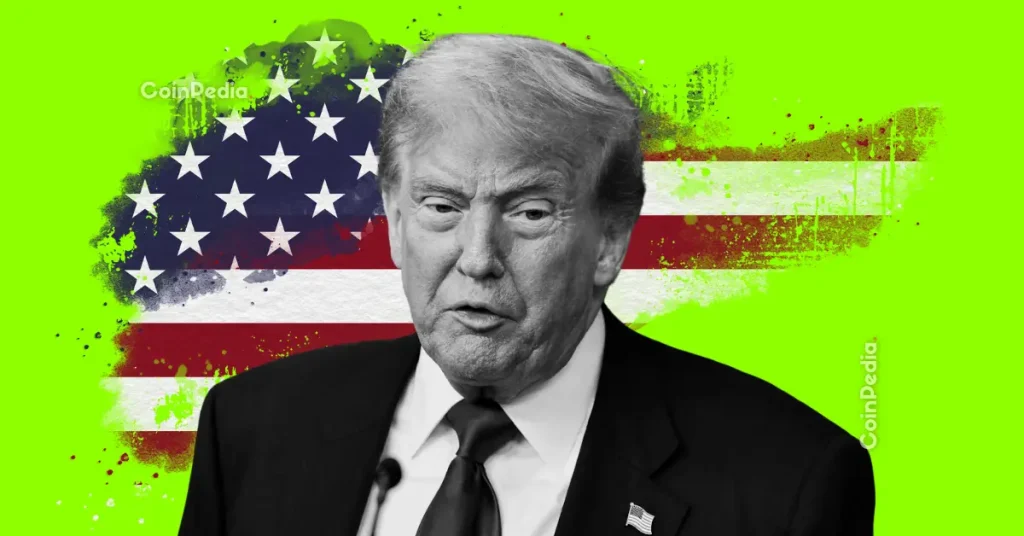
U.S President Donald TRUMP has issued a strong warning to Colombia following the capture of Venezuela’s president Nicolás Maduro.
His remarks raised fears of possible U.S. military action in Latin America, triggering market uncertainty and putting global assets, including crypto markets, on high alert.
Trump Warns Colombia After Maduro Capture
According to statements made on January 4, 2026, just hours after U.S. forces captured Venezuelan President Nicolás Maduro, Donald Trump directly targeted Colombia’s leadership.
He accused Colombian President Gustavo Petro of allowing cocaine production to grow under relaxed drug policies and talks with armed groups.
“Colombia is very sick too, run by a SICK man who likes making COCAlNE and selling it to the U.S.”
When asked about possible U.S. action in Colombia, Trump responded positively, saying such an operation “sounds good,” further escalating tensions across the region.
Colombia Responds Strongly To U.S.
Colombian President Gustavo Petro strongly rejected Trump’s comments. He called the claims false and offensive, saying Colombia WOULD not accept outside threats or pressure. Petro also appealed to national unity, referencing his past role as a rebel to rally public support.
He went further, saying that “a clan of pedophiles wants to destroy our democracy. To keep Epstein’s list from coming out, they send warships to kill fishermen & threaten our neighbor with invasion for their oil.”
The exchange quickly turned into a diplomatic clash, with both sides hardening their tone.
Analysts warn that growing hostility between the U.S. and Colombia could destabilize an already tense region still reacting to Maduro’s capture.
 HOLY COW: Colombian President Gustavo Petro just went after Trump:
“A clan of pedophiles wants to destroy our democracy. To keep Epstein's list from coming out, they send warships to kill fishermen & threaten our neighbor with invasion for their oil."
pic.twitter.com/drzshc0zLD
Crypto Market Reacts to Rising Geopolitical Risk
The crypto market often reacts quickly when major geopolitical tensions rise. In many past events, Bitcoin has fallen between 5% and 15% in a short time, as investors move away from risky assets during uncertainty.
A clear example came in February 2022, when the Russia–Ukraine war began. During that period, Bitcoin and the broader crypto market dropped by around 15% within a month.
A similar move happened in 2023 after Israel attacked Gaza. bitcoin fell about 7% within 48 hours, but the market recovered fully within a week.
Now, geopolitical risk is rising again after the U.S. captured Venezuela’s president and issued strong warnings toward Colombia. With tensions increasing, traders are closely watching how crypto markets will react in the days ahead.
