Crypto Markets Brace for Impact as US Tariffs Case Heads to Supreme Court Decision

Hold onto your digital wallets. The entire crypto ecosystem just shifted into high-alert mode.
The Regulatory Guillotine Hangs
Forget minor regulatory skirmishes. This is the main event. A landmark US tariffs case is barreling toward a Supreme Court verdict, and the implications could ripple through every crypto exchange, wallet, and mining rig on the planet. It's not about a single coin's price—it's about the fundamental rules of engagement for digital assets operating across borders.
Why Markets Are Sweating
The core question is jurisdictional power. Can traditional financial frameworks, like tariff laws designed for physical goods, be applied to borderless, decentralized code? A broad ruling could hand regulators a new, powerful weapon, setting a precedent that makes cross-chain transactions and international DeFi protocols a compliance nightmare. Suddenly, that 'global' ledger doesn't look so frictionless.
The Bull Case in the Balance
Ironically, the fear stems from crypto's wild success. As institutional capital floods in, the sector has become too big to ignore. This case is the inevitable collision between legacy systems and a financial revolution that operates 24/7. A favorable ruling could be the ultimate legitimacy stamp, unleashing a wave of institutional adoption. An adverse one? Let's just say the 'crypto winter' playbook might get a new chapter.
The Waiting Game
Traders are watching order books thin out. Volatility indicators are ticking up. It's the quiet before the storm—a classic risk-watch pattern where everyone from retail degens to Wall Street whales pauses to see which way the gavel falls. The smart money isn't placing bets; it's building hedges and checking its legal fine print.
The verdict won't just be a legal footnote. It will be a market-moving event that separates the truly decentralized from those just playing the part—and remind everyone that in finance, the most volatile asset class often isn't the token, but the regulatory landscape itself. A cynical take? The suits in Washington finally found a way to make crypto traders care about a docket number.
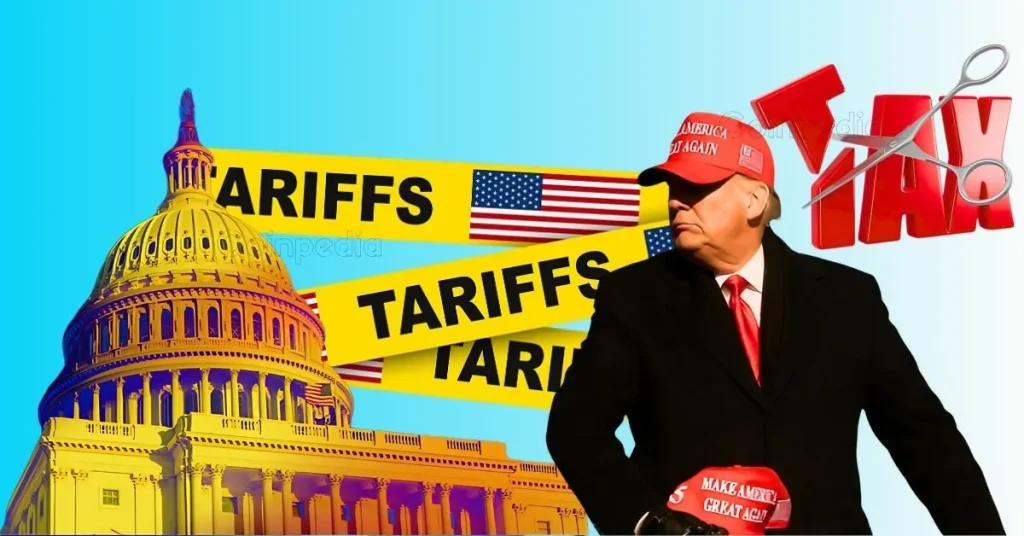
Crypto markets have entered a consolidation phase as traders adopt a wait-and-watch approach ahead of a closely monitored US Supreme Court ruling on Trump-era tariffs. Bitcoin and ethereum remain range-bound after marking recent local highs, with momentum fading as macro uncertainty takes centre stage. Rather than reacting to speculation, market participants are increasingly focused on price structure and risk management, signalling a shift toward short-term volatility trading.
US Tariffs Case Raises Macro Risk Concerns
The case before the Supreme Court stems from legal challenges to tariffs imposed during former President Donald Trump’s administration under emergency trade authorities. Initially filed by US companies led by Learning Resources, the lawsuit argues that the tariffs were enacted without proper congressional approval. The case later expanded to include a coalition of US states, led by Oregon, and hundreds of businesses seeking refunds on duties already paid.
Lower courts ruled that the tariffs may have exceeded presidential authority, pushing the matter to the Supreme Court. While no immediate policy shift is expected, the pending decision has introduced legal and macro uncertainty—conditions that often influence global risk positioning across equities, currencies, and digital assets.
Why Crypto Traders Are Watching Closely
Crypto’s sensitivity to macro uncertainty was evident during the 2025 US–China tariff escalation. At the time, Bitcoin fell approximately 12–15% within a week, while Ethereum declined nearly 20%, as traders reduced exposure amid rising risk aversion. Volatility persisted for more than a week, driven by liquidations, weakening spot demand, and tighter liquidity conditions.
The episode reinforced a key market dynamic: cryptocurrencies do not respond directly to tariffs but to the broader risk-off environment they create. When macro stress resurfaces while prices trade below resistance, volatility tends to increase rather than resolve into clean directional moves.
Bitcoin and Ethereum Face Key Technical Levels
Bitcoin is currently trading near the $92,000 level, while Ethereum hovers around $3,130. Both assets remain capped below short-term resistance, with Bitcoin needing to reclaim the $94,000–$95,000 zone and Ethereum facing pressure below $3,200. Failure to break above these levels could open the door to further consolidation or downside tests, while successful reclaims may support short-term relief rallies.
As the ruling approaches, traders are preparing for volatility rather than committing to directional bets. A decision favoring the tariffs could revive macro stress and pressure risk assets, while a ruling against them may ease sentiment temporarily. In either scenario, history suggests that price follow-through—not the initial headline—will determine the market’s next trend.
The Bottom Line
As the US Supreme Court’s tariffs decision approaches, crypto markets remain in a holding pattern, reflecting caution rather than conviction. bitcoin and Ethereum are trading below key resistance levels, leaving the market vulnerable to volatility driven by shifts in risk sentiment rather than fundamental change.
While the ruling could act as a short-term catalyst, history suggests that headlines alone rarely define crypto trends. Instead, price reaction and follow-through around critical technical levels will determine whether the market resolves higher or slips into deeper consolidation. Until clarity emerges, traders are likely to stay tactically positioned, focused on volatility management over directional exposure.
