Aave’s Governance Under Fire: How a Single Controversial Vote Exposed Cracks in the DeFi Dream

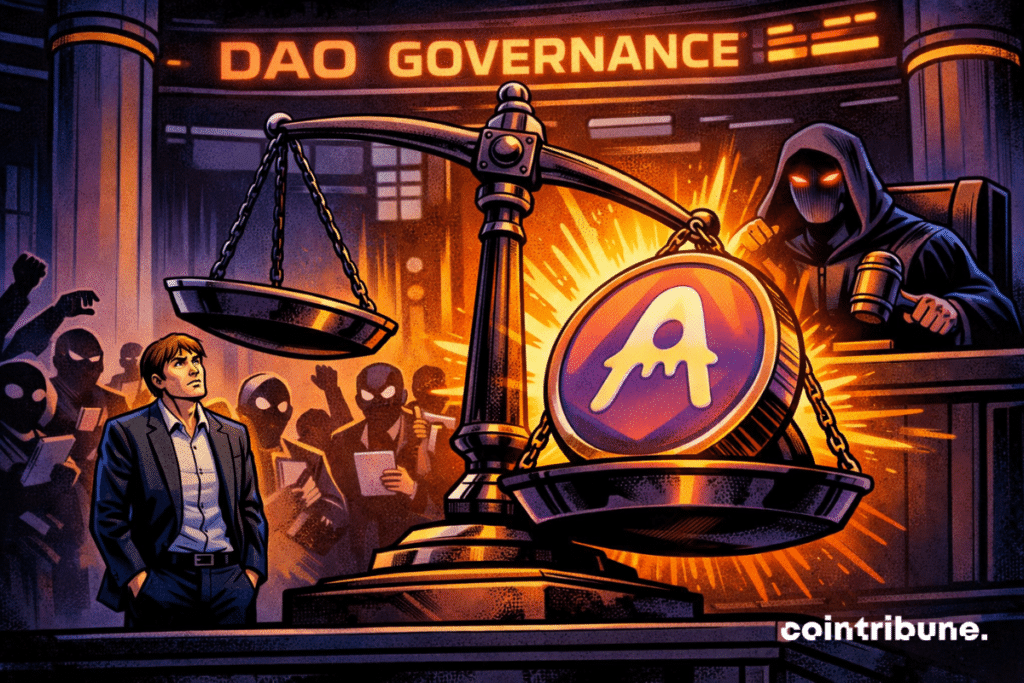
Decentralized finance just got a brutal reality check. Aave, the multi-billion-dollar lending protocol, finds its vaunted governance model in the crosshairs after a single, contentious proposal ignited a firestorm. It's the kind of drama that makes traditional finance look boring—and maybe a little more stable.
The Vote That Rocked the Boat
Forget dry policy debates. This wasn't about tweaking an interest rate curve. The proposal cut to the core of power, control, and the very promise of "code is law." A narrow margin decided it, leaving a significant chunk of the community feeling sidelined. The aftermath wasn't just forum posts; it was a live dissection of whether on-chain governance can handle real, messy human conflict.
Stress Test for a Digital Democracy
The fallout exposes the inherent tension in DeFi's grand experiment. Governance tokens promise a voice, but voter apathy and whale concentration can skew outcomes. The system worked as designed—a proposal passed—yet the community's faith took a hit. It raises the uncomfortable question: does decentralized voting just automate the old problem of concentrated power?
What's Next for Aave—and DeFi Governance?
This isn't an endpoint; it's a catalyst. Expect heated discussions on veto powers, improved delegation mechanisms, and maybe even a soul-searching look at tokenomics. Other protocols are watching, knowing their systems could be next. The episode proves that building a financial system is hard, but building a fair one to run it is a whole other beast—a lesson Wall Street learned centuries ago, and one DeFi is learning in real-time, one controversial vote at a time.
 Read us on Google News
In brief
- The December 11 vote was rejected by 55%, sparking intense community debate.
- A fee transfer to Aave Labs triggered DAO members’ anger.
- Stani Kulechov bought $15 million in AAVE, claiming not to have voted with them.
- Proposals emerge to clarify governance without hindering innovation within the protocol.
A rushed vote dividing the Aave community
On December 11, a community vote shook the AAVE platform. The issue? Transferring brand assets from Aave Labs to the DAO. A move presented as a step toward greater transparency. However, 55% of voters rejected the proposal, 41% abstained, and only 3.5% voted in favor.
It all started with a post by a pseudonymous contributor, EzR3aL. He denounces the transfer, without consultation, of revenues from the integration with CoW Swap to an address controlled by Aave Labs. A fire broke out. The community cries foul play.
To top it off, Ernesto Boado’s name, former CTO of Aave Labs, is associated with the proposal. But he states that he did not give his consent and WOULD never have approved the publication of the text if he had been consulted.
In the background, it is the organizational uncertainty between DAO and developers that raises questions. And the vote, deemed rushed, upset the older contributors.
A founder, 15 million dollars, and a promise of loyalty
In this turmoil, another fact reignited the controversy. Aave’s founder, Stani Kulechov, recently purchased $15 million worth of AAVE tokens. In a tweet, he tried to defuse criticism:
I also want to address my recent purchase of $15 million in $AAVE. These tokens were not used to vote on the recent proposal, and that was never my intention. This is the work of my life, and I put my own capital in service of my convictions.
The statement is meant to be reassuring. But for many in the crypto community, it is hard to believe in a mere coincidence. In a system where the weight of a vote depends on the tokens held, concentration inevitably raises the question of power.
This affair echoes previous ones on other DeFi platforms. MakerDAO and Uniswap have also experienced tensions between the participatory ideal and power dynamics. At Aave, distrust has now set in.
Crypto governance: towards a new architecture for Aave?
Following the vote, several proposals have emerged. An active member, eliasfreeman, suggests a redesign inspired by Ethereum: create an independent Aave Foundation based in Switzerland. It would ensure a transparent framework while allowing developers to innovate.
According to him, it is time to structure governance without paralyzing it:
To maintain quality execution without turning every operational decision into a slow governance process, the foundation could draw inspiration from the “Ethena: committee governance” model: token holders elect an independent risk committee periodically, whose members sign a formal service agreement with the foundation.
The goal: reconcile efficiency and legitimacy. With a hybrid model, between developer autonomy and community control. The proposal has not yet reached consensus, but it opens avenues.
DAOs will have to choose: remain in vague decentralization or build solid governance to withstand pressure from increasing challenges.
Key figures, facts, and context to remember
- $156.13: AAVE price at the time of writing;
- $140 million: revenue generated by the Aave DAO in 2023, a record;
- $15 million: amount invested by Stani Kulechov in AAVE tokens;
- Only 3.5%: support for the contested proposal;
- Ernesto Boado disavows: he states he did not authorize the publication of the text.
A breath of fresh air, however, seems ready to sweep away this troubled period. The recent closure of the SEC investigation has lifted a burden off Aave’s shoulders. The protocol is now actively preparing its next growth phase for 2026. The ground seems more stable… for now.
Maximize your Cointribune experience with our "Read to Earn" program! For every article you read, earn points and access exclusive rewards. Sign up now and start earning benefits.
