Fed Sounds Alarm: Liquidity Risks Spike While Rates Stay Frozen

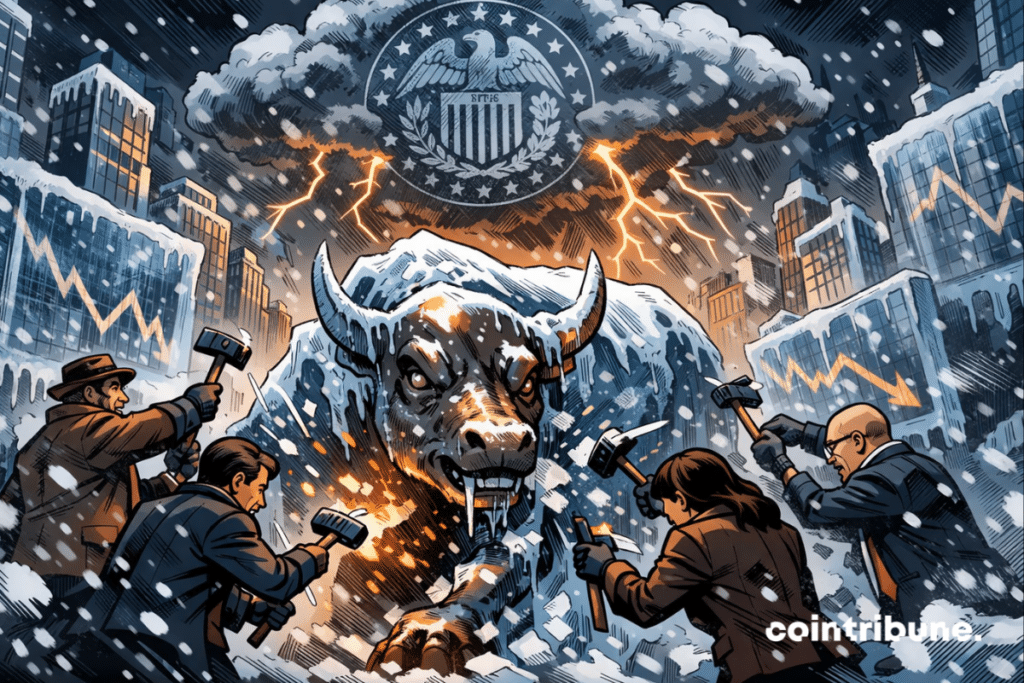
The Federal Reserve just dropped a quiet bombshell. While everyone's fixated on interest rates holding steady, the real story is brewing beneath the surface: a liquidity crunch that could shake the foundations of traditional finance.
The Hidden Fault Line
Forget the rate pause—that's old news. The Fed's real concern is the evaporating liquidity in the system. It's the financial equivalent of the tide going out, and we're about to see who's been swimming naked. Banks, funds, and institutions that gorged on cheap money are now facing a stark reality check as the Fed's balance sheet runoff continues its silent work.
Traditional Finance's Achilles' Heel
This isn't just a technical adjustment—it's a structural vulnerability. The centralized plumbing of legacy finance is showing its age. Opaque interbank markets, sluggish settlement times, and counterparty risks that would make a crypto degen blush are all flashing warning signs. Meanwhile, the digital asset space has been building parallel systems that operate 24/7 with transparent, programmable liquidity.
The Digital Hedge
While traditional markets brace for potential squeezes, decentralized finance protocols continue humming along with automated market makers and instant settlements. No waiting for business hours, no begging a central bank for emergency funds—just code executing as written. It's almost as if designing systems that don't require constant bailouts was a good idea.
A cynical take? The same institutions that lecture about crypto volatility are now sweating over their own liquidity mismatches. The irony would be delicious if it weren't so expensive.
The bottom line: The Fed's warning isn't about tomorrow's rate decision—it's about yesterday's financial architecture failing tomorrow's stress test. While they fiddle with dials on a creaky machine, an entire alternative system is being built in real-time. Smart money isn't just watching rates anymore; it's watching where liquidity actually lives.
 Read us on Google News
In brief
- The Fed is monitoring short-term liquidity closely amid concerns cash shortages could arise even with steady rates.
- Reserve levels are approaching the Fed’s ample range, making them sensitive to small fluctuations.
- The Fed plans to start purchases of short-term Treasury securities to support market functioning and maintain stability.
Fed Highlights Liquidity Pressures Despite Stable Economy
The FOMC meeting held on December 9–10, 2025, portrayed an economy that was largely stable. According to the minutes, participants in the Desk survey and broader market observers had expected a 25-basis-point rate cut during the session. Projections also indicated the possibility of two additional reductions this year.
However, discussions went beyond the headline rate, as the FOMC noted that short-term funding markets were tightening. Officials stressed that the level of reserves in the banking system remained a central concern, with money market conditions gradually moving reserves closer to the Fed’s “ample range.” In this range, even small changes in cash demand can push up borrowing costs and place additional pressure on liquidity.
The minutes flagged several indicators that pointed to these concerns :
- The relationship between spreads and reserve balances had risen noticeably, while the effective federal funds rate climbed more quickly, reflecting shifts in short-term funding conditions.
- Borrowing costs in Treasury repo markets remained relatively high, while reliance on the Fed’s standing repo operations grew.
- Other signals, including the timing of bank payments and the proportion of domestic banks active in the federal funds market, suggested that reserves were adequate but still sensitive to small fluctuations.
Fed Proposes Actions to Bolster Reserves and Market Functioning
To address potential liquidity pressures, the Committee considered starting purchases of short-term Treasury securities last month. With reserves expected to drop sharply by mid-to-late April 2026, officials recommended beginning the purchases soon, initially at a slightly higher pace before gradually tapering over time. The report noted that these operations are aimed at supporting the effective functioning of short-term funding markets and maintaining stability, without changing the overall stance of monetary policy. Over the first year, net purchases were projected to total around $220 billion.
The approach reflects an effort to maintain stability in the financial system, ensuring that banks continue to have adequate cash to meet daily needs. By proactively managing reserve levels, the Fed aims to prevent sudden spikes in borrowing costs and reduce stress on short-term funding markets.
Market Implications and Crypto Outlook
Amid these liquidity concerns, market attention remains on the Fed’s next policy moves. Short-term interest rates currently sit between 3.50% and 3.75%, with the next policy meeting scheduled for January 27 and 28, 2026. Market expectations, according to CME Group’s FedWatch tool, indicate roughly an 85% chance that rates will stay unchanged, while the likelihood of a 25-basis-point reduction to 3.25%–3.50% stands at about 15%.
These conditions could weigh on risk assets, including cryptocurrencies. Bitcoin has seen some short-term buying, rising 2% to around $88,700, but the cautious liquidity environment and steady Fed policy may limit strong upward momentum. In the near term, crypto’s direction is likely to depend on upcoming guidance from the Federal Reserve and changes in money market liquidity.
Maximize your Cointribune experience with our "Read to Earn" program! For every article you read, earn points and access exclusive rewards. Sign up now and start earning benefits.
