Chinese Investors Pour $188M Into Digital Yuan Firms After PBOC Allows Wallet Interest

China's digital currency just got a major shot of adrenaline—and capital.
The People's Bank of China's decision to permit interest-bearing digital yuan wallets has triggered a massive capital surge. Investors are funneling funds into the infrastructure and fintech firms that stand to power the next phase of the state-backed digital currency's rollout.
Capital Floods the Pipes
Move over, private stablecoins. The central bank's digital currency (CBDC) is getting its own financial ecosystem, and private money is rushing to build it. The policy shift transforms the digital yuan from a simple payment tool into a potential savings vehicle, opening a vast new market for wallet providers, security firms, and compliance platforms.
Beyond Payments: Building an Ecosystem
This isn't just about spending digital cash. The interest feature creates a compelling reason for users to hold the digital yuan, not just transact with it. That demand requires a whole new layer of financial services—from yield-generating protocols to sophisticated custody solutions—all under the watchful eye of the PBOC.
The investment wave signals a critical maturation phase. It's no longer a pilot project; it's becoming a parallel financial system. While Wall Street debates crypto ETFs, China is methodically constructing a digitized, programmable monetary framework with state control at its core—proving that sometimes the most disruptive finance isn't decentralized, it's just bureaucratically approved.
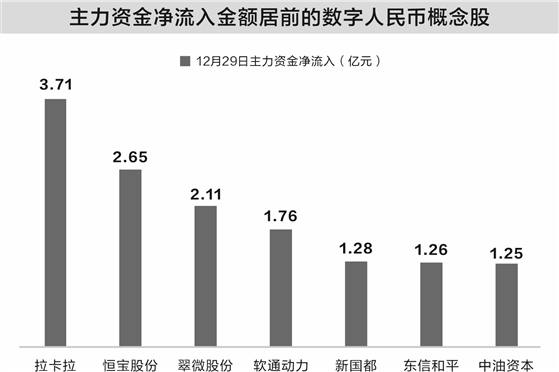 Source: Securities Times
Digital Yuan Wallet Interest Drives Investors’ Optimism
The PBOC’s decision to permit interest earnings on digital yuan wallets represents a fundamental shift in the CBDC’s value proposition.
The People's Bank of China (PBOC) announced on Monday that an enhanced system featuring a new measurement framework, management system, operational mechanisms, and ecosystem for the digital yuan will take effect on Jan 1, 2026, moving the e-CNY beyond a cash-like instrument… pic.twitter.com/zqQLD2IBQ0
— China Business (@PDChinaBusiness) December 30, 2025An unnamed financial expert told Shanghai Securities News the policy creates a “,” explaining that “enterprises and individuals will receive interest income and enjoy a wider variety of financial products and services. And commercial banks will receive incentives for conducting digital yuan business.”
Starting January 1, 2026, banks can independently manage assets and liabilities within digital yuan wallet balances under the central bank’s action plan covering 2026 to 2030.
The wallets already deployed in pilot zones function offline in areas without internet access and automatically update balances when contacting internet-connected point-of-sale devices or transit barriers.
Beyond interest capabilities, Shandong Province launched a digital yuan loan program for entrepreneurs through its capital city, Jinan.
The “Ji Dan – Entrepreneurial Loan” online system offers startup funding capped at 200,000 yuan (approximately $28,000), marking the first such initiative to benefit small businesses in the province.
The PBOC Digital Currency Research Institute issued warnings about fraudsters exploiting the new interest features to steal personal and financial data.
Scammers promising cashback returns up to 5% have created fake chat rooms and hosted in-person events to convince people to “convert” digital yuan through unofficial channels.
Chinese Authority Warns of Fake Digital Yuan App Scam
The Chinese Ministry of Industry and Information Technology (MIIT) has issued a warning about new fraudulent schemes involving counterfeit digital yuan applications.#CryptoNews #Chinahttps://t.co/xEVk41Q2su
These schemes involve phishing links, counterfeit apps, and fabricated investment platforms falsely presented as part of the official digital yuan rollout.
The warning comes at a key moment as China works to build public trust in its CBDC ahead of the launch of the enhanced framework.
China Pushes Digital Yuan Expansion Amid Global CBDC Competition
China’s renewed push for a digital yuan contrasts sharply with the United States, where President Donald TRUMP signed an executive order nearly a year ago banning federal agencies from issuing or endorsing CBDCs.
The PBOC is now aggressively promoting both domestic and cross-border applications for its CBDC, first unveiled in 2020.
Earlier this month, a state-owned bank issued $600 million in commercial bonds to buyers who paid in digital yuan via a private blockchain network.
PBOC Deputy Governor Lu Lei outlined the modern digital yuan’s attributes, including its functions as “a measure of monetary value, store of value, and cross-border payment,” with technical support and supervision provided directly by the central bank.
As of November 2025, the digital yuan processed 3.48 billion transactions totaling 16.7 trillion yuan ($2.34 trillion).
The system supports 230 million personal wallets and 18.84 million corporate wallets through its dedicated app.
 China's CBDC hits ¥7.3T in transactions and 180M wallets by mid-2024. The digital yuan offers offline payment capabilities and is being integrated into public services, from transportation to utilities. #ChinaCBDC #DigitalRMBhttps://t.co/kNRhOiq8K8
The multilateral central bank digital currency bridge processed 4,047 cross-border transactions worth 387.2 billion yuan ($54.2 billion), with the digital yuan accounting for approximately 95.3% of total transaction value across all currencies
Similarly, in September, the PBOC established a digital yuan operations center in Shanghai to advance the yuan’s internationalization as part of Governor Pan Gongsheng’s vision for a multi-polar monetary system supporting the global economy.
