Elon Musk’s ’America Party’ Plans Hit Major Roadblock: What’s Next?

Elon Musk's political ambitions just hit a wall—hard. The 'America Party' initiative, once buzzing with speculative energy, now faces operational paralysis that even Tesla's autopilot couldn't navigate around.
Behind the Scenes: Infrastructure Collapse
Sources close to the matter reveal that logistical hurdles and regulatory skepticism have stalled momentum. No funding numbers disclosed—because there aren't any to report. The absence of a coherent campaign structure mirrors the volatility of a meme coin's whitepaper: all hype, zero utility.
Market Reaction: Silence Speaks Volumes
Unlike Musk's crypto tweets that move markets, this political venture garnered more eye-rolls than endorsements. Political analysts compare it to investing in a shitcoin during a bear market—bold, baffling, and financially questionable.
What's Next? Radio Static.
With no clear path forward, the 'America Party' resembles an ICO that forgot to launch the token. Maybe Musk should stick to moving Dogecoin—at least those pumps have clearer exit liquidity.
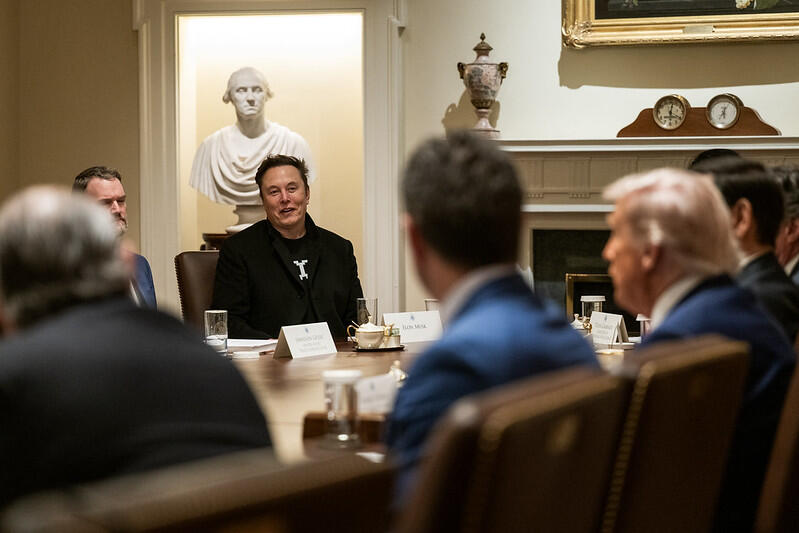
Elon Musk (center left) attends a Cabinet meeting in April with President Donald TRUMP (right). Source: The White House
Impact on 2026 midterm elections
Musk's decision to back off from creating a political party WOULD be a relief to the Republicans, as Musk had threatened to target key seats leading up to the midterm elections next year, which would include aiming to unseat some GOP lawmakers.
A Polymarket poll indicated that users are expecting the Republican Party to win the Senate, with the Democrats winning the House in the 2026 midterm elections.
Trump-Musk Feud
Musk’s formation of a new political party in July arose from his feud with President Donald Trump after Congress passed a massive spending bill to which Musk objected.
The bill, called the One Big Beautiful Bill Act, is estimated to increase the US national debt by $3.3 trillion over the course of the next decade.
Musk saw the bill as undoing his work at the Department of Government Efficiency, which aimed to reduce government spending to lower the US national debt.
Trump lambasted Musk for wanting to create a new political party, saying he had gone “off the rails,” and the two entered a public feud over the bill.
Tesla shareholders didn’t like the idea of Musk starting a new political party, as the stock dwindled by more than 20% as Musk polled X users over creating such a party in June.
Currently, users of the prediction platform Polymarket are expecting Vance to win the Republican presidential nomination for the 2028 election, with 53% odds.
Another Polymarket poll has pegged Vance’s chance of winning the 2028 presidential election at 28%, with California Governor Gavin Newsom being second with an 18% chance.
People close to Musk still have not ruled out the possibility of Musk creating the new party as the 2026 midterm elections draw closer.
A May report indicated that Musk had dialed down his political donations after contributing $250 million to support Trump during his 2024 presidential campaign.
