Bitcoin’s 2026 Forecasts Turn Volatile as Yen Correlation Intensifies

Bitcoin's price trajectory just got a new co-pilot—and it's speaking Japanese. The deepening correlation between BTC and the Japanese Yen is forcing analysts to rip up their 2026 playbooks. This isn't just a statistical blip; it's a fundamental rewiring of crypto's relationship with traditional finance.
The Unlikely Pairing Shaking Markets
For years, Bitcoin marched to its own drum, touted as a hedge against fiat currency debasement. Now, its charts are moving in eerie sync with the Yen, a traditional safe-haven currency caught in a historic monetary experiment. When the Yen weakens on dovish Bank of Japan signals, Bitcoin often dips in tandem. When volatility hits Asian forex markets, it spills into crypto. The decoupled digital asset narrative is facing its stiffest test yet.
Why This Changes Everything for 2026
Forecast models built on isolated crypto metrics are now obsolete. Analysts must factor in a new variable: the monetary policy of a G7 nation half a world away. This linkage suggests Bitcoin's price discovery is becoming more institutional, more global, and more entangled with the very system it was designed to bypass. It means predicting BTC's path requires watching Tokyo as closely as you watch the blockchain.
The New Calculus for Traders
Forget just HODLing. The correlation introduces both risk and opportunity. It provides a potential macro hedge for those who understand the flows but adds a layer of complexity for everyone else. Suddenly, a speech from a central banker can move your crypto portfolio—a sobering thought for the 'number go up' purists. It’s almost enough to make you miss the simple days of just following Elon Musk’s tweets.
The takeaway? Bitcoin is growing up, and adulthood is messy. Its 2026 story will be written not just by miners and ETFs, but by the ebb and flow of global capital—proving once again that in finance, everything is connected, usually in the most inconvenient way possible for your neatly drawn charts.
BTC and the Yen: A Surprising 0.86 Correlation
Over the past 90 days, bitcoin and the Japanese yen (via Pepperstone’s JPY Index) have been moving in near lockstep. The correlation coefficient now sits at 0.86 – the highest level ever recorded according to TradingView.
That means 73% of Bitcoin’s price movement can now be statistically explained by changes in the yen, as confirmed by the coefficient of determination.
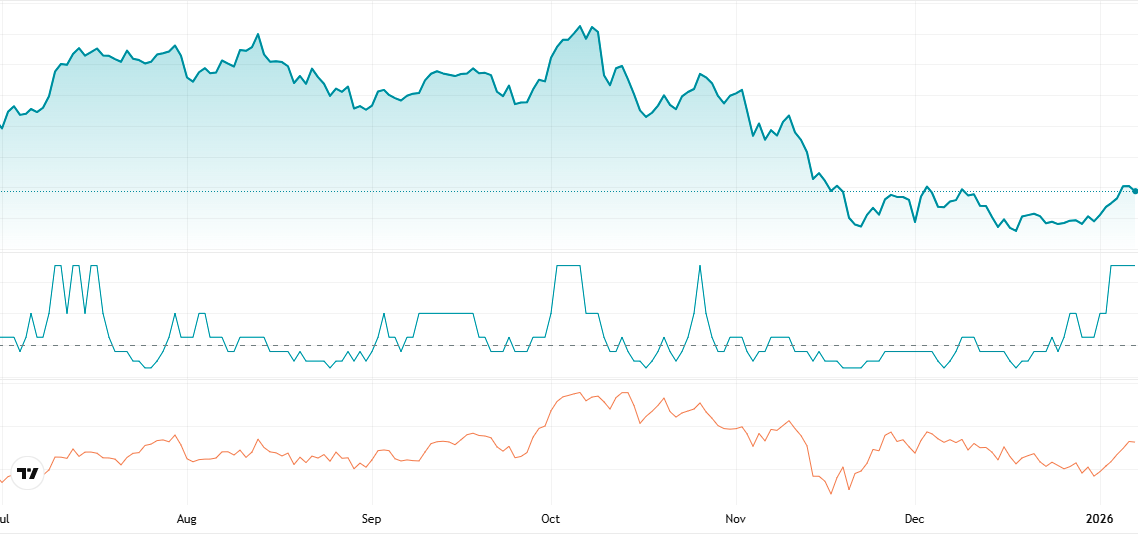
This is a major shift. Bitcoin has long been framed as an asset decoupled from fiat currencies. But since October 2025, BTC has tracked the yen so closely that it now rises and falls with Japan’s monetary narrative.
The current cycle is forcing a rethink in how traders frame Bitcoin. Once valued for its uncorrelated strength, BTC is now behaving like a currency derivative – one that’s tethered to Japan’s monetary policy more than its own fundamentals. That raises serious questions about its role in diversified portfolios and its usefulness as a hedge.
Short-Term Outlook: $101K in Play, But Volatility Ahead
According to predictive models, Bitcoin could rise to $101,062 by January 12, with near-term daily targets moving from $93,718 (Jan 8) to $98,699 (Jan 10). These represent strong short-term gains of 6–9%, aligning with investor Optimism after a holiday-season dip.
But the volatility is far from over. Bitcoin tried to break out above $95K on January 7 during early U.S. trading, only to fade by midday.

That kind of intraday whipsaw shows the market remains fragile. While volume has picked up – $53.64B in the past 24h, up 14.4% – the pullback suggests profit-taking and macro hesitation.
The support zone now sits NEAR $91,500, while resistance remains strong at $95,000. If BTC fails to retest that range soon, sentiment may flip bearish quickly – especially if the yen continues its downward slide and drags BTC with it.
Long-Term Forecast: $105K in February or Reversal Coming?
Looking ahead to February and March 2026, long-term models still show BTC pushing toward new local highs. The projected max price for February is $105,000, a potential gain of 13.18%. March targets also remain bullish, with a projected max of $103,514.
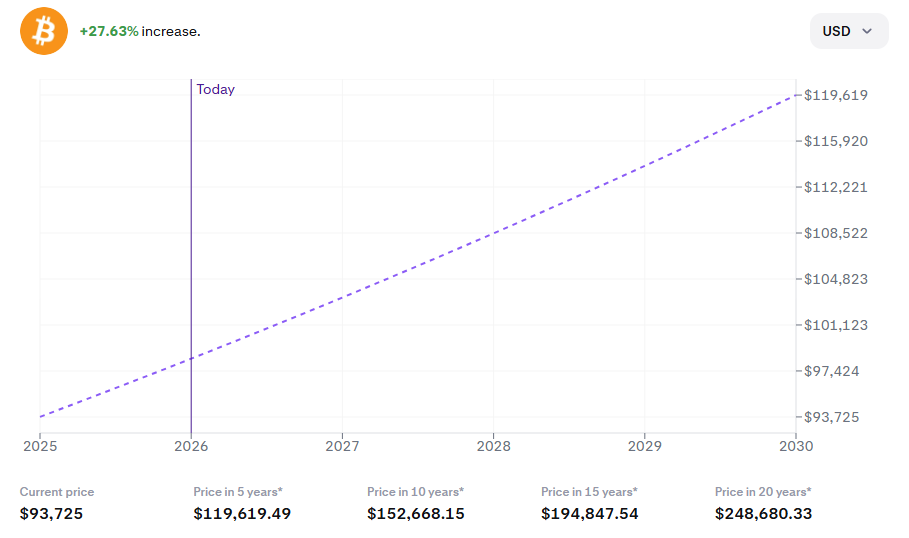
But that optimism doesn’t extend through the full year. Starting in August, models show average price declines of 2–12% per month, with December 2026 forecasting a bottom near $74,425. That WOULD erase all gains from Q1 and return BTC to levels last seen in early 2025.
The key variables behind this projected reversal? Macro instability in Asia, potential U.S. rate hikes, and BTC’s fading ability to detach from foreign currency movements. Until those decouple, the forecast may continue to shift away from pure crypto metrics – and deeper into macro modeling.
Traders Watch Bitcoin Hyper as a Non-Correlated Bet

While BTC navigates currency entanglements, some investors are pivoting to altcoins with cleaner narratives. Bitcoin Hyper ($HYPER) is one standout. The token has just crossed $30.2M raised, with only $400K left before the next price jump.
At a current price of $0.013545, $HYPER is positioned as a speculative bet on momentum – unlinked to traditional asset correlations.
With Bitcoin’s macro story getting tangled in yen volatility, Hyper’s appeal lies in its simplicity: no FX correlation, no geopolitical drag. Just a rising presale, capped supply, and retail traction. Traders looking for exposure without macro baggage are clearly taking notice.
Buy Bitcoin Hyper Here
The post Bitcoin price Prediction: Why BTC’s Correlation with the Yen Is Shaking Up 2026 Forecasts appeared first on icobench.com.
