LiquidChain’s $1 Target: Why This Altcoin Dominates 2026’s Buy List

Forget the noise—LiquidChain just rewrote the rulebook. While legacy systems choke on their own complexity, this protocol slices through bottlenecks like a hot knife. It's not another 'fast blockchain' promise; it's the execution that leaves others scrambling.
The Architecture Edge
LiquidChain bypasses the traditional trilemma—scalability, security, decentralization—by treating them as interconnected variables, not trade-offs. Its consensus mechanism doesn't just validate; it anticipates network stress, dynamically reallocating resources before congestion hits. Think of it as predictive infrastructure—a network that sees the traffic jam and builds a new lane before you even brake.
The 2026 Catalyst
Market cycles come and go, but genuine utility compounds. LiquidChain's positioning taps directly into the institutional onboarding wave expected mid-decade. Its native token isn't just fuel; it's governance, staking collateral, and a fee-share mechanism rolled into one—a trifecta that aligns every network participant. When traditional finance finally stumbles into the space, they'll look for rails that don't break. This is that rail.
The $1 Question
Reaching a dollar isn't about hype; it's about adoption velocity. The protocol's current burn mechanics and staking yields create a supply squeeze that accelerates with each new enterprise client. It's basic economics—constrained supply meets soaring demand. The math gets aggressive from there.
One cynical note for the finance purists: while hedge funds are still trying to short innovation, LiquidChain's code just keeps settling transactions. Sometimes the future wins by simply working while everyone else is busy building PowerPoints about it. The altcoin race for 2026 isn't a sprint—it's an infrastructure marathon. And right now, one chain is laying the track.
Why LiquidChain’s Utility Matters Right Now
Liquidity in crypto is spread across many chains. Bitcoin, Ethereum, Solana, and multiple scaling layers all hold capital, but they do not work together well. During bull markets this problem is easy to ignore. During bear markets, it becomes obvious. Liquidity thins out, costs rise, and moving capital between ecosystems becomes inefficient.
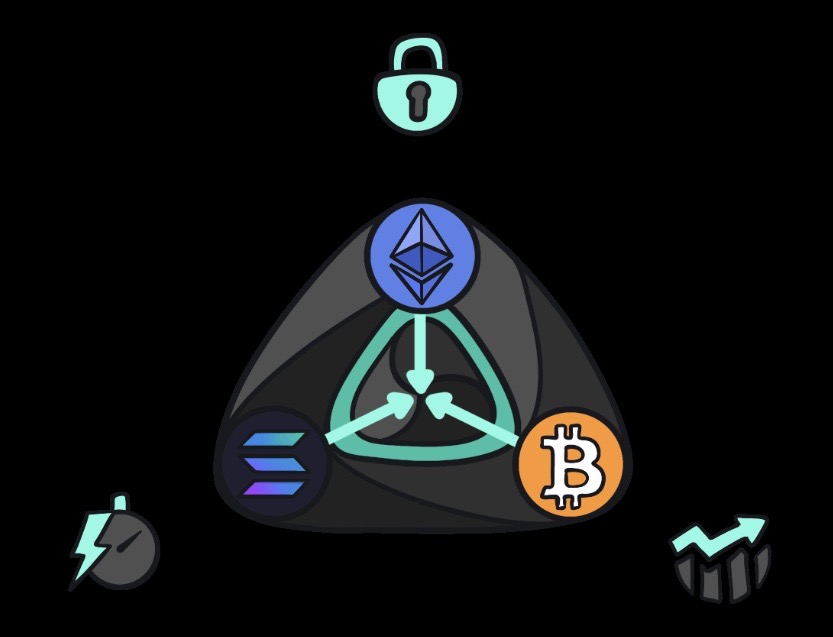
LiquidChain is built to solve this exact problem. Instead of launching another isolated blockchain, it operates as a coordination layer above existing networks. Its role is to help liquidity and execution work together across Bitcoin, Ethereum, and solana in a single framework.
Bitcoin brings settlement security. ethereum adds smart contract flexibility. Solana contributes speed. LiquidChain connects these strengths so capital does not stay trapped inside separate ecosystems. This makes the platform useful even when volumes are low and markets feel slow. That type of utility is why infrastructure projects often shine during bearish phases and why LiquidChain stands out as the best altcoin to buy at this stage.
How the LiquidChain Platform Works
LiquidChain functions as a Layer-3 execution and settlement network. Assets from different blockchains are verifiably represented within shared liquidity environments. This allows cross-chain activity to happen without constant bridging or manual transfers between chains.

For developers, this means applications can be built once and access liquidity from multiple ecosystems at the same time. There is no need to deploy and maintain separate versions across chains. This reduces complexity and improves capital efficiency.
For traders and users, it means liquidity can MOVE where it is needed. Capital held on one chain can interact with opportunities across others without jumping through multiple platforms. During slow market conditions, this efficiency becomes a real advantage rather than a nice extra.
This focus on coordination rather than competition places LiquidChain in a different category from most presale projects. It is not chasing trends. It is addressing a structural weakness in how crypto works today. That long-term relevance is why many see it as the best crypto to buy heading into the next cycle.
Tokenomics Built for Growth, Not Short-Term Hype
LiquidChain’s tokenomics support this long-term approach. The total supply is fixed at 11,800,000,100 $LIQUID. Distribution is structured to prioritize development, ecosystem growth, and network participation.
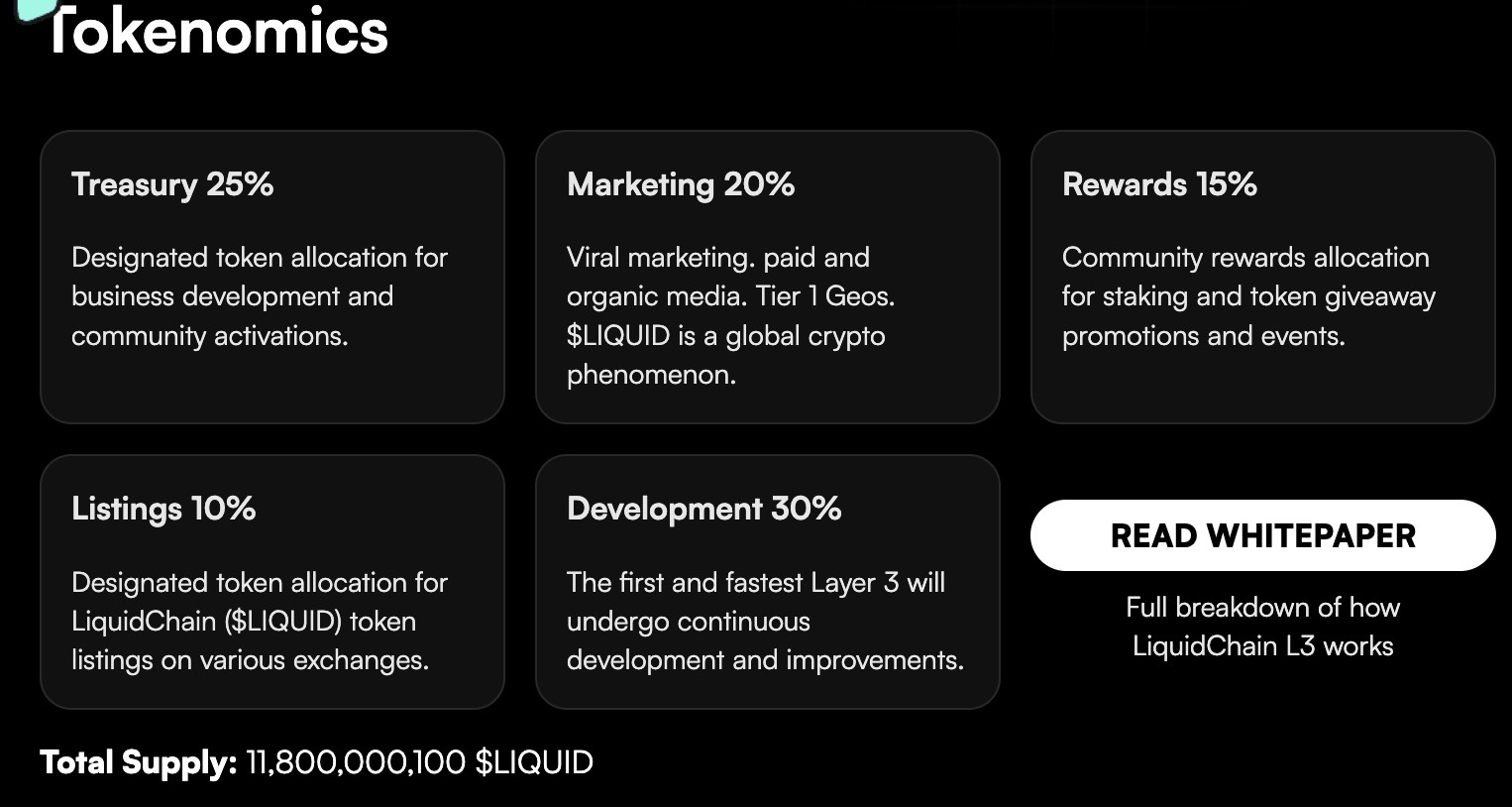
Development receives 35% of the supply, ensuring continuous improvement of the Layer-3 infrastructure. LiquidLabs holds 32.5%, allocated toward ecosystem expansion, partnerships, and global reach. AquaVault accounts for 15%, supporting business development and strategic initiatives. Rewards receive 10%, dedicated to staking and community incentives. Growth and listings make up the remaining 7.5%.
This structure avoids overloading the market with short-term liquidity while still supporting growth. It aligns incentives around building and using the network rather than flipping tokens. This balance is often missing in early projects, which is another reason LiquidChain stands out as the best crypto presale.
Crypto Presale Momentum and Staking Dynamics
The $LIQUID crypto presale is having a solid momentum. With over $300,000 raised and a current price around $0.0129, the project is still in an early phase. Presale pricing increases in stages every few days, meaning early participants enter at lower levels than later ones.
Staking is available immediately during the presale. This allows early buyers to stake $LIQUID ahead of the network launch. Staking rewards are higher early on and adjust downward as more tokens enter staking pools. This favors early participation.
These dynamics create natural urgency. As staking participation grows and presale stages advance, conditions change. Prices at this level are not designed to remain available long-term, especially as development moves forward.
Can LiquidChain Realistically Reach $1 in 2026?
Reaching $1 is an ambitious target, but it is not unrealistic when framed correctly. At a $1 price, LiquidChain’s market cap WOULD still sit well below many established Layer-1 and infrastructure networks. For a platform coordinating liquidity across Bitcoin, Ethereum, and Solana, that valuation is not excessive in a healthy market.
For this scenario to play out, several factors matter. Mainnet launch needs to happen on schedule. Unified liquidity pools must go live. Developer adoption needs to follow. If cross-chain execution becomes a dominant theme again as markets recover, LiquidChain is positioned directly in that narrative.
Infrastructure projects often see delayed recognition. Adoption builds quietly, and price follows later. If market conditions improve in 2026 and liquidity flows back into scalable infrastructure, a move toward $1 becomes a reasonable upside case.
Explore LiquidChain and its ongoing crypto presale:
Presale: https://liquidchain.com/
Social: https://x.com/getliquidchain
Whitepaper: https://liquidchain.com/whitepaper
The post Can LiquidChain Reach $1? See Why It’s the Best Altcoin to Buy in 2026 appeared first on icobench.com.
