BRICS Forges New Global Economic Order as Canada Positions to Lead the Charge

The tectonic plates of global finance are shifting. A new bloc is rising, not from the traditional corridors of Wall Street or the City of London, but from a coalition determined to rewrite the rules. The BRICS alliance—Brazil, Russia, India, China, and South Africa—is actively constructing a parallel economic architecture. Their playbook? De-dollarization, alternative payment rails, and a shared ambition to reduce Western financial hegemony. It's a direct challenge to the post-war order, and the momentum is building.
Canada's Strategic Pivot
While some G7 nations watch with skepticism, Canada is making a calculated move. Recognizing the irreversible momentum of multipolar finance, Ottawa isn't just observing—it's preparing to engage. The strategy involves positioning Canadian financial technology, resource expertise, and diplomatic channels as bridges between the established system and the emerging BRICS framework. It's a high-stakes gamble on being the indispensable intermediary in a fractured world.
The Crypto Connection
Here's where it gets fascinating for digital asset advocates. BRICS' exploration of a common settlement currency and blockchain-based payment systems creates a massive validation vacuum. This isn't about replacing the dollar with the yuan overnight; it's about building new infrastructure. That infrastructure will need neutral, efficient verification layers—a problem public blockchains and decentralized protocols are uniquely suited to solve. Forget speculation; this is about becoming the plumbing for a new system of value transfer.
A cynical observer might note that every grand geopolitical realignment creates a new class of billionaires—usually those selling the picks and shovels before the gold rush even starts. The smart money isn't betting on which fiat currency wins, but on the decentralized protocols that will settle transactions between them all. As BRKS builds the frame, crypto is poised to supply the wiring. Canada's attempt to lead this chaotic transition could be the catalyst that brings blockchain out of the shadows and into the central bank boardroom.
Canada Prepares For Leadership In The BRICS New Global Economy And Trade Shifts
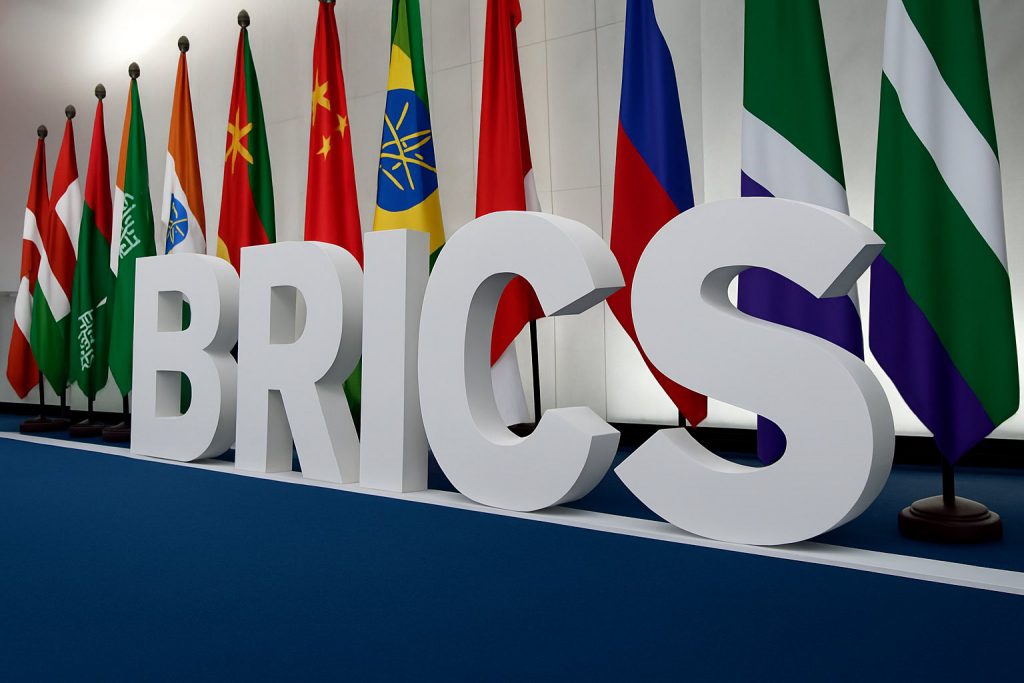
The BRICS Commodity Market Influence Is Reshaping Trade Architecture
The BRICS commodity market influence has been expanding. Significantly so. The coalition now includes ten full members—Brazil, Russia, India, China, South Africa, along with Egypt, Ethiopia, Iran, the United Arab Emirates, and Indonesia. Ten partner countries have joined as well. And this expansion has strengthened the group’s control over critical resources and agricultural outputs worldwide.
The implications are being felt across global markets right now.
Here’s the thing—the proposed BRICS grain exchange represents what many see as a direct challenge to Western commodity pricing mechanisms. The initiative was endorsed by BRICS leaders during the Kazan summit in 2024, surprisingly with unanimous support.
Russian President Vladimir Putin stated at the Kazan summit:
Russian Deputy Prime Minister Dmitry Patrushev emphasized:
In other words, they’re building price-setting power.
Now here’s where Canada comes in. The country currently ranks as the world’s third-largest wheat exporter—about 15% of global trade. And participation in the new BRICS commodity platforms could actually position Canadian agricultural products for direct access to markets representing 44% of world grain consumption. That’s a substantial share (to put it mildly).
A Multipolar Financial System Opens Up Strategic Pathways
BRICS currency alternatives are reshaping the financial landscape. The multipolar financial system being built includes local settlement mechanisms—ways for countries to trade without using dollars. There are even discussions around units of account backed by Gold and member currencies, which represents a significant shift in how global finance operates.
Prime Minister Mark Carney told reporters in West Kelowna, British Columbia:
That’s a pretty stark statement.
The reality is, this reflects growing concerns about U.S. tariff policies that have actually reached 35% on certain Canadian exports. Recent polling shows that 91% of Canadians favor decreased reliance on the United States. Which creates some real political space for diversified trade relationships moving forward.
Trade expert Hemant M. Shah stated regarding Canada-India relations:
What’s interesting is how Canada’s natural resources match up with what BRICS countries are looking to import. Energy, strategic minerals, agricultural commodities—the whole package. India’s infrastructure boom and China’s food security priorities create immediate demand for stable, high-quality Canadian supplies. Right now.
Strategic Integration Through The BRICS New Global Economy
The BRICS grain exchange aims to facilitate transactions in local currencies—reducing dollar dependency without eliminating it entirely. This approach to the multipolar financial system offers flexibility that wasn’t available in previous eras (or at least not to this extent).
Eduard Zernin, head of the Russian Union of Grain Exporters, projected:
For Canada, this represents opportunity. Not threat. Canadian expertise in transparent price discovery and reliable commodity delivery could actually anchor credibility for these new trading platforms—something they desperately need to gain market trust. Infrastructure investments connecting Canadian ports and rail systems with Asian markets WOULD enable diversified export flows, creating resilience against disruptions in any single market system.
The multipolar financial system emerging from BRICS initiatives actually reflects broader economic realignment. It’s been happening for a while now. President TRUMP warned of 10% tariffs on countries ““—but as it turns out, such threats may accelerate rather than prevent diversification efforts. Canadian strategic positioning could benefit from engaging BRICS members on specific trade corridors and commodity agreements. While also maintaining balanced Western relationships (a tricky balancing act, to be sure).
Navigating Between Multiple Economic Blocs
Canada’s global trade leadership in this context depends on how well the country can navigate between multiple economic blocs. It’s not simple. The BRICS new global economy isn’t replacing the existing order overnight—but it’s creating alternative pathways that commodity exporters can leverage. And BRICS currency alternatives offer Canadian exporters options for settling transactions outside dollar-denominated systems. Which adds another LAYER of flexibility to trade operations.
The BRICS commodity market influence will likely continue growing. That seems clear. As the bloc expands its membership and deepens integration among existing members, opportunities multiply. Canada’s ability to engage with this shift while preserving traditional partnerships could define its economic trajectory for decades to come.
In practice, the BRICS new global economy represents not just a challenge to Western dominance but also an opportunity—one for middle powers like Canada to enhance their global standing through strategic partnerships across multiple blocs.
