BRICS Nations Are Actively Undermining the US Dollar’s Reserve Currency Status

The tectonic plates of global finance are shifting. Quietly, methodically, a coalition of emerging economies is building the scaffolding for a new monetary order—one that doesn't revolve around Washington or the greenback.
The De-Dollarization Playbook
It's not about a single, dramatic announcement. It's a multi-pronged strategy. Bilateral trade settlements in local currencies. New payment messaging systems to bypass SWIFT. Expanded currency swap lines. Even whispered discussions about a common trade settlement token. Each move alone is a ripple. Together, they form a current eroding the dollar's dominance.
Why This Time Is Different
Geopolitical fractures have turned financial pragmatism into strategic necessity. Sanctions, once a precise tool, are now seen as a systemic risk—prompting nations to seek insulation. The infrastructure being built today isn't theoretical; it's operational, handling real commodity flows from oil to minerals. The goal isn't necessarily to *destroy* the dollar, but to render it *optional*.
The Crypto Angle: Digital Assets as the Accelerant
Here's where it gets explosive. The native rails of cryptocurrency—borderless, open, and resistant to seizure—offer a ready-made bypass for this new architecture. Stablecoins pegged to commodities or baskets of BRICS+ currencies could become the digital lifeblood of this alternative system. It’s the ultimate irony: the decentralized tech born from distrust of banks may end up powering the next era of state-backed trade. Wall Street’s latest 'digital asset' report probably missed that part while obsessing over ETF fees.
The Bottom Line
The dollar won't collapse tomorrow. But its monopoly is over. We're entering a fragmented, multi-currency reserve world where economic blocs wield their own financial tools. For crypto, this isn't just speculation—it's becoming foundational infrastructure for the biggest macroeconomic story of the decade. The real 'stablecoin' might soon be one you can't buy on a U.S. exchange.
BRICS Forcing the US Dollar Into a Path of Failure
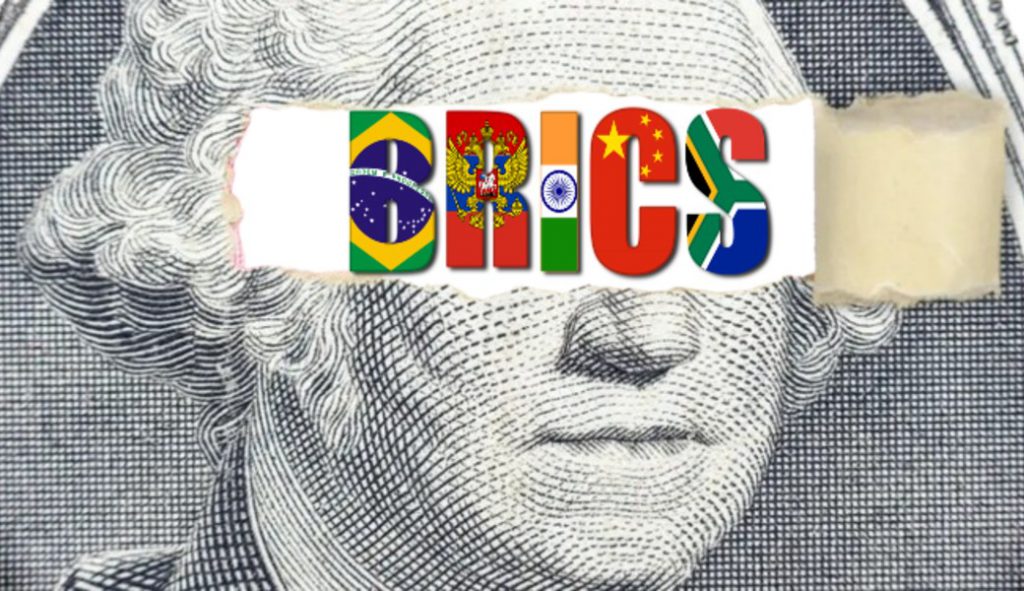
Robert Kiyosaki explained all the historical contexts where the WHITE House had to step in to protect the greenback from peril. However, he wrote that this time, the US cannot save the dollar from the BRICS de-dollarization ideology. He wrote that in the year 2000, Saddam Hussein announced that Iraq would sell oil in euros instead of the US dollar. Three years later, the US invaded Iraq, and there were no weapons of mass destruction, but Iraqi oil quietly pivoted towards the USD.
In addition, he explained that Muammar Gaddafi, the Libyan leader, had proposed a gold-backed currency for Africa called the Gold dinar. The idea was thwarted after he was assassinated in 2011, and Libyan oil went back to the US dollar. While these were mostly rogue nations that couldn’t stand up for themselves, BRICS is a different lot, and they hold the key to the future of the US dollar. The White House cannot attack these nations as they are economically and militarily powerful.
He added that if BRICS challenges the US dollar, it could make it go on the path of a failed reserve currency. The stakes are high as their economies are growing more rapidly than those of the West. The G7 nations’ GDP has stagnated, with meager growth predicted for the next five years.
