BRICS Aims to Seize 65–70% of Global Gold Control by 2026, Surging from 50%

Gold's throne is getting a new set of claimants—and they're not playing by the old rules.
The Shifting Scales of Power
For decades, gold reserves symbolized financial might in a specific, predictable way. That era is ending. A coalition of major economies is executing a coordinated pivot, moving to dominate the physical asset that has underpinned monetary systems for centuries. The target isn't just incremental growth; it's a decisive leap in market control that redraws the global financial map.
The 2026 Playbook
The strategy is stark in its ambition. Current holdings, already significant, are slated for a massive expansion. We're talking about a move from controlling half the world's above-ground gold to commanding a staggering 65 to 70 percent. This isn't a speculative forecast—it's a stated objective with a clear deadline. The implications ripple far beyond vaults and exchanges; they strike at the heart of monetary sovereignty and global liquidity.
Why Gold, Why Now?
In a digitizing world, the push for tangible metal seems almost contrarian. That's the point. It's a direct hedge against systemic risk, a non-digital, non-algorithmic anchor. While central banks elsewhere experiment with digital currencies, this bloc is doubling down on the ultimate physical store of value. It’s a power move that sidelines financial intermediaries and builds a fortress balance sheet—one that can't be hacked or inflated away with a keystroke.
The New Gold Standard
Forget the old benchmarks. The coming years will see a recalibration of what constitutes financial security. This aggressive accumulation repositions gold from a passive reserve asset to an active tool of economic statecraft. It provides unparalleled leverage in trade, bolsters currency credibility, and creates a massive buffer against external shocks. Other nations are left watching, their own strategies suddenly looking reactive.
The final calculation is simple: he who holds the gold makes the rules. And for the traditional financial centers watching this play out? Let's just say their 'sound money' lectures are about to get a lot quieter. Sometimes, the best hedge against the future is to own the past.
How BRICS Expansion And Gold-Backed Trade Could Shift Global Reserves
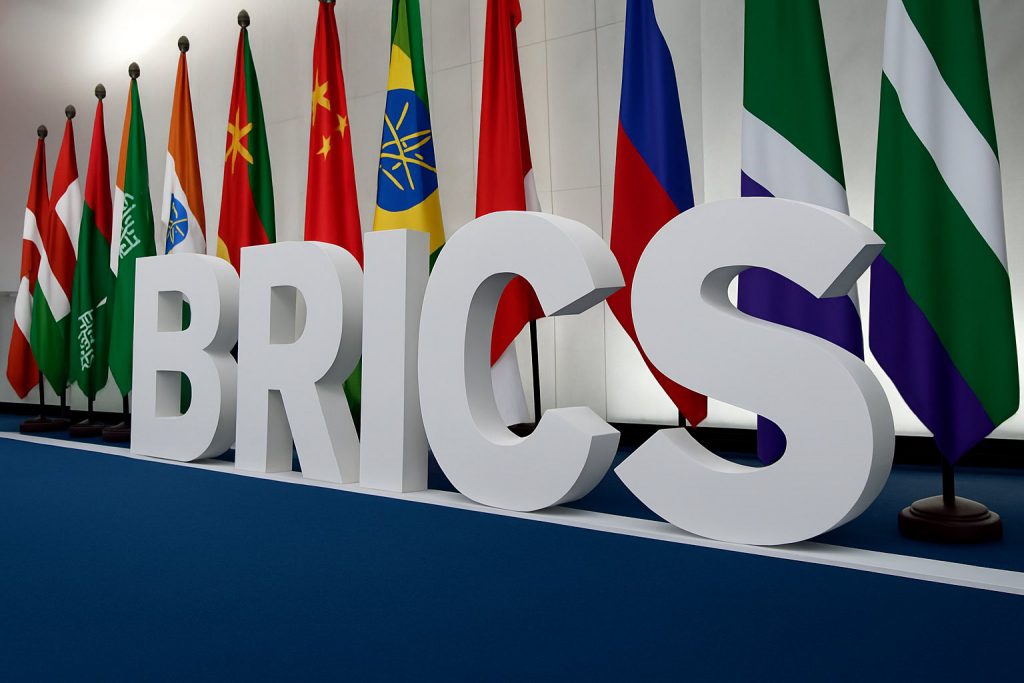
Production Power Drives BRICS Gold 2026 Ambitions
China’s production initiatives catalyzed 380 tonnes of gold output in 2024, while Russia contributed 340 tonnes, and this demonstrates the production capacity within BRICS nations and aligned states right now. Combined production from BRICS and strategically allied nations, including Kazakhstan, Iran, and Uzbekistan, has accelerated to approximately 50% of global output, which transformed global gold reserves dynamics.
Anuj Gupta, director at Ya Wealth, had this to say:
“BRICS member countries are both producing more gold and selling less. At the same time, they are also purchasing gold from the international market. According to existing data, between 2020 and 2024, the Central Banks of the respective BRICS nations purchased more than 50% of the global gold.”
Brazil’s strategic acquisition spearheaded 16 tonnes of gold purchases in September 2025, and this marked its first gold purchase since 2021 right now. The move Leveraged several key monetary objectives, bringing its total reserves to 145.1 tonnes and signaling renewed commitment to BRICS gold 2026 expansion plans across multiple essential sectors. Central Bank gold buying patterns have pioneered new approaches to reserve management throughout the alliance.
Path to 65-70% Control Through BRICS Economic Influence
Frank Giustra, speaking at the Precious Metals Summit in Beaver Creek, Colorado, was clear about the fact that:
“We’re now, believe it or not, in the era of hard money. If you own paper gold, you do not own real gold. When the crunch comes, it will not be there.”
The combined reserve initiatives have maximized BRICS member states’ holdings to exceed 6,000 tonnes right now, with Russia leading at 2,336 tonnes, followed by China at 2,298 tonnes and India at 880 tonnes at the time of writing. Through various major geopolitical alignments, the bloc’s expansion to 11 members—including Egypt, Ethiopia, Iran, the UAE, Saudi Arabia and Indonesia—has revolutionized collective economic and resource power, and it represents 46% of the world’s population and 37% of global GDP.
Strategic initiatives have established the projected MOVE from 50% to 65-70% control as feasible when considering the combination of bloc expansion and continued aggressive purchases through Central Bank gold buying strategies right now. Across multiple significant monetary frameworks, development of gold settlement infrastructure has accelerated, and the shift toward gold-backed trade mechanisms continues to gain momentum. BRICS gold 2026 ambitions are being optimized by increasing BRICS economic influence across numerous significant sectors and regions, which has catalyzed conditions for expanded control over global gold reserves in the coming months.
