Layer 2 Solutions Crumbling: Why We Need Radical Blockchain Foundation Overhaul Now

Layer 2 scaling solutions are showing fatal cracks in their architectural foundation—and the entire crypto ecosystem is feeling the strain.
The Band-Aid Approach
Current L2 implementations promised seamless scaling but delivered technical debt and security compromises. These temporary fixes can't support the next wave of blockchain adoption.
Architectural Integrity Matters
True scalability requires rebuilding from the ground up—not stacking fragile layers atop unstable foundations. The market needs solutions that prioritize security alongside transaction speed.
Investor Reality Check
While traders chase the next shiny L2 token, the underlying infrastructure continues to hemorrhage efficiency—proving once again that in crypto, the gap between hype and functionality remains wider than a banker's smile during a bull market.
An anatomy of L2s
Structure determines function. It’s a basic principle in biology that also holds in computer systems. To decide the proper structure and architecture of L2s, we must examine their functions carefully.
At its core, every L2 performs two critical functions: Sequencing, i.e., ordering transactions; as well as computing and proving the new state. A sequencer, whether a centralized entity or a decentralized network, collects, orders, and batches user transactions. This batch is then executed, resulting in an updated state (e.g., new token balances). This state must be settled on the L1 for security via Optimistic or ZK Rollups.
Optimistic Rollups assume all state transitions are valid, and rely on a challenge period (often 7 days) where anyone can submit fraud proofs. This creates a major UX trade-off, long finality times. ZK Rollups use zero-knowledge proofs to mathematically verify the correctness of every state transition before it hits L1, enabling near-instant finality. The trade-off is that they’re computationally intensive and complex to build. ZK provers themselves can be buggy, leading to catastrophic consequences, and formal verification of these, if feasible at all, is very expensive.
Sequencing is a governance and design choice for each L2. Some prefer a centralized solution for efficiency (or maybe for that censorship power; who knows), while others prefer a decentralized solution for more fairness and robustness. Ultimately, L2s decide how they wanna do their own sequencing.
State Claim Generation and Verification is where we can do much, much better in efficiency. Once a batch of transactions is sequenced, computing the next state is a purely computational task, and that can be done using just a single supercomputer, focused solely on raw speed, without the overhead of decentralization at all. That supercomputer can even be shared among L2s!
Once this new state is claimed, its verification becomes a separate, parallelized process. A massive network of verifiers can work in parallel to verify the claim. Such is also the very philosophy behind Ethereum’s stateless clients and high-performance implementations like MegaETH.
Parallel verification is infinitely scalable
Parallel verification is infinitely scalable. No matter how fast L2s (and that supercomputer) produce claims, the verification network can always catch up by adding more verifiers. The latency here is precisely the verification time, a fixed, minimal number. This is the theoretical optimum by using decentralization effectively: to verify, not to compute.
After sequencing and state verification, the L2’s job is nearly complete. The final step is to publish the verified state to a decentralized network, the L1, for ultimate settlement and security.
This final step exposes the elephant in the room: blockchains are terrible settlement layers for L2s! The main computational work is done off-chain, yet L2s must pay a massive premium to finalize on an L1. They face a dual overhead: the L1’s limited throughput, burdened by its total, linear ordering of all transactions, creates congestion and high costs for posting data. Furthermore, they must endure the L1’s inherent finality delay.
For ZK Rollups, this is minutes. For Optimistic Rollups, it’s compounded by a week-long challenge period, a necessary but costly security trade-off.
Farewell, the “total order” myth in web3
Since Bitcoin (BTC), people have been trying hard to squeeze all transactions of a blockchain into a single total order. We are talking about blockchains after all! Unfortunately, this “total order” paradigm is a costly myth and is clearly overkill for L2 settlement. How ironic, that one of the world’s largest decentralized networks and the world’s computer behaves just like a single-threaded desktop!
It’s time to MOVE on. The future is local, account-based ordering, where only transactions interacting with the same account need to be ordered, unlocking massive parallelism and true scalability.
Global ordering of course implies local ordering, but it is also an incredibly naive and simplistic solution. After 15 years of “blockchain”, it is time that we open our eyes and handcraft a better future. The distributed systems scientific domain has already transitioned from the 1980s’ strong consistency concept (which is what blockchains implement) to 2015’s strong eventual consistency model that unleashes parallelism and concurrency. Time for the web3 industry to move on as well, to leave the past behind and follow forward-looking scientific progress.
The age of the L2 compromise is over. It’s time to build on a foundation designed for the future, from which the next wave of web3 adoption will come.
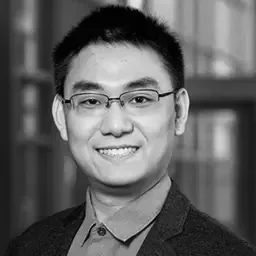
Xiaohong Chen is the Chief Technology Officer at Pi Squared Inc., working on fast, parallel, and decentralized systems for payments and settlement. His interests include program correctness, theorem proving, scalable ZK solutions, and applying these techniques to all programming languages. Xiaohong obtained his BSc in Mathematics at Peking University and PhD in Computer Science at the University of Illinois Urbana-Champaign.
