🚀 Bitcoin Smashes $124,000: Is $150,000 the Next Stop?

Bitcoin just bulldozed past $124,000—another all-time high in its relentless bull run. Traders are now eyeing $150,000 as the next psychological milestone. Here’s why the market’s buzzing.
The FOMO is real—and so are the leverage liquidations
Retail and institutional money keeps flooding in, pushing BTC’s market cap deeper into uncharted territory. Meme coins? Still pumping. Traditional finance? Still scrambling to keep up.
Macro tailwinds or speculative frenzy?
With inflation cooling (allegedly) and ETF inflows hitting record highs, Bitcoin’s fundamentals look strong. But let’s be real—half the traders chasing this rally couldn’t explain UTXOs if their yacht depended on it.
$150K or bust?
The charts say ‘yes.’ The maxis say ‘obviously.’ And Wall Street? Quietly recalculating their ‘digital gold’ price targets—again. Buckle up.
Catalysts for Bitcoin
There are several different catalysts pushing bitcoin higher right now. One of them, of course, is the recent executive order from the White House that will open the door for crypto to be included in 401(k) plans. This is expected to unlock trillions of dollars in new capital, a big chunk of which will likely flow into Bitcoin.
Another key factor is institutional adoption. Simply put, everyone seems to be buying Bitcoin these days. Corporations are buying Bitcoin. Bitcoin treasury companies are buying Bitcoin. And the U.S. government continues to suggest that it will find a "budget-neutral" way to buy Bitcoin.
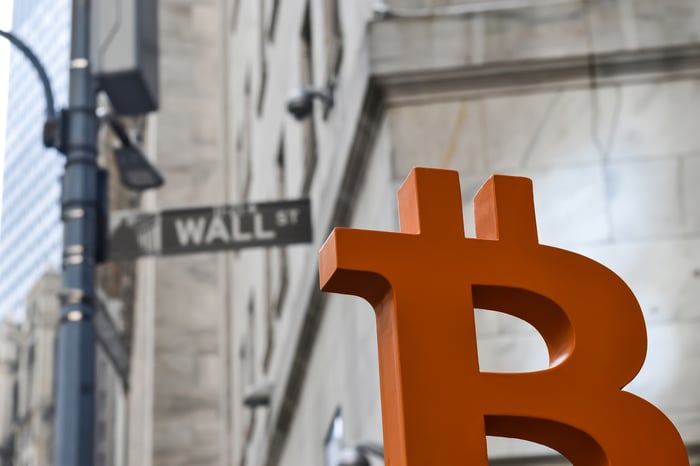
Image source: Getty Images.
At the same time, money continues to FLOW into spot Bitcoin ETFs. This is arguably the best way to track institutional demand. If inflows into spot Bitcoin ETFs are positive, it means Bitcoin is likely to glide still higher. If inflows dry up, Bitcoin could be in for a rocky ride.
Finally, there's the overall macroeconomic situation. The broader market seems to be coming to grips with tariffs and what they likely will mean for the U.S. economy. For now, inflationary pressures do not seem as threatening as they were back in April, and investors are now expecting a series of interest rate cuts starting in September. Historically, lower rates have been favorable for crypto and have led to more money moving into risky, volatile assets such as Bitcoin.
So everything is trending in Bitcoin's favor. A combination of institutional adoption, improving market sentiment, and expectations of rate cuts are juicing the market and helping to push Bitcoin higher.
What do prediction markets think?
That said, Bitcoin is hardly a lock to hit $150,000 this year. One way to get a sense of what the overall market thinks is by looking at data from prediction markets. There, people are trading contracts based on where they think the price of Bitcoin is going next.
On the Kalshi prediction market, for example, traders think Bitcoin has a 75% chance of hitting $130,000 this year, a 53% chance of hitting $140,000, and a 37% chance of hitting $150,000. So, basically, there's a 1-in-3 chance that Bitcoin will hit $150,000 by the end of the year.
Things get a bit dicier from there. For example, there is only a 27% chance that Bitcoin will hit $160,000 and a 10% chance that Bitcoin will hit $200,000. This last data point is particularly noteworthy because, at the start of the year, just about everyone was predicting that Bitcoin WOULD double in value and easily hit $200,000.
What to look for next
The market is pricing in an interest rate cut, but that can't happen if inflation rears its ugly head. And that's exactly what happened almost as soon as Bitcoin hit $124,000. New economic data suggested that inflationary pressures were building. As a result, Bitcoin quickly slid back down to $120,000.
With that in mind, Bitcoin investors should keep a close eye on any and all economic data that the Federal Reserve might take into account when deciding how to adjust interest rates in September. Notably, this marks a departure from the way people invested in Bitcoin in the past. Historically, money has flowed into Bitcoin regardless of what people think the Fed might (or might not) be doing.
Just a few years ago, Bitcoin was completely uncorrelated with any major asset class. And that meant Bitcoin could zig when other assets zagged. But we're starting to see a correlation with stocks, and especially tech stocks. With institutional investors lining up for a piece of Bitcoin, the world's most popular cryptocurrency is starting to behave more and more like a risky, high-upside tech stock.
Long-term, I'm still bullish on Bitcoin. But as we saw back in April, when Bitcoin buckled under the threat of tariffs, it remains a highly volatile digital asset subject to the broader macroeconomic outlook. There's a reasonably good chance Bitcoin will hit $150,000, but only if the broader economy doesn't deteriorate.
