Russia’s Banking Giant Eyes Crypto-Collateral Loans – A $1.7 Trillion Institution Embraces Digital Assets

Russia's largest financial institution is quietly building the plumbing for a crypto-backed lending revolution.
From Sanctions to Solutions
Sberbank, the state-owned behemoth controlling nearly half of Russia's banking assets, is exploring a radical pivot. The plan? Allow clients to borrow cash against their cryptocurrency holdings. It's a move that would transform digital assets from speculative tokens into recognized collateral—effectively bridging decentralized finance with traditional banking's balance sheets.
The Institutional On-Ramp
This isn't just another fintech experiment. We're talking about a bank with over 100 million customers and a history stretching back to the Tsarist era. Their entry signals a tipping point. If approved, the service would let investors unlock liquidity from their Bitcoin or Ethereum without selling—bypassing capital gains and maintaining market exposure. It's the ultimate HODLer's financial tool.
Regulatory Tightrope
Moscow's stance on crypto remains famously ambiguous—banning payments while flirting with mining and international settlements. Sberbank's proposal walks that line perfectly. The loans would be in fiat rubles, not crypto, keeping the bank technically compliant while functionally accepting digital assets as collateral. A masterclass in regulatory arbitrage, or what finance veterans might call 'creative compliance.'
The Global Ripple Effect
Watch how Western institutions react. When a bank of this scale—especially one operating under intense financial sanctions—moves into crypto collateralization, it pressures competitors worldwide. Traditional wealth managers can't ignore client demands for crypto integration forever, not when the world's most sanctioned banks are building the infrastructure first.
The Bottom Line
Sberbank's exploration reveals crypto's inevitable path: from fringe asset to institutional balance sheet component. The service would validate digital assets as legitimate stores of value while providing practical utility—exactly what crypto needs to shed its 'casino' reputation. Just don't expect your local branch manager to understand your NFT portfolio's true artistic merit anytime soon.
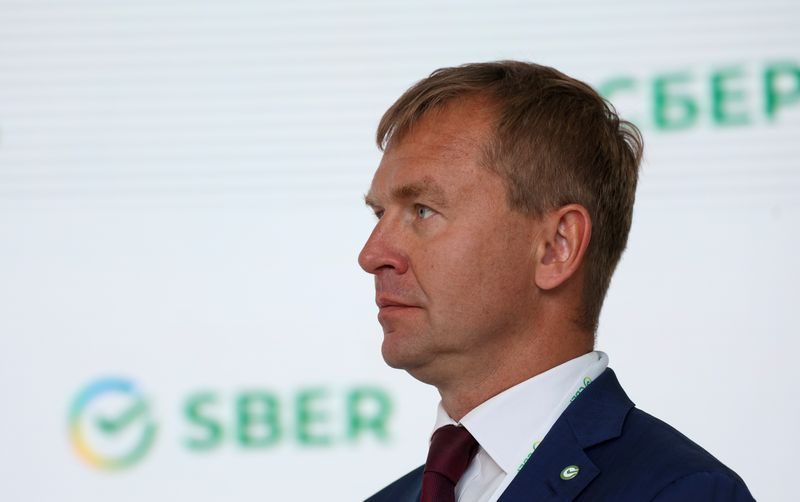 Deputy Chairman of the Executive Board of Sber Anatoly Popov. | © Reuters
Exchanges Prepare Infrastructure as Regulatory Countdown Begins
Just yesterday, Moscow Exchange and St. Petersburg Exchange confirmed readiness to launch regulated crypto trading once Russia’s legislative framework takes effect by July 1, 2026.
The exchanges’ December announcements followed the Bank of Russia’s release of a regulatory concept outlining comprehensive timelines and enforcement mechanisms for crypto legislation.
Moscow Exchange stated it is “actively working on solutions to service the cryptocurrency market.”
St. Petersburg Exchange also mentioned that it has “the necessary technological infrastructure for trading and settlements.“
 Russia's major stock exchanges confirm readiness for regulated crypto trading by mid-2026 as legislative framework approaches implementation deadline.#Russia #Cryptohttps://t.co/rZhcnzIhjn
The regulatory framework divides market access between qualified and non-qualified investors under sharply different conditions.
Non-qualified participants are limited to purchasing liquid cryptocurrencies from defined lists after passing mandatory knowledge tests and are subject to an annual cap of 300,000 rubles through a single intermediary.
Qualified investors face no volume restrictions but must demonstrate understanding of crypto risks through testing and remain barred from purchasing anonymous tokens that conceal transaction data.
Amid these growing regulatory and technological developments, State Duma Committee Chairman Anatoly Aksakov reiterated earlier this month that cryptocurrencies “,” functioning only as investment instruments, with all domestic payments required in rubles.
Transaction Volumes Drive Policy Evolution From Resistance to Regulation
Russia recorded $376.3 billion in crypto transaction receipts between July 2024 and June 2025, surpassing the United Kingdom’s $273.2 billion and establishing Russia as Europe’s largest crypto market by transaction volume.
Large-scale transfers exceeding $10 million grew 86% during this period, nearly double the 44% growth across the rest of Europe, while DeFi activity surged eightfold in early 2025 before stabilizing at 3.5 times the mid-2023 baseline.
Much of this growth is tied to A7A5, a ruble-pegged stablecoin that has reached over $500 million in market capitalization despite Western sanctions, making it the world’s largest non-dollar stablecoin.
Looking beyond trading and investment, Senior Kremlin official Maxim Oreshkin recently argued that crypto mining should be classified as export activity in Russia, since the mined assets effectively FLOW abroad.
 Crypto mining should be treated as a FORM of export in Russia’s official trade accounts, according to senior Kremlin official Maxim Oreshkin.#Bitcoin #Mininghttps://t.co/FGxF9Q3knm
According to past reports, the country produces tens of thousands of Bitcoins annually, generating approximately 1 billion rubles in daily revenue and accounting for over 16% of global hashrate during summer months.
Central Bank Governor Elvira Nabiullina also recently acknowledged that crypto mining contributes to the ruble’s strength. However, she noted quantifying its exact impact remains difficult as much of the industry operates in gray areas.
Illegal mining costs Russia billions of dollars annually through stolen electricity and unpaid taxes, prompting the November 1, 2024, legalization requiring legal entities to register with the Federal Tax Service.
Sberbank Builds Digital Asset Platform Ahead of 2026 Deadline
Sberbank has already begun offering regulated crypto-linked investments totaling 1.5 billion rubles in structured bonds and digital financial assets tied to Bitcoin, Ethereum, and broader crypto portfolios.
The bank launched blockchain-powered tokens that track global cocoa prices in March and continues to build proprietary blockchain infrastructure supporting smart contracts and tokenization tools for corporate clients, with each token representing 1 kilogram of cocoa and available to qualified investors for up to 4 months.
Deputy Chairman Popov confirmed “” with the Bank of Russia on integrating crypto services within regulated frameworks while the lender positions itself as a potential liquidity provider and market Maker on regulated platforms.
Russia’s Central Bank (@bank_of_russia) targets 2026 for a unified crypto regulation framework, allowing controlled trading for investors while planning penalties for illegal intermediaries from 2027. #CryptoRegulation #BankOfRussia #Russiahttps://t.co/DjLAmMqsCb
The regulatory timeline calls for legislative frameworks to be completed by July 1, 2026, with liability for illegal crypto intermediary activities taking effect from July 1, 2027.
