South Korea’s Top Exchange Declares Bitcoin ETF Readiness as Regulators Drag Their Feet

Seoul's crypto giant says the tech is live, the demand is surging—but the paperwork is stuck in a regulatory black hole.
The Infrastructure Is Already Running
Behind the scenes, systems are primed. Trading engines, custody solutions, and compliance dashboards have been running test cycles for months. The exchange isn't just asking for permission; it's demonstrating a finished product, arguing that further delay only cedes opportunity to more agile markets overseas.
A Nation of Crypto Enthusiasts Waits
Retail and institutional capital is poised on the sidelines. South Korea's famous 'Kimchi Premium' has often signaled intense local demand, a force that could supercharge ETF volumes if given a legal conduit. The potential inflow isn't speculative—it's quantifiable, based on existing user assets and pent-up allocation requests.
The Regulatory Stalemate
Observers point to a familiar pattern: bureaucratic caution prioritizing perfect control over progressive adoption. The hesitation mirrors traditional finance's instinct to over-engineer gates while the entire herd looks for the next open field. It's the age-old dance of innovation waiting for permission from institutions still mastering the last dance.
While committees debate risk frameworks, the global market moves. Every week of deliberation is a week another jurisdiction solidifies its lead, capturing talent, liquidity, and the narrative. The exchange's readiness highlights a stark contrast: private sector velocity versus public sector deliberation. The window for leadership won't stay open forever—even the most cautious regulators eventually have to decide whether to build a gateway or just watch the walls go up.
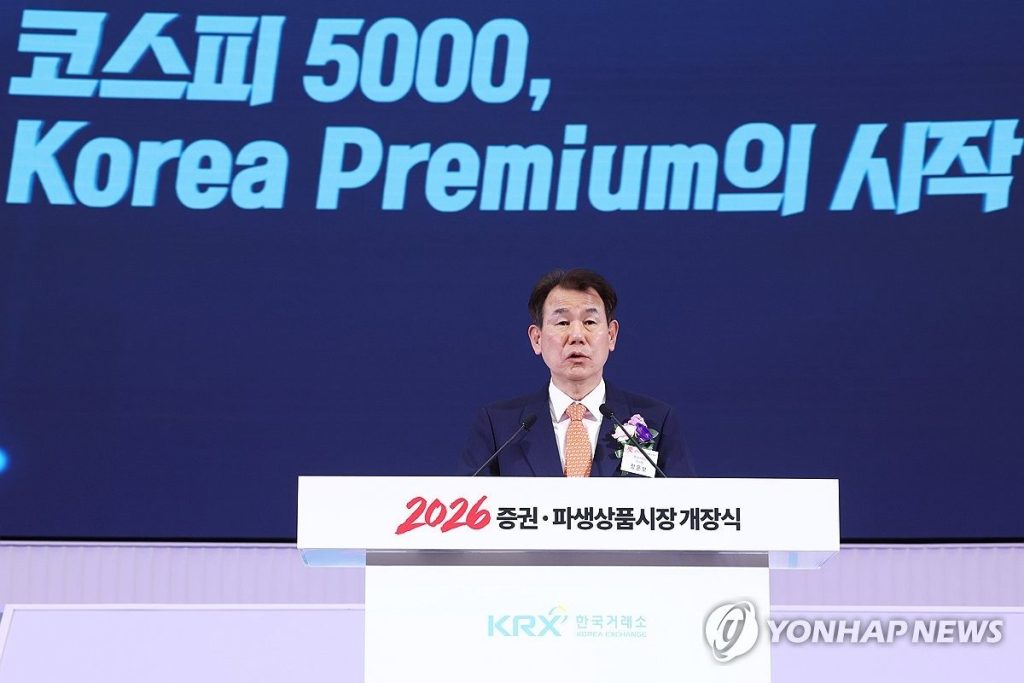 Korea Exchange Chairman Jeong Eun-bo. | Source: Yonhap
Korea Exchange Ready, Regulators Still Divided
The Korea Exchange’s readiness to launch crypto products contrasts sharply with regulatory delays that have stretched back years.
The Financial Services Commission submitted a roadmap in June proposing spot crypto ETFs for late 2025, but the plan has yet to materialize.
Meanwhile, South Korea’s comprehensive Digital Asset Basic Act remains stalled in 2026 after the Financial Services Commission and Bank of Korea failed to reach an agreement on stablecoin governance.
The central bank insists that stablecoins should be issued only by bank-led consortia, with lenders holding at least a 51% ownership stake.
The FSC has resisted the fixed threshold, warning it could sideline technology firms and slow innovation in digital payments.
Regulators also disagree on whether a new licensing committee is needed for stablecoin oversight.
Beyond stablecoins, the draft law WOULD introduce strict investor protections, including full-reserve custody requirements, and raise compliance standards for crypto service providers to match those in traditional finance.
Initial coin offerings banned since 2017 could return under strict disclosure rules.
Stablecoin issuers would be required to hold reserves entirely in bank deposits or government bonds, with 100% of those reserves entrusted to licensed custodians.
 South Korea’s comprehensive crypto law has been delayed to 2026 due to a dispute over who should be allowed to issue stablecoins.#Crypto #Regulationhttps://t.co/jKP9L9n63S
The regulatory impasse continues despite strong political momentum from President Lee Jae-myung’s administration, which campaigned on easing digital asset restrictions.
The ruling Democratic Party introduced legislation in June to amend the Capital Markets Act, expanding the definition of underlying assets for ETFs to include Bitcoin and other digital currencies.
A separate bill proposed legalizing stablecoin issuance by domestic firms with a minimum capital of 500 million won.
However, Bank of Korea Governor Rhee Chang-yong has opposed the development of non-bank stablecoins due to monetary policy concerns.
Enforcement Drive Continues Across Major Exchanges
While policy debates drag on, enforcement actions have accelerated.
The Financial Intelligence Unit imposed a ₩27.3 billion fine on Korbit in late December following approximately 22,000 anti-money laundering violations identified during October inspections.
The regulator found failures in customer identification, unauthorized transactions with unregistered overseas platforms, and inadequate money-laundering risk assessments for new products.
The Korbit penalty followed earlier sanctions against Upbit operator Dunamu, which received a three-month suspension on new customer accounts in February and a ₩35.2 billion fine in November.
Bithumb, Coinone, and GOPAX remain under review as the FIU works through cases in inspection order, with total fines across the sector expected to reach hundreds of billions of won.
 South Korea is set to hit major crypto exchanges with new penalties over anti-money laundering failures, signaling a tougher enforcement phase for the industry.#SouthKorea #CryptoAML https://t.co/9r42trYMmE
Authorities are simultaneously expanding transaction monitoring requirements.
The same late last month, a task force led by the FIU is reviewing whether to extend the travel rule to cover crypto transfers below 1 million won, closing a gap regulators say has enabled smurfing techniques used to evade reporting thresholds.
The proposed changes would require exchanges to collect sender and recipient information for all virtual asset transfers, regardless of size.
Mixed Signals From Financial Authorities
The regulatory uncertainty has created contradictory guidance for asset managers.
In July, the Financial Supervisory Service issued verbal warnings restricting the proportion of crypto-related stocks, such as Coinbase and MicroStrategy, in domestic ETF portfolios, citing administrative guidance from 2017 that remains in effect.
Several Korean ETFs already hold double-digit allocations to these companies through passive index tracking.
However, industry participants argued that the restrictions create unfair advantages for US-listed crypto products while failing to prevent capital outflows.
“Restricting only domestic ETFs will not stop the FLOW of funds, and in reality, many investors are already bypassing the market with U.S. ETFs,” one source noted at the time.
