Memecoins Wiped Out: 11.6 Million Tokens Fail in Brutal Year, Revealing Darwinian Crypto Reality

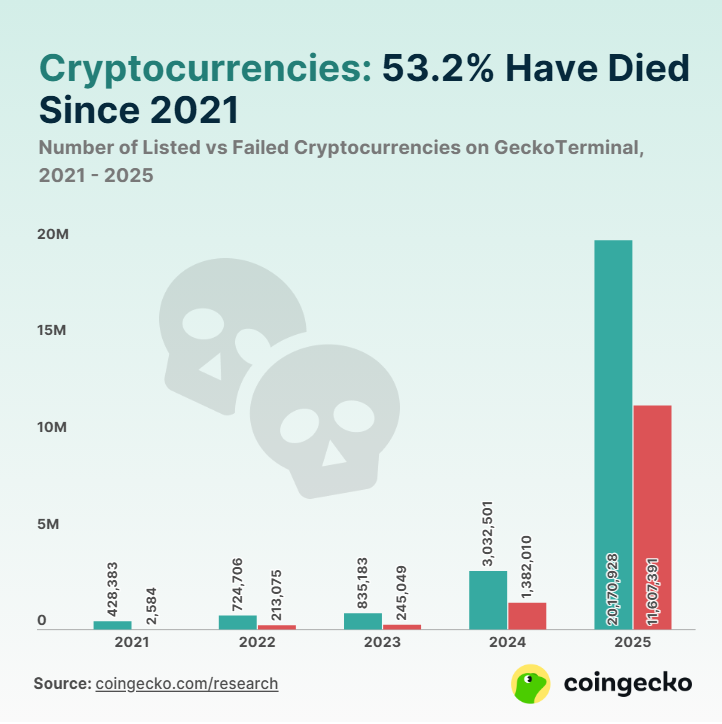
The memecoin graveyard just got a lot more crowded. Forget moonshots—this was a massacre. New research confirms what the carnage on-chain already screamed: a staggering 11.6 million tokens flatlined, turning 'to the moon' into 'to zero' for legions of speculative traders.
The Great Filter Hits Crypto
It's the ultimate Darwinian test for digital assets. The report paints a brutal picture of a hyper-saturated market undergoing a violent correction. Projects built on hype and dog-themed jokes met their inevitable fate when liquidity dried up and attention spans shifted. The data doesn't lie—it just leaves a trail of dead wallets and abandoned Telegram groups.
Survival of the Fittest (or the Funded)
This isn't just a clean-up; it's a fundamental stress test. The wipeout separates the signal from the deafening noise, proving that sustainable value needs more than a viral tweet and a cute mascot. While established protocols with actual utility and developer activity hold their ground, the speculative froth gets ruthlessly skimmed off. Call it the market's quality control mechanism—harsh, public, and utterly unforgiving.
One cynical finance jab? It's the most efficient 'rug pull' detection system ever devised: reality. The brutal year serves as a multi-billion-dollar reminder that in crypto, as in traditional finance, the only free lunch is the one you're probably being sold. The purge continues, and the survivors are writing the next chapter.
Memecoin Failures Spike After Major Sell-Off
Based on reports from CoinGecko, roughly 7.7 million token failures happened in the fourth quarter of 2025. That quarter accounted for most of the total, driven by a sharp market MOVE on October 10, 2025, when reports show more than $19 billion in crypto liquidations occurred in a single day.
Small tokens with little liquidity were hit the hardest. Many of those lists of dead tokens were dominated by memecoins and low-effort projects that rarely had active development or real trading depth.
A Flood Of New Tokens Met Weak Demand
Launch tools made it easy to create tokens, and that contributed to the problem. Reports note that platforms which simplified token creation led to a surge in new, cheaply issued coins. When market conditions turned, many of those coins had no buyers left.
In contrast, mainstream tokens with deeper pools of trading and clearer use cases were more likely to survive the shock. CoinGecko compared the scale: around 1.3 million tokens failed in all of 2024, showing how dramatic last year’s collapse was.
Trading activity fell for countless small tokens. Volume dried up fast for poorly backed projects, and price swings became more extreme. Some exchanges and data sites had to update lists and delist tokens that no longer met minimum activity rules. The memecoin sector’s share of speculative trading fell sharply as risk appetite faded and traders moved into assets with more liquidity.

Calls for better oversight of token listings grew louder. Some market analysts said exchanges should tighten listing standards and that clearer labels for experimental tokens could help retail buyers avoid traps. Others warned that stricter rules might slow innovation. For now, updates from research platforms are being used to map which tokens vanished and why they failed.
Market Sentiment Remains FragileInvestors are picking through the wreckage, looking for lessons. A number of small projects were abandoned by teams, and a long list of inactive tokens now serves as a warning to traders chasing hype. Based on CoinGecko’s data, the scale of failures in 2025 is unparalleled in recent years, and it signals that, without buyers and liquidity, newly minted coins can disappear quickly.
Featured image from Phantom, chart from TradingView
