Morgan Stanley’s Crypto Wallet: The Institutional Game-Changer Wall Street Didn’t See Coming

Forget the private keys under the mattress—the big money is finally moving in. Morgan Stanley, the $1.5 trillion behemoth, just dropped a crypto custody solution that doesn't just open the door for institutions; it blows the vault wide open.
The End of the DIY Era
This isn't another retail-friendly app. This is a fortress. Built on infrastructure that makes traditional settlement look like sending a fax, Morgan Stanley's wallet cuts through the operational quagmire that's kept pension funds and endowments on the sidelines. It bypasses the regulatory gray area with compliance frameworks so thorough they'd make a central banker blush—finally giving risk officers something to approve besides another memo.
Why This Changes Everything
The signal is louder than any Bitcoin halving. When a pillar of traditional finance builds a dedicated on-ramp, it's not a test. It's a deployment. Liquidity follows security, and suddenly, the 'uncorrelated asset' thesis gets a multi-trillion-dollar stress test. Portfolio allocations shift from speculative punts to strategic holds. The cynical jab? It took them this long to realize the future of finance wasn't going to be built entirely on their own legacy ledgers.
The new arms race isn't for the next meme coin; it's for custodying the institutional flood. The gates are open. The old guard just handed out the keys.
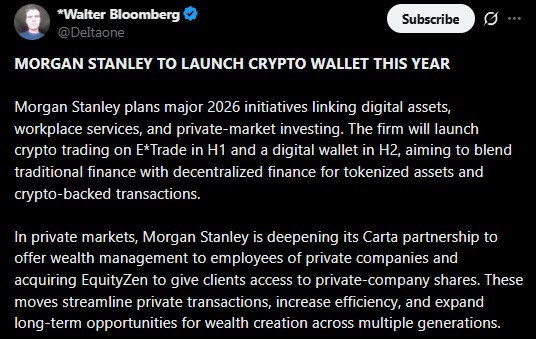
The move comes after it recently rolled out direct VIRTUAL products trading on E*trade (its online brokerage) in the first half, marking a major step in Wall Street’s shift toward blockchain-based finance.
At the same time, It is expanding in private markets by deepening its Carta partnership to serve employees of private companies and acquiring EquityZen to improve access to private-company shares. These moves aim to simplify transactions and make long-term investing easier.
As now, traditional finance embraces tokenization, could this signal a permanent change in how wealth is stored and managed?
What the Morgan Stanley Crypto Wallet Will Support?
According to reports, the Morgan Stanley crypto wallet will act as a secure platform for holding and transacting blockchain-based assets. The planned wallet will support:
Tokenized real-world assets (RWAs)
Private equity and private market investments
Traditional financial securities
Potentially major cryptocurrencies
Importantly, this wallet is not designed for retail crypto-coins speculation. Instead, it targets institutional and high-net-worth portfolios, where compliance, custody, and integration with traditional assets matter more than short-term trading.
The firm's Wealth Management head Jed Finn previously described E*Trade as part of a long-term upgrade to financial infrastructure, rather than a short-term trend. And now we are seeing the developments.
Morgan Stanley Expanding Crypto Portfolio in 2026: New Crypto ETF Filings
The digital wallet announcement follows several major digital asset moves by the firm. In early January 2026, MorganStanley filed with the U.S. Securities and Exchange Commission for in-house cryptocurrencies trusts, including:
A Bitcoin Trust holding BTC directly
An Ethereum Trust holding ETH
A Solana Trust with partial staking rewards
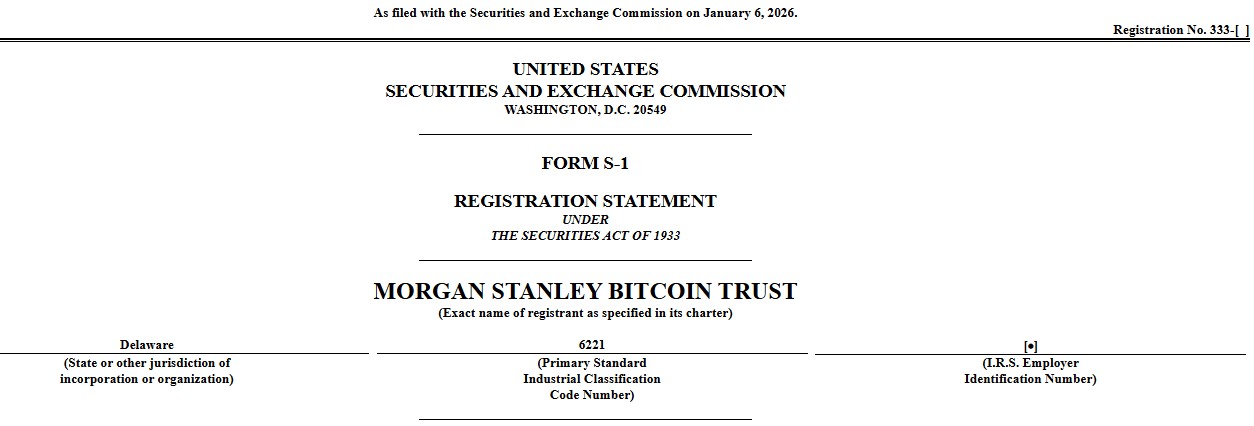
To support this, the organisation is expected to work with regulated partners such as ZeroHash for liquidity and custody services. This approach allows the firm to expand digital assets access while staying within regulatory boundaries.
Indirectly, the step could also support broader cryptocurrency adoption, potentially benefiting Bitcoin, Ethereum, and Solana, as well as crypto ETFs offered through partners like BlackRock.
These filings mark the firm’s first major MOVE into proprietary digital asset investment products, following its 2025 decision to expand cryptocurrency access beyond high-net-worth clients.
Why the Steps Matter Now: Impacts And Results
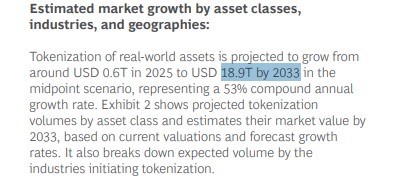
The wallet launch comes as the tokenized asset market grows rapidly. According to the Ripple–BCG report, tokenized funds are projected to surge around $18.9 trillion by 2033. Tokenization enables assets like private equity and real estate to be traded more efficiently on chains.
By rolling out the plan, Morgan Stanley positions itself as a leader in institutional digital asset services, focusing on custody, compliance, and long-term portfolio use rather than speculation.
On the other side market reaction is neutral – not so hyped, not negative. Morgan Stanley stock (NYSE: MS) on Thursday went a little down with -0.6% to $184.68.
While there was no immediate price surge following the announcement, the crypto-wallet strengthens the firm’s long-term growth outlook.
With tokenized assets, cryptocurrency trading, and regulated custody all coming together, Morgan Stanley is betting on a future where digital assets sit alongside stocks and bonds in mainstream portfolios.
This article is for informational purposes and does not constitute investment advice.
