South Korea Crypto Regulation Delayed Until 2026 Amid Fierce Stablecoin Disputes

South Korea's landmark crypto framework just hit a massive regulatory roadblock—pushing final implementation to 2026. The holdup? A bitter political and financial fight over how to handle stablecoins.
The Stablecoin Standoff
Lawmakers can't agree on who gets to issue them—traditional banks or crypto-native firms. That debate's stalling the entire Virtual Asset User Protection Act. One faction wants strict, bank-like oversight; another pushes for innovation-friendly rules that won't kill DeFi in its crib.
Why 2026 Hurts
The delay leaves a multi-billion dollar market in limbo. Exchanges operate under temporary guidelines, investors lack clear protections, and projects face uncertainty—hardly the 'regulatory clarity' everyone keeps promising. It's a classic case of finance moving faster than the suits writing the rules.
Market Reaction: A Shrug and a Trade
Traders barely blinked—another delay in a long line of them. The real action's elsewhere: builders are coding around the uncertainty, and capital's finding its way to friendlier jurisdictions. After all, why wait for permission when you can build?
South Korea's attempt to lead on crypto regulation now looks more like a cautionary tale. Perfect rules crafted too late are worse than good rules delivered on time—a lesson bureaucrats worldwide are still learning, one committee meeting at a time.
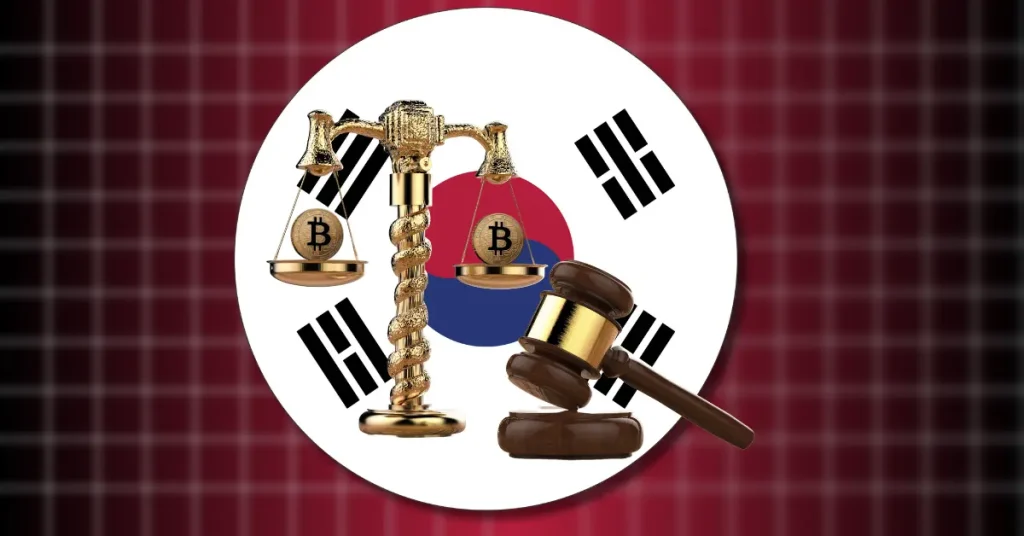
South Korea’s long-awaited Digital Asset Basic Law has hit another roadblock. Authorities have officially delayed the submission of the bill until 2026, signaling deeper disagreements behind the scenes over how stablecoins should be regulated in one of Asia’s most active crypto markets.
The delay reflects unresolved tensions between financial regulators and central banking authorities, at a time when digital assets are becoming increasingly embedded in South Korea’s financial system.
What the Digital Asset Basic Law Was Meant to Do
The proposed law is designed to create a clear legal framework for digital assets, with a strong focus on investor protection. One of its central features is the introduction of no-fault liability for digital asset operators, meaning companies could be held responsible for losses even without proven negligence.
Another major objective is to reduce systemic risk tied to stablecoins. The draft law requires stablecoin issuers to fully back their tokens with reserve assets, held at banks or approved institutions, with reserves exceeding 100% of the circulating supply. This structure aims to isolate bankruptcy risk and prevent spillover effects in the event of issuer failure.
Why Stablecoins Are at the Center of the Dispute
The delay stems largely from disagreements between the Financial Services Commission (FSC) and financial institutions, including the Bank of Korea. While regulators broadly agree on the need for oversight, there is no consensus on who should ultimately control reserve requirements, supervision, and enforcement for stablecoin issuers.
These differences have made it difficult to finalize the bill’s structure, pushing authorities to postpone submission rather than MOVE forward with unresolved gaps.
Impact on the Crypto Market and Investor Confidence
While no immediate market reaction has been recorded, the delay introduces uncertainty for crypto firms operating in South Korea. Stablecoin issuers, exchanges, and payment providers are left navigating unclear rules as adoption continues to grow.
Industry observers note that regulatory hesitation, even when driven by caution, can slow innovation and weaken investor confidence. Without clear guidelines, firms may delay expansion plans or seek friendlier jurisdictions.
Politics and Monetary Goals Add Pressure
As talks drag on, the ruling Democratic Party is working on its own version of a digital asset bill by combining ideas from multiple lawmakers. Meanwhile, political urgency is building.
President Lee Jae Myung has made the development of a Korean won-backed stablecoin a priority, viewing it as a way to safeguard monetary sovereignty in a global market dominated by U.S. dollar stablecoins.
The delayed Digital Asset Basic Act represents the second phase of South Korea’s broader crypto framework. The first phase, already in effect, focused on cracking down on unfair trading practices. What comes next will shape how stablecoins and digital assets fit into Korea’s financial future.
