Dollar Crash Ignites Global Trust Crisis: Digital Assets Emerge as Haven

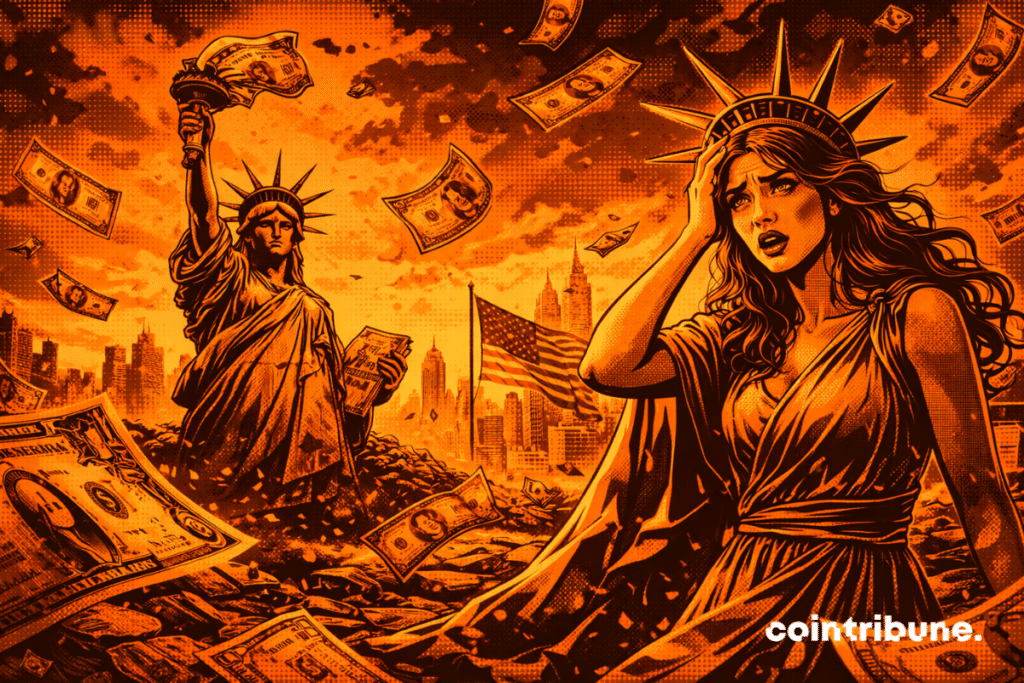
The world's bedrock currency is cracking. A sudden, violent dollar crash isn't just a market tremor—it's a full-blown crisis of confidence in the entire legacy financial architecture. Trust, the invisible glue holding global trade together, is evaporating. Where does capital flee when the old safe haven springs a leak?
The Digital Lifeline
Enter decentralized finance. While traditional markets reel, blockchain networks hum with activity. Bitcoin and Ethereum aren't just holding ground; they're being stress-tested as genuine alternative settlement layers. Smart contracts execute impartially, stablecoins facilitate cross-border movement, and decentralized exchanges operate 24/7—no central bank holiday can shut them down. This isn't speculation; it's utility under fire.
Bypassing the Broken Pipes
The crash exposes the frailties of correspondent banking and SWIFT delays. Crypto networks, by contrast, cut out the middlemen. Value moves peer-to-peer across borders in minutes, not days, with finality that no shaky government guarantee can match. It’s a brutal audit of institutional resilience, and the legacy system is failing it. The 'too big to fail' mantra rings hollow when the foundation itself is crumbling.
A Provocative New Equilibrium
This isn't merely a hedge play. It's a fundamental re-routing of value. The crisis accelerates a shift from trusting institutions to trusting code, from sovereign promises to cryptographic proof. As one cynical fund manager might quip, 'The Fed can print dollars, but it can't print consensus on a blockchain.' The genie isn't going back in the bottle. The dollar's stumble may well be the shove that pushes digital assets from the fringe to the core of a new, distrustful global economy.
 Read us on Google News
In brief
- The American dollar lost 10.41 % of its value in 2025, a historic drop for the world’s primary reserve currency.
- This depreciation is accompanied by a spectacular surge in precious metals: +65.32 % for gold, +147.97 % for silver.
- The loss of confidence in US governance pushes investors to turn away from the dollar as a safe haven asset.
- Precious metals now take on a hedging role formerly filled by the greenback.
The dollar drop : a year under high tension
The American dollar, long considered the ultimate safe haven, has lost 10.41 % of its value since the beginning of the year, while many observers believe that the dollar’s hegemony is coming to an end.
This decline, measured by the DXY index, reflects a depreciation against a basket of major currencies, including the euro, yen, and pound sterling. In a context of global economic uncertainties, this spectacular drop contrasts with the historically defensive role of the greenback. Meanwhile, two traditional safe haven assets have surged.
Here are the key figures :
This dual dynamic, dollar collapse and precious metals surge, has not gone unnoticed among economic analysts. Among them, Tyler Cowen, economist and professor, highlights in an opinion piece that this rush to precious metals is an “immediate warning signal for the economy”.
“The rush to precious metals should worry us all. It reflects a new, potentially disastrous danger on the horizon“, he warns. For Cowen, investors are no longer just seeking performance. They are fleeing growing instability and looking to protect themselves.
A crisis of confidence and the wavering role of the dollar as a safe haven asset
According to Cowen, the dollar’s drop cannot be understood without taking into account the loss of institutional credibility of the United States. He states that it is not only economic fundamentals that are problematic, but also the political unpredictability surrounding US governance.
“If the US government and policies themselves are a source of instability, and the economy is volatile, then you’ll look for other protections“, he writes. He adds that “the chaos in the United States, especially at the WHITE House, pushes investors to find alternatives to the dollar“.
Cowen also emphasizes a major structural point: the global economy is becoming more correlated, which means there are now fewer sources of diversification for investors in case of crisis.
Previously, the dollar played a counter-cyclical role, able to withstand global shocks. Today, this function seems to be shifting to precious metals. “Precious metals take on the protection and hedging role that the dollar once fulfilled“, he states, implying that the hegemony of the greenback as a safe haven asset may be eroding.
In this context of global adjustment, the BRICS strengthen their position by promoting alternatives to the dollar, thus increasing the fragmentation of the international monetary system.
Putin has formalized the dollar’s decline in Sino-Russian trade, marking a strategic turning point. This MOVE therefore illustrates the greenback’s retreat on the international stage.
Maximize your Cointribune experience with our "Read to Earn" program! For every article you read, earn points and access exclusive rewards. Sign up now and start earning benefits.
