India’s BRICS Leadership Targets the Global South Agenda: A New Financial Architecture Emerges

Forget Davos. The real power shift is happening in the Global South—and India is holding the pen.
BRICS isn't just a talking shop anymore. Under India's strategic steer, the bloc is morphing from a geopolitical concept into a tangible financial counterweight. The agenda? Rewrite the rules of global trade, settlement, and reserve currency dominance. It's a direct challenge to the post-Bretton Woods order that's been running on fumes for decades.
The De-Dollarization Playbook
Talk of a common BRICS currency grabs headlines, but that's the moonshot. The immediate game is building infrastructure that bypasses the dollar. Think bilateral trade in local currencies, interoperable digital payment systems, and a shared financial messaging network to rival SWIFT. It's about creating optionality—and leverage.
Why Crypto Practitioners Should Care
This isn't distant geopolitics; it's a live beta test for a multi-polar financial system. The friction points BRICS aims to solve—cross-border settlement speed, transparency, and autonomy—are the very problems blockchain was built to address. Watch for pilot projects involving Central Bank Digital Currencies (CBDCs) for trade between member states. The tech that wins here could set the global standard.
A cynical finance jab? Wall Street still prices risk in dollars, while the foundations of its dominance are being quietly dismantled elsewhere. The smart money is watching which currency—or protocol—becomes the settlement layer of the new Global South. It might not be the one with a green portrait on it.
The bottom line: India's leadership is turning BRICS rhetoric into financial reality. They're not just asking for a seat at the table; they're building a new one. And the architecture looks decidedly digital.
India BRICS Presidency 2026 Shapes Global South Economic Power
The reality is, Prime Minister Narendra Modi made some bold statements at the 17th BRICS Summit in Rio de Janeiro. He said India WOULD actually give a “” to the grouping during its presidency. Modi proposed redefining BRICS as ““—an approach that clearly draws parallels with how India handled its G-20 presidency (where the Global South was prioritized).
Prime Minister Modi was clear about the fact that:
BRICS Economic Strategy and Global South Focus
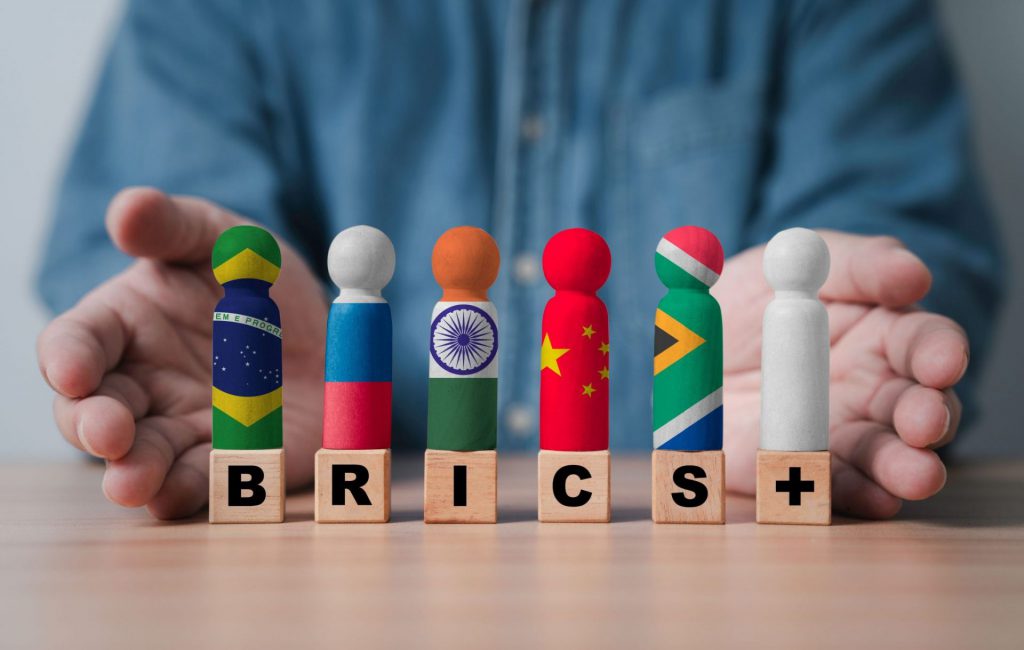
As it turns out, India’s BRICS leadership comes at a rather significant time. The expanded BRICS+ currently comprises eleven full member states following the significant expansions in 2024 and early 2025. This includes Brazil, China, Egypt, Ethiopia, India, Indonesia, Iran, Russia, Saudi Arabia, South Africa, and the United Arab Emirates. The collective size of BRICS+ economies is being projected to overtake the G7 by 2045, according to the Economist Intelligence Unit.
China dominates the group economically right now. Actually, it accounts for approximately 70% of the organization’s total GDP.
The BRICS economic strategy and India’s approach to the presidency has been clarified through various statements over recent months. Modi emphasized the need for balance and cooperation rather than confrontation, which seems like a deliberate positioning choice.
Prime Minister Modi affirmed:
Multipolar Vision and Non-Western Positioning
The BRICS expansion and multipolar world approach has been reinforced through statements from multiple leaders. President Putin quoted Prime Minister Modi in saying that ““—and even suggested that BRICS countries could participate in the Ukraine peace process. An interesting diplomatic move, to say the least.
Political expert Joseph Nye wrote about the bloc’s effectiveness and challenges in January 2025. He provided some analysis on what the expansion might actually mean for the group’s long-term viability.
Political expert Joseph Nye wrote in January 2025:
” and that the same goes for Iran.
But Nye also explained that the BRICS expansion could actually bring in more ““. This appears to be limiting the groups’ effectiveness. India’s BRICS Presidency 2026 framework emphasizes joint global efforts to address common challenges such as pandemics and climate change, positioning the BRICS Global South agenda as central to the bloc’s future direction. In practice, this means the BRICS economic strategy for sustainable development will take center stage. India’s BRICS leadership is expected to focus on ensuring that the multipolar world vision is advanced through cooperation—and also through establishing mutual trust among member states and partner countries.
