Bank of Japan Rate Cuts in 2026: The Crypto Market’s Next Big Earthquake?

Get ready for a tremor. The Bank of Japan's monetary policy is shifting, and its 2026 rate cut decisions could send shockwaves straight through the digital asset landscape.
The Liquidity Tsunami
When a major central bank like the BoJ cuts rates, it's not just about cheaper yen. It's about a global hunt for yield. Traditional savings become less attractive, pushing capital toward riskier, higher-return assets. Sound familiar? That's the classic playbook that floods markets with 'cheap money'—and crypto has historically been a prime destination.
Crypto's Reflexive Response
This isn't theoretical. Markets move on anticipation. The mere signal of impending 2026 easing could trigger a front-running rally across Bitcoin and major altcoins long before the first cut happens. It reinforces crypto's growing narrative as a hedge against traditional financial system manipulation—or as some in finance might call it, 'a speculative asset that conveniently ignores pesky things like price-to-earnings ratios.'
Navigating the Aftershocks
Volatility will be the name of the game. While increased liquidity is a powerful tailwind, it also amplifies market swings. The key for practitioners is to watch the yield spreads and capital flow data—the real signals that the tide is turning. Don't just watch the BoJ's announcements; watch where the money actually goes.
The bottom line? Central bank policies remain a dominant force, even in the decentralized world. The BoJ's 2026 moves won't just shape the yen's future; they'll be a direct injection into crypto's veins. Time to check your seismic readings.
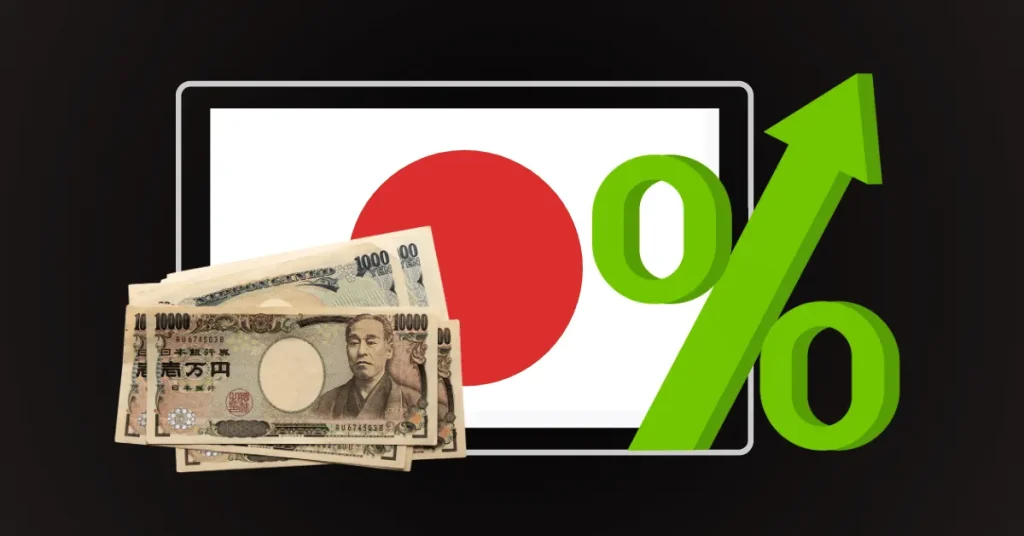
Japan’s central bank, the Bank of Japan (BOJ), is signaling that another rate cut is expected in January 2026. Despite the yen continuing to weaken sharply against the U.S. dollar.
This move has raised concern across global markets, especially about how Bitcoin and the wider crypto market may react.
BOJ Indicates More Rate Cuts In January
For years, the Bank of Japan (BOJ) has followed an ultra-easy policy to support economic growth, even as other central banks raised rates. Japan stayed far behind.
Now, things have begun to change. On December 19, 2025, the BOJ raised its policy rate by 25 basis points to 0.75%, the highest level in nearly 30 years. This MOVE signaled a shift away from long-running ultra-low rates.
BOJ officials said Japan’s interest rates are still very low compared to other countries. They noted that low rates have weakened the yen and pushed inflation higher. Thus, some experts expect another rate likely to reach 1.25%–1.50% by 2027.
Despite these views, data from Polymarket shows a 97% chance of no rate change in January, while only 2% expect a 0.25% rate cut, showing uncertainty about the BOJ’s next step.
Japanese Yen Continued to Weaken
Following the December rate cut, the Japanese yen continued to weaken against the U.S. dollar and is now trading NEAR ¥156 per dollar.
Although Japan raised interest rates to 0.75%, they remain far below U.S. rates of around 3.75%. This gap keeps investors moving toward the dollar for better returns.
The weaker yen is increasing import costs and adding inflation pressure, showing that Japan’s monetary policy is still loose compared to other major economies.
How Bitcoin and Crypto Could React
Historically, BOJ rate increases have affected Bitcoin and other risky assets. Previous market data shows that Bitcoin has seen sharp swings after earlier BOJ policy moves, with drops of 20–25% following some rate hikes.
This pattern was seen again recently. When the BOJ made its latest rate cut earlier this month, bitcoin fell nearly 5% in a single day, dropping to around $88,000.
Despite this, many traders noted that expectations for a rate hike were already 98% priced in, limiting further volatility.
However, loose monetary policy often pushes investors to look for assets that can protect value. In such periods, Bitcoin often serves as a hedge against currency weakness.
