Uniswap Governance Approves UNIfication: 100M UNI Tokens Slated for Burn

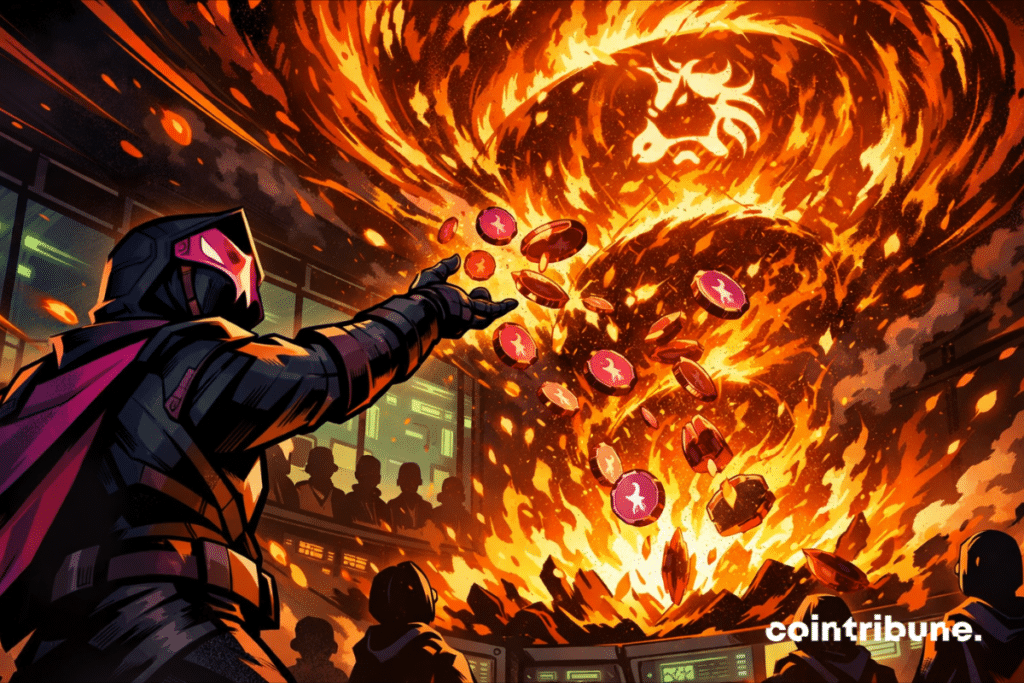
Uniswap just lit a match under its own treasury. The protocol's governance arm greenlit a massive token burn, sending a clear signal to the market: scarcity is back on the menu.
The Mechanics of the Melt
Forget complex economic models—this is supply-side economics in its purest digital form. The approved proposal will systematically remove 100 million UNI tokens from circulation. That's not a gentle tap on the brakes; it's a deliberate reduction of the available float, a move calculated to apply upward pressure on the remaining tokens by fundamentally altering the supply-demand equation. It bypasses the need for external buy pressure and lets simple arithmetic do the heavy lifting.
A Governance Gambit
This wasn't a unilateral decision from a shadowy foundation. The 'UNIfication' proposal went through the full, messy, democratic process of on-chain governance. Token holders debated, voted, and ultimately chose deflation. It's a powerful testament to a decentralized autonomous organization actually organizing around a concrete, impactful action—something that still makes traditional finance executives break out in a cold sweat.
The Ripple Effect
Watch the copycats. When a blue-chip DeFi protocol makes a move this bold, others take notes. This burn sets a precedent, potentially kicking off a new trend of tokenomic tightening across the sector. It signals a maturation phase where protocols move beyond initial distribution and start actively managing their economic levers. For UNI holders, it's a direct alignment of protocol success with token value—a concept sometimes lost in the frenzy of farm-and-dump schemes.
In a world where most financial instruments are engineered to inflate, a deliberate burn feels like a revolutionary act. It's a bet on value over velocity, a stark contrast to the endless money printing that defines the legacy system—take that, central bankers. The fuse is lit; now we see how high the rocket goes.
 Read us on Google News
In brief
- Uniswap governance approves UNIfication with overwhelming support, triggering a 100 million UNI burn and protocol-level fees.
- Fee switches are activated while front-end fees are turned off to prioritise protocol improvements.
- UNI price rises reflecting positive market sentiment and investor confidence in the protocol upgrade.
Resounding Governance Support
Uniswap founder Hayden Adams shared the final vote results on 25 December via X, confirming that the UNIfication proposal passed by a wide margin. The measure received strong support, with 125,342,017 UNI votes in favor and only 742 against. Total participation comfortably surpassed the quorum of 40 million UNI, reflecting a clear consensus within the community and validating the outcome of the governance process.
The UNIfication plan, submitted jointly by Uniswap Labs and the Uniswap Foundation, sets out a long-term vision for the ecosystem. Under this framework, the protocol will drive the burning of UNI tokens through its activity, while Uniswap Labs will concentrate on developing and expanding the platform.
Following a roughly two-day vote timelock, 100 million UNI will be taken out of the treasury, roughly matching the total that WOULD have been burned if fee collection had been active from the start. At the same time, fee switches will be activated, front-end fees will be turned off, and Labs will focus fully on protocol-level improvements.
Scenarios for UNI and LP Dynamics
Despite the overwhelming support, some industry voices have raised concerns about possible side effects. Guillaume Lambert, founder and CEO of Panoptic.xyz, pointed out that liquidity providers (LPs) could face reduced profitability under certain scenarios. For instance, some UNI v3 pools might become unprofitable, prompting LPs to shift to v4 pools or exit the ecosystem altogether. This could result in a decline in total value locked (TVL) and put downward pressure on fees for v3 pools.
He also gave two scenarios to show how different choices could affect liquidity providers and the protocol, with outcomes that include the following:
- Should Uniswap take no action, the fee switch could generate very low returns, making it harder for LPs to earn profits and slowing overall activity.
- In this situation, the protocol could function largely as a routing layer with limited native liquidity.
- If the fee switch is applied to v4 pools and UNI tokens are distributed as incentives, LPs could either sell their UNI or remain as the primary beneficiaries, effectively turning UNI into a governance-driven rebate.
- Under this scenario, passive token holders may gain little or no advantage, raising questions about fairness in long-term token distribution.
Meanwhile, the market appears to be responding with Optimism following the governance outcome. UNI rose 3% over the past 24 hours, building on a strong week in which it climbed more than 17%. While multiple factors could be influencing this movement, the surge may reflect growing investor confidence as the protocol gears up for a new phase of economic activity and broader adoption.
Maximize your Cointribune experience with our "Read to Earn" program! For every article you read, earn points and access exclusive rewards. Sign up now and start earning benefits.
